
Controversial Ingredients
I’m Not Using That!!
When it comes to certain ingredients, opinions can be sharply divided. For nearly every topic, there seem to be two passionate camps: for or against, pro or con, good or bad, use it or avoid it. These strong positions are often shaped by deeply personal factors, such as:
Allergies or sensitivities
Ethical concerns
Religious beliefs or restrictions
Personal discomfort with animal-derived fats (the infamous “ick factor”)
Today, consumers are far more mindful of ingredient lists than ever before. Genuine concerns can cause us to put a product back on the shelf—or avoid certain materials entirely. For those of us who craft our own products, these same preferences often guide the choices we make in our formulations.
Discovering the Controversy
When I began making soap for my family, I quickly ran headfirst into ingredient debates—particularly around palm oil and lard. I was genuinely surprised by how much I hadn’t known about the palm oil controversy until I started digging deeper.
During my research, I encountered strong, unequivocal statements like:
“I avoid palm oil completely,” or “I refuse to use palm oil in my soaps.”
While I don’t always share the same intensity of feeling for or against specific ingredients, I do respect those convictions. Taking the time to explore viewpoints different from my own has helped me better understand why people make the choices they do—and why ingredient transparency matters so much.
Palm Oil Controversy
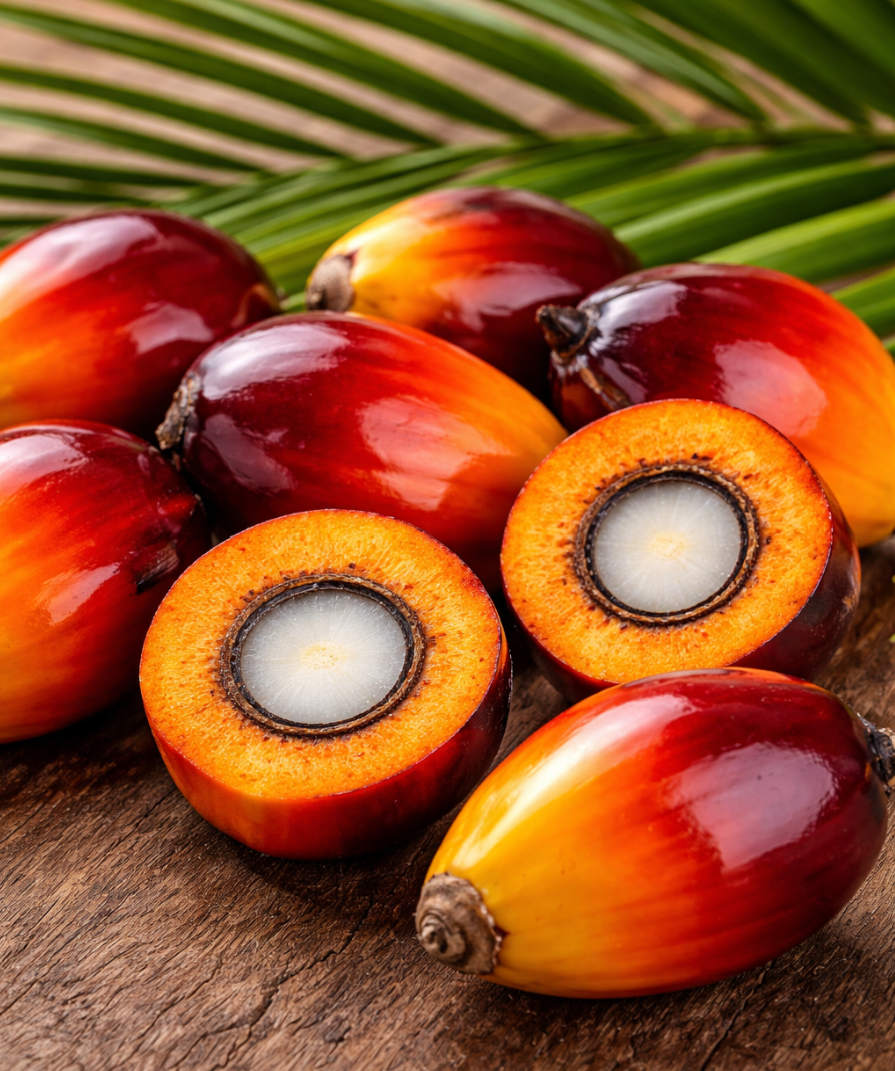
Image AI generated
Did you know there’s an ongoing debate surrounding palm oil? If you’re anything like I once was, you may not even realize this everyday ingredient has become such a controversial topic.

Image AI generated
This section—along with my Palm Oil Controversy page—serves as a hub for anyone who wants to better understand the issues involved. From environmental concerns such as deforestation and wildlife habitat loss (including the well-known plight of orangutans), to ethical questions surrounding labor practices, there’s a lot to unpack when it comes to palm oil.
Why Some Crafters Still Use Palm Oil
It’s important to understand that not everyone who uses palm oil does so irresponsibly. Many soap makers are fully aware of the concerns surrounding conventional palm oil production and take those issues seriously.
For that reason, some crafters make a deliberate choice to use responsibly sourced palm oil, certified by organizations such as the Roundtable on Sustainable Palm Oil (RSPO). While certified palm oil is more expensive, it reflects stricter environmental and ethical standards. This is the type of palm oil I personally choose to use.
Certified palm oil is produced under guidelines intended to reduce deforestation, protect wildlife habitats, and support better labor practices within local communities.
From a formulation standpoint, many soap makers value palm oil for the functional qualities it brings to soap—such as bar hardness, longevity, and stable lather. For some, responsibly sourced palm oil offers a balance between performance and ethical sourcing.
Whether you choose to use palm oil or avoid it altogether, understanding both sides of the debate allows you to make an informed decision that aligns with your values.
Palm oil has become a hot-button issue, and for good reason. Concerns about deforestation, habitat loss, and the impact on wildlife—including endangered orangutans—have led many people to choose an outright boycott.
These concerns are serious and deserve attention. However, simply boycotting palm oil might not be the most effective solution. In many cases, blanket boycotts can shift environmental and ethical problems elsewhere rather than address them at the source.
Understanding how palm oil is produced—and supporting responsible, certified sources—can have a more meaningful impact than rejecting the ingredient outright.
Understanding how palm oil is produced—and supporting responsible, certified sources—can have a far greater impact than walking away from the ingredient entirely.
Palm oil is an extremely versatile and efficient ingredient, used in everything from food and cosmetics to cleaning products. It’s widely relied upon because it produces a high yield, is relatively inexpensive to grow, and has a long shelf life.
As demand for palm oil has increased, so has its environmental footprint. Large-scale production has contributed to deforestation and habitat loss, particularly in regions such as Southeast Asia. These impacts are real and deserve serious attention.
At the same time, completely abandoning palm oil does not address the root causes of these problems. The issue lies not simply in the ingredient itself, but in how it is produced and sourced.
Rather than boycotting palm oil outright, supporting responsibly sourced palm oil can be a more effective and constructive approach. Organizations such as the Roundtable on Sustainable Palm Oil (RSPO) work to establish standards and certification programs for producers who meet specific environmental and ethical criteria.
Choosing RSPO-certified palm oil helps encourage better practices—such as reducing deforestation, respecting workers’ rights, and protecting biodiversity—by rewarding producers who commit to improvement.
An outright boycott can also have unintended consequences. When palm oil is removed, manufacturers often replace it with other oils that require more land and resources to produce. Crops such as soy or sunflower may seem like better alternatives at first glance, but they can result in greater land use and increased environmental pressure.
The goal isn’t to ignore the problems associated with palm oil—it’s to address them at the source by supporting sustainable production rather than simply removing the ingredient from the equation.
.
Ultimately, boycotting palm oil is a simplified response to a complex issue. Supporting sustainably sourced palm oil—and holding companies accountable for responsible production—offers a more effective and realistic path forward.
Consumers have genuine influence. By choosing products backed by credible sourcing certifications, they can encourage better environmental and ethical practices while still acknowledging the functional value of palm oil as an ingredient. This balanced approach promotes meaningful change without simply shifting the problem elsewhere.
Repulsive Animal Fats
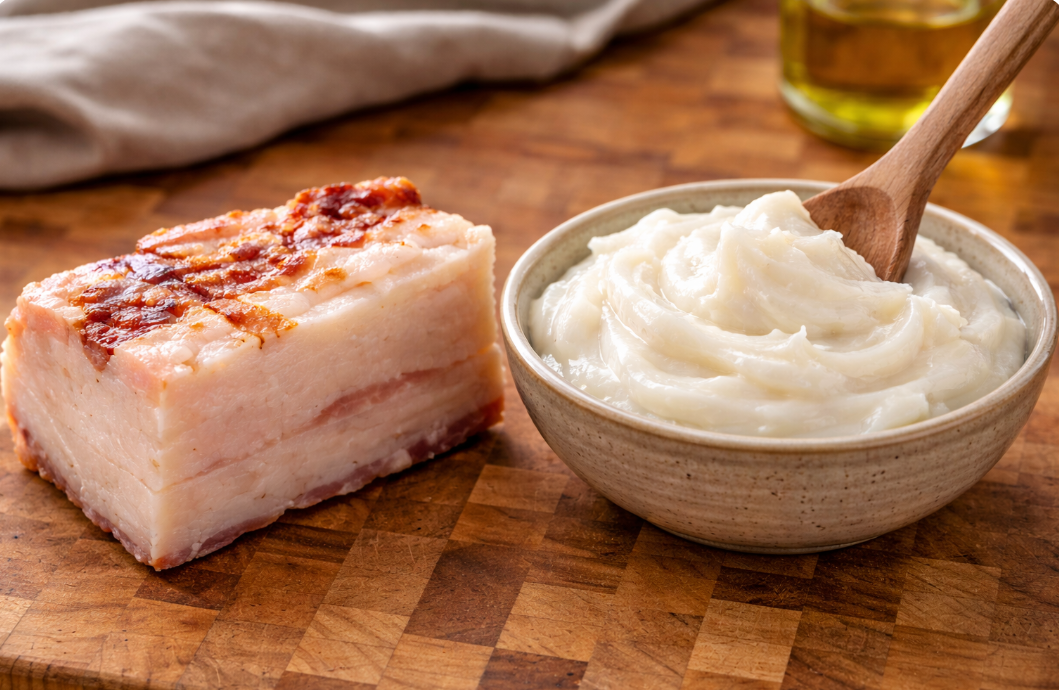
Image AI generated
Lard and Other Animal Fats in Soap Making
Animal fats—such as lard (rendered pig fat) and tallow (rendered beef fat)—tend to spark strong reactions. For some people, the idea of using animal fats in soap (or anywhere near their skin) is simply off-putting.
Others, however, swear by them—some even going so far as to use lard as a facial moisturizer.
(That one usually raises eyebrows.)
This section focuses primarily on lard, while acknowledging that many soap makers also use other animal fats, such as tallow, for their unique soap-making qualities.
Why Some Choose Lard
L
Soap makers who use lard do so for several practical reasons:
Soap Performance
Lard produces a hard, long-lasting bar with a creamy, stable lather—qualities that are highly valued in traditional soap making.Fatty Acid Profile
Lard contains a balanced mix of fatty acids that contribute to a mild-feeling, conditioning bar.Sustainability Considerations
For those who already consume pork or live in agricultural areas, lard can be a locally sourced, low-waste ingredient, utilizing by-products that might otherwise be discarded.
While many soap makers promote lard as “nourishing” in soap, I take a more cautious and honest stance. Soap is a rinse-off product, and I make no claims that lard in soap provides the same benefits as leave-on products like lotions or creams.
Why Some Avoid It
Despite its soap-making advantages, lard and other animal fats aren’t for everyone:
Ethical Choices
Vegans and vegetarians avoid animal-derived ingredients as part of a cruelty-free lifestyle.Cultural or Religious Restrictions
Certain traditions prohibit the use of specific animal products.The “Ick” Factor
For many people, the idea of using animal fat on their skin—regardless of chemistry—is simply unappealing.
All of these reasons are valid, which is why ingredient transparency matters.
Coconut Oil and Nut Oils
Adverse Reactions and Considerations
Coconut oil and various nut oils are popular in soap making due to their lathering ability and performance. However, they aren’t universally tolerated.
Coconut oil, while suitable for many, can be irritating for some individuals—especially those with very sensitive or compromised skin.
Nut oils (such as almond or hazelnut) may trigger allergic reactions in individuals with tree-nut sensitivities.
Ingredients that work beautifully for one person may be problematic for another.
The Importance of Ingredient Transparency
Whether products are sold or simply gifted, clear ingredient labeling is essential. Transparency allows consumers to make informed decisions based on allergies, sensitivities, ethical beliefs, or personal comfort levels.
As makers, we have a responsibility to be upfront about what’s in our products. Ultimately, it’s also up to each individual to read labels carefully and choose what aligns with their needs and values.
Understanding ingredients—and the reasons people may avoid them—creates a safer, more respectful experience for everyone.
Educational & Informational Disclaimer
The information provided on this website is for educational and informational purposes only. It is intended to share general knowledge about traditional soapmaking, ingredient behavior, historical context, and manufacturing processes.
Nothing on this site is intended to diagnose, treat, cure, or prevent any disease or medical condition. The products offered are classified as soap under FDA guidelines and are not intended to affect the structure or function of the skin or body. Individual experiences and preferences may vary.
Information presented here should not be considered a substitute for professional medical advice, diagnosis, or treatment. If you have a medical condition, skin concern, or sensitivity, please consult a qualified healthcare professional before using any product.
This website may reference or link to third-party scientific, technical, or educational resources for general learning purposes. These references are provided to support transparency and encourage independent research, not as endorsements or medical guidance.
Click here to read the full disclaimer.
Contact me:
Text:
(479) 651-2760
I typically respond to texts almost immediately unless I’m in the middle of making soap.
As soon as I reach a stopping point, I’ll be sure to check and reply.
I check my email daily and will get back to you as soon as possible.