
What is Soap??
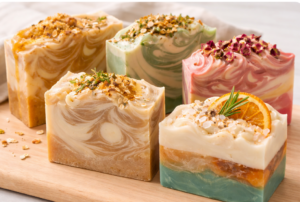
Something most of society does 'NOT' use today ! !

Most body cleansers on the market today—both liquid and solid—are synthetic detergent products, even though many are still commonly referred to as “soap.”
There are relatively few true soaps available commercially. Thankfully, because of artisans, traditional soap hasn’t faded into history—it’s making a quiet but meaningful comeback.
What’s fascinating is that the basic process of soap making remained unchanged for centuries.
Not all that long ago, pioneers followed the same time-tested method: a lye solution made from rainwater and wood ashes combined with animal fats, then cooked for hours—sometimes days—over an open fire. It was labor-intensive, messy, and far from precise, but it was how soap was made.
Thanks to scientific breakthroughs between 1790 and 1880, I can now make soap using accurately produced, ready-made lye. This was something my husband’s grandmother and mother simply didn’t have access to—they had no choice but to make their own lye, a time-consuming and tedious process.
I’ll happily admit it: I’m very glad to be living on this side of 1880.
Why does traditional soap cost more than detergent-based cleansers? Click here
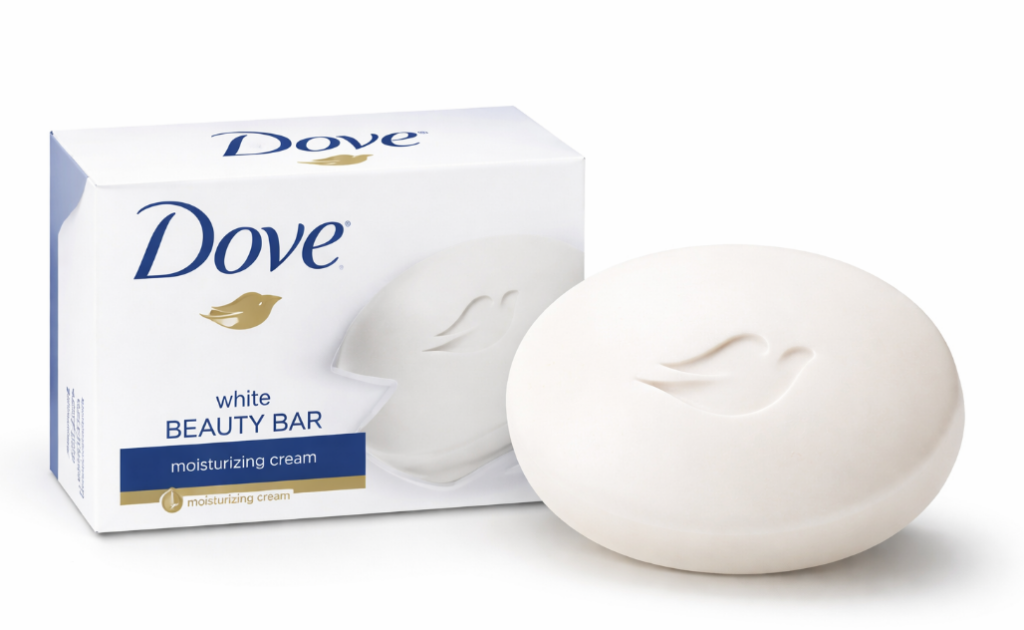
The FDA defines what soap is...and...what it is NOT
The U.S. Food and Drug Administration clearly explains what it classifies as soap—and what is not soap, but instead a detergent product.
Yes… detergent—as in the type of substance used to wash dishes and clothing. Skin detergents are, of course, formulated to be milder than products like Dawn or Tide, but chemically speaking, they are still detergents.
The word soap was once reserved exclusively for traditional soap. Today, however, many synthetic detergent products are marketed using the word “soap,” even though—by regulatory definition—they are not true soap.
So What is TRUE Soap?
To meet the regulatory definition of soap, a product must meet three conditions:
- be composed primarily of fats or oils with an alkali (such as lye). When made properly, no lye remains in the finished product.
- The only cleaning action ingredients must be the “alkali salts of fatty acids.”
- It’s intended use and the marketing of it must be only as soap.
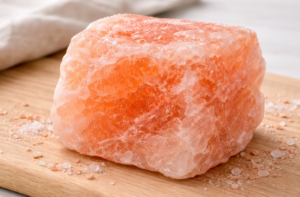
It is a salt of the fatty acids used
So, the wife is in the shower when she hollers to her husband in the other room,
“Dear, I need more salt here in the bathtub!”
“Salt?!” the husband replies.
“What are you doing—eating a hamburger and French fries while you’re bathing?”
Funny as that sounds, chemically speaking, soap is a salt—specifically, a salt of fatty acids.
In simple terms, soap is formed when fats or oils react with an alkali (such as lye) in the presence of water. This chemical reaction, known as saponification, converts the fats into soap molecules and glycerol. Once the reaction is complete, the soap itself is the salt that does the cleaning.
“Soap is a combination of fat or oil (fatty acids), water, and an alkali. In a saponification reaction, neutral fat and an alkali react to create glycerol and soap molecules.”
— National Center for Biotechnology Information (NCBI) (ncbi.nlm.nih.gov)
Jump to a brief simulation of the chemical reaction called ‘saponification.’
What’s especially fascinating is that civilizations were making soap long before anyone understood its chemistry. People knew it worked, even if they didn’t know why.
Thanks to scientific discoveries in the early 1800s—particularly the work of Michel Chevreul, who identified and classified fatty acids—I’m now able to make soap that is well-balanced and not harsh, while still being beautifully decorative.
If you’d like to explore how soap evolved from a luxury item into something nearly everyone could afford, click the link below called The Salt That Cleans… It’s History
Step into the past with me and uncover the fascinating history of soap, where you'll discover its ancient origins and enduring legacy. By the end of this journey, you'll gain a profound appreciation for soap's timeless significance, realizing that detergent-based cleansers are mere newcomers in comparison. Click the link below to embark on this enlightening exploration and delve into either or both, 1) an overview or 2) a comprehensive version of soap's history.
SAPONIFICATION: the science behind soap
Educational & Informational Disclaimer
The information provided on this website is for educational and informational purposes only. It is intended to share general knowledge about traditional soapmaking, ingredient behavior, historical context, and manufacturing processes.
Nothing on this site is intended to diagnose, treat, cure, or prevent any disease or medical condition. The products offered are classified as soap under FDA guidelines and are not intended to affect the structure or function of the skin or body. Individual experiences and preferences may vary.
Information presented here should not be considered a substitute for professional medical advice, diagnosis, or treatment. If you have a medical condition, skin concern, or sensitivity, please consult a qualified healthcare professional before using any product.
This website may reference or link to third-party scientific, technical, or educational resources for general learning purposes. These references are provided to support transparency and encourage independent research, not as endorsements or medical guidance.
Click here to read the full disclaimer.
Contact me:
Text:
(479) 651-2760
I typically respond to texts almost immediately unless I’m in the middle of making soap.
As soon as I reach a stopping point, I’ll be sure to check and reply.
I check my email daily and will get back to you as soon as possible.