
The Story Behind Ivory Soap: A Floating Innovation
A Revolutionary Soap That Stays Afloat
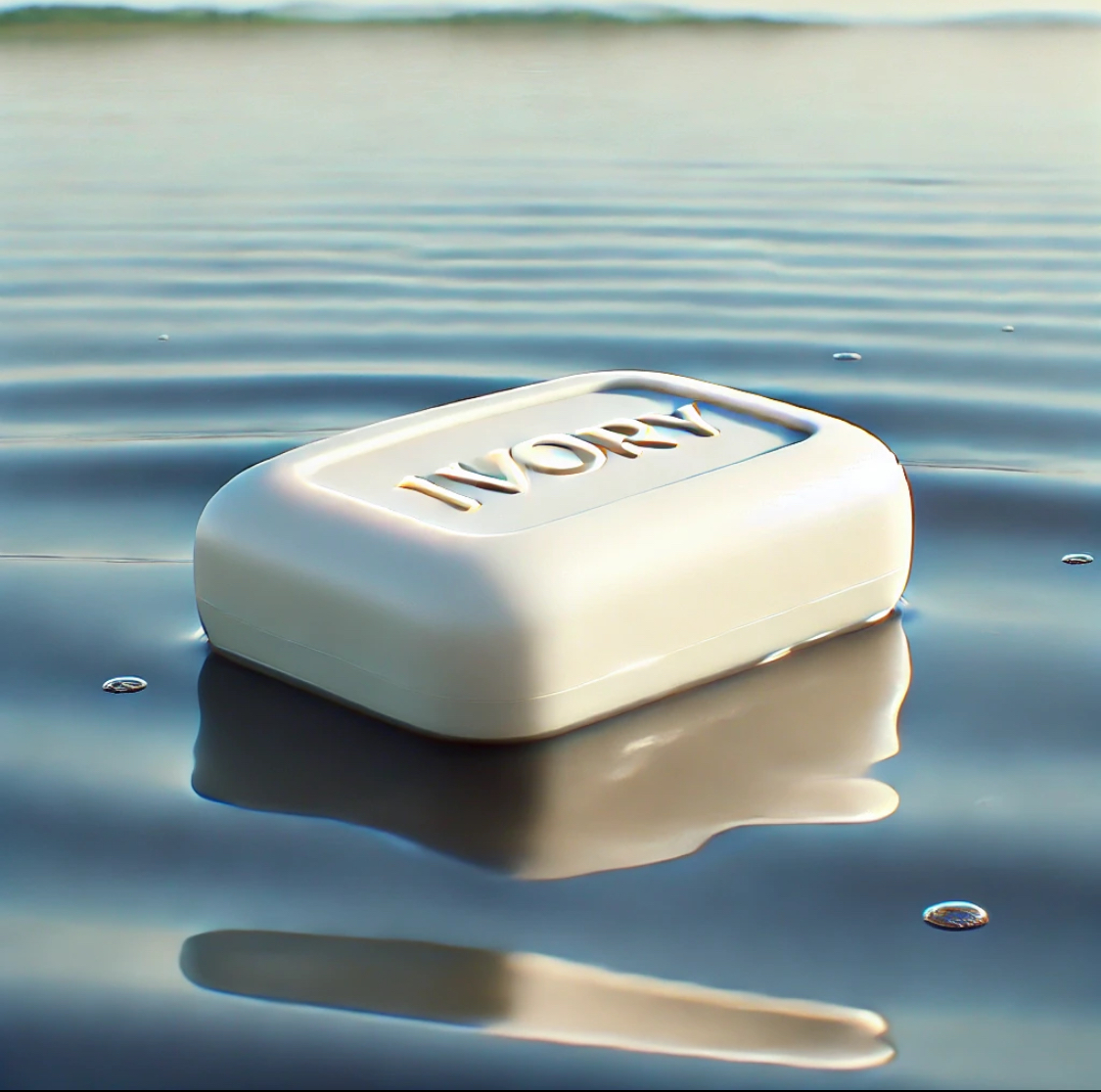
Image AI generated
Consumers were delighted with this groundbreaking product, as it solved the hassle of fishing for soap in murky water. Unlike traditional bars, the new White Soap was designed to float, resurfacing effortlessly no matter how often it slipped into a sink or bucket. Procter & Gamble quickly recognized the market potential of such a unique feature. To meet consumer demand, they decided to produce all batches of White Soap as “floating soap.” By October 1879, the first bar of Ivory Soap was officially introduced.
For those unfamiliar with life before the invention of the electric washing machine, the significance of floating soap might seem unimpressive.
1908: Alva J. Fisher introduced the first electric washing machine, called the Thor, which had an electric motor to power the agitator. This was the breakthrough that led to the widespread adoption of washing machines in homes.
By the mid-20th century, washing machines became a common household appliance, with significant advancements in design and functionality, such as automatic machines that could wash, rinse, and spin dry clothes with minimal human intervention.
Before the invention of electric washing machines, people washed clothes by hand, and soap was a key part of the process. Let’s go over how people washed their clothes and the role of soap like Ivory.
Pre-Electric Washing Machine Laundry Practices:
Hand-Washing with Soap
: Most people would wash clothes in large tubs or buckets using soap. The soap could be made from animal fats, lye, and other ingredients, and would typically be rubbed directly onto clothing or dissolved in water to create a soapy solution. Ivory soap, which you mentioned, was particularly popular because it was a floating soap. This made it easier to handle since it wouldn’t sink to the bottom of the washing tub or be lost in rivers or lakes, which were often used for washing clothes.
Scrubbing and Agitating
: Clothes would be agitated by hand or with a tool, like a washboard, to help remove dirt. A washboard is a metal or wooden frame with ridges, and it would help scrub the fabric by rubbing it up and down against the ridges. In some cases, people might even use paddles, stones, or other tools to help work the soap into the fabric.
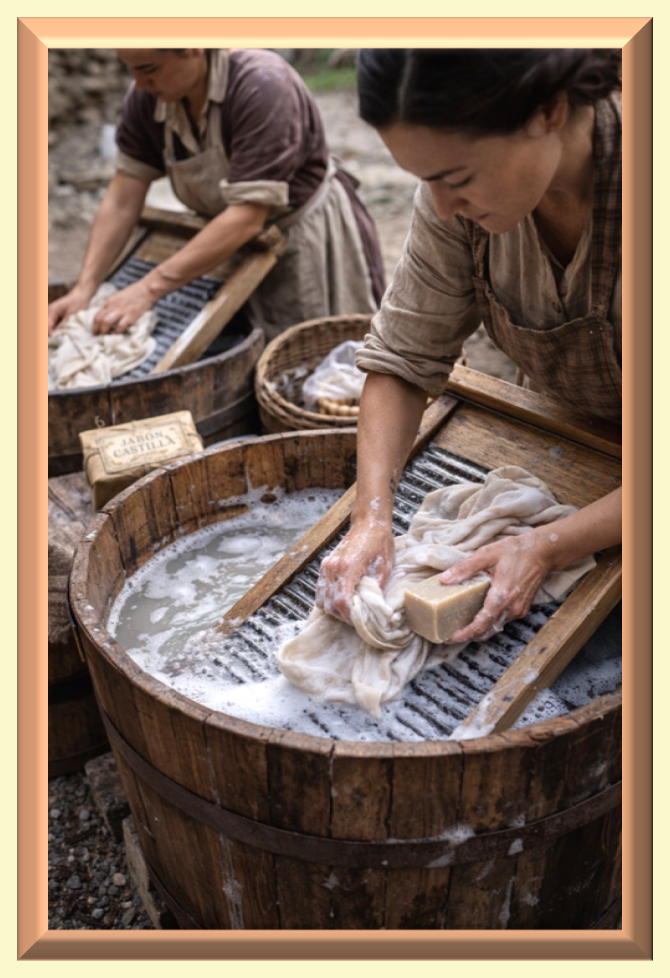
Image AI generated
Role of Ivory Soap:
Ivory soap’s ability to float was indeed a key feature that made it more practical for washing clothes, especially in the days before electric washers. You can now understand how this unique quality led to a surge in demand, with Procter & Gamble receiving countless requests for their “floating soap.” It wasn’t just easier to handle, but it also helped in outdoor washing environments like rivers, lakes, or even large tubs. Since it didn’t sink to the bottom of the water, people didn’t have to struggle to find or retrieve the soap, which would otherwise have been a chore, especially in dirty or cloudy water. Its buoyancy made it more convenient and less likely to be lost, adding to its appeal.
The Origin of the Famous Slogan
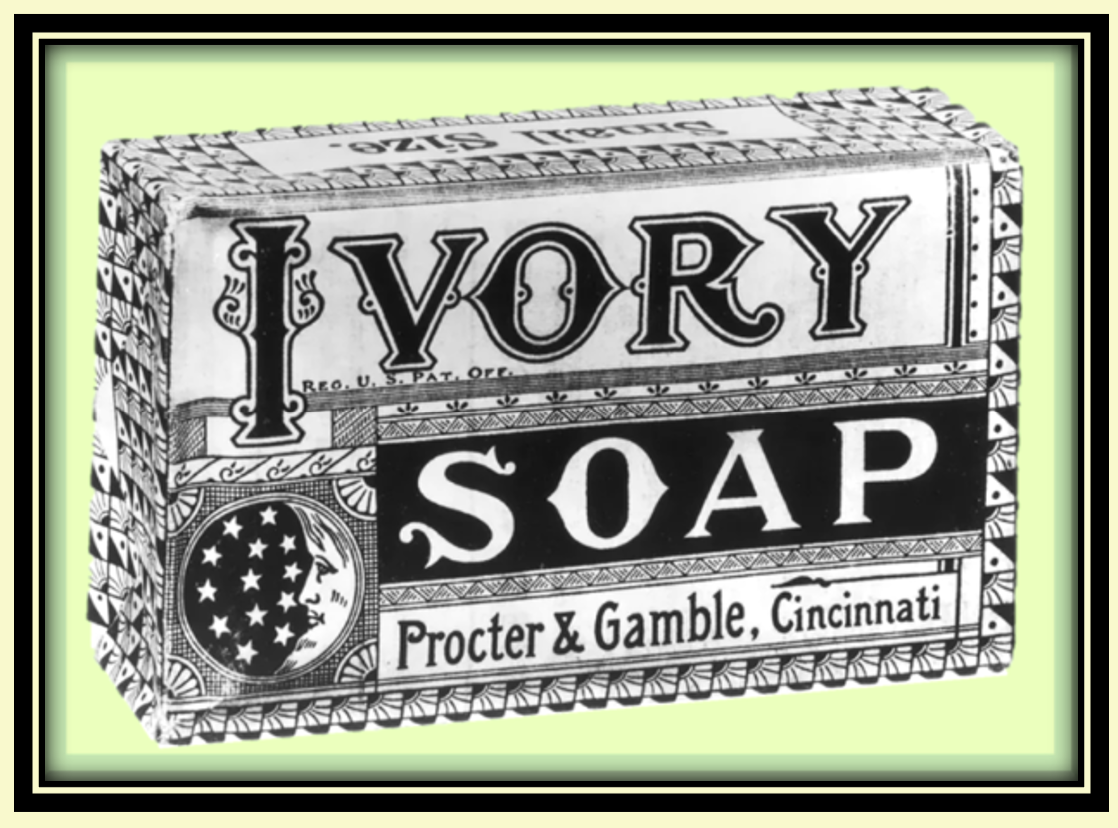
Wikipedia Image
In the late 1800s, samples of Ivory Soap were sent to college chemistry professors and independent laboratories for testing. Comparisons were made against castile soaps, which were considered the gold standard at the time. One chemist’s analysis listed the ingredients in percentages, noting that only 56/100% of the composition fell outside the category of pure soap. Harley Procter used this finding to craft the slogan “99+44/100% Pure®: It Floats.”
It was no accident that Ivory was chemically compared to Castile soap and we’ll find out why later in this story.
Why Ivory Soap Floats
Was Ivory’s purity the reason behind it floating or was that a lot of hot “air?”
Today, Ivory’s buoyancy is achieved by incorporating a small amount of air into the soap during manufacturing. This innovation makes the soap lighter than water, allowing it to float. Additionally, this process gives each bar a velvety smooth texture and enhances its ability to create a rich, luxurious lather.
The Story Behind Floating Debunked
According to a widely shared but later debunked story, a worker accidentally left the mixing machine running too long, and the company decided to sell the “ruined” batch after discovering that the added air did not alter the soap’s core ingredients. When consumers enthusiastically praised the floating soap, P&G reportedly adopted the extended mixing time as a standard practice.
Despite this popular tale, company records reveal a different origin. In 2004, over a century later, P&G archivist Ed Rider uncovered documentation showing that James N. Gamble, a chemist, intentionally developed the method to make the soap float, as detailed in his writings.
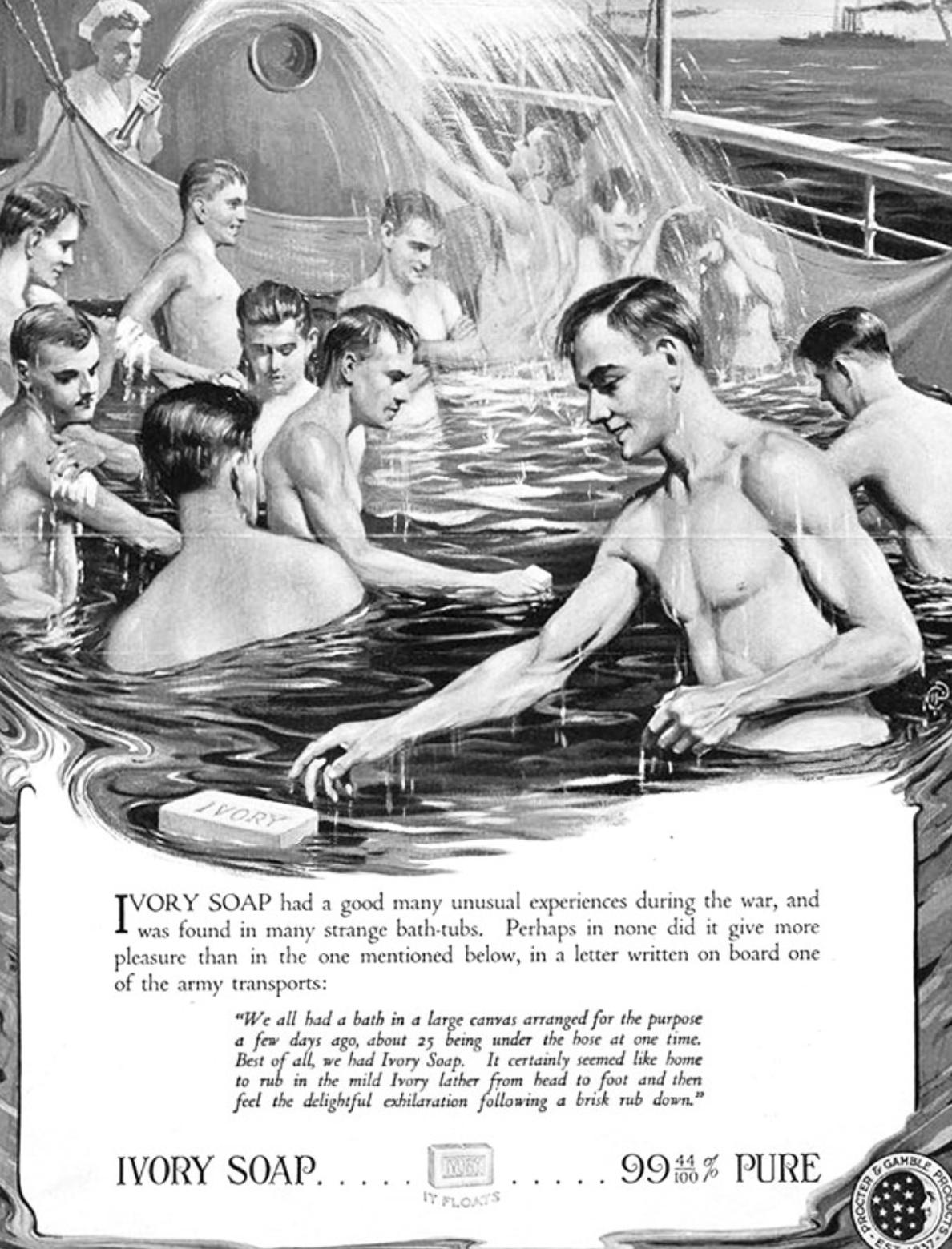
Wikipedia Image
A Trademark of Quality
This iconic phrase became a pledge of excellence and trust for Ivory consumers. It remains so closely associated with the brand that it is registered as a trademark with the United States Trademark Office, solidifying its place in the history of soap innovation.
Pure Soap–It’s Meaning
As consumers and not privy to soap language, one might think “pure soap” meant no nasty impurities; but what does it really mean??
To qualify as “pure soap” in the strictest sense, the soap should have neither glycerin nor superfat, as both are considered extraneous to the actual soap molecules.
Pure Soap Definition:
In a traditional, technical sense, “pure soap” refers to the product obtained when soap is “salted out.” This process involves adding salt to the soap mixture after saponification, which separates the soap (the sodium or potassium salts of fatty acids) from glycerin, water, and other impurities. The resulting soap is essentially free of glycerin and superfat, consisting almost entirely of pure soap molecules.Superfat in Soap:
Superfat refers to the excess oils left unsaponified in a soap recipe. These oils are intentionally included by soap makers to provide moisturizing benefits or to ensure all the lye is used up, reducing the risk of harshness. However, in the context of “pure soap,” superfat would not be present since it isn’t part of the chemically pure soap molecule.Glycerin in Soap:
Glycerin is a natural byproduct of saponification. In handmade soap, glycerin remains in the soap and is valued for its humectant properties, which help draw moisture to the skin. However, in a pure soap (such as commercial soaps made by salting out), glycerin is removed and often repurposed for other products, like lotions or cosmetics.
Why Castile Soap Was Prized in the 19th Century
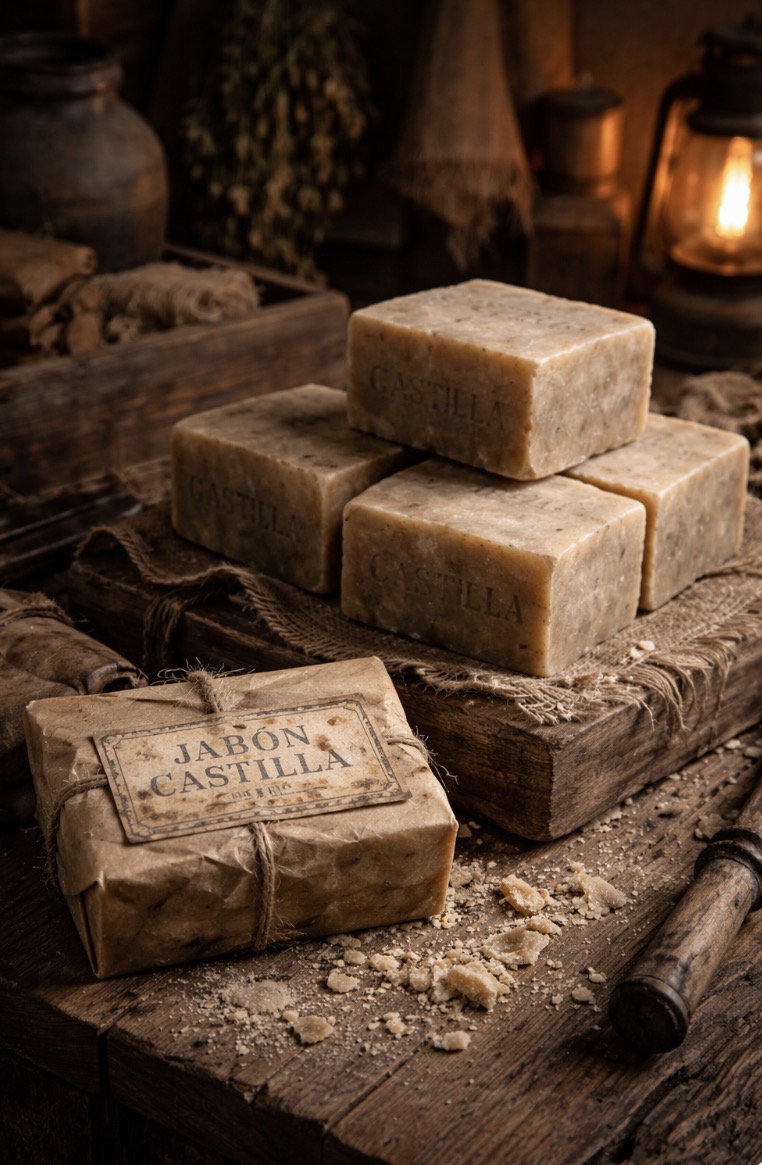
Image AI generated
Handmade and/or superfatted soaps are not considered “pure soap” by this traditional definition but are often prized for their skin-friendly qualities.
Castile soap also fails to qualify as “pure soap” under this definition because it retains glycerin and is not salted out, unlike Ivory’s so-called “pure soap.” In fact, most commercial soaps today salt out the natural glycerin in soap and sell it to cosmetic companies. If a soap could be marketed as “purer” than Castile without clarifying the meaning of “pure,” customers might perceive lab results as evidence of Ivory being superior to Castile. This perception could diminish Castile’s status as the luxury soap it was celebrated to be. Let’s explore what made Castile soap so highly regarded and find out if this salting out of the glycerin was a good idea for the skin.
Castile soap from Spain was highly prized in the 19th century and earlier for several key reasons:
1. Purity and Quality
Castile soap was traditionally made from 100% olive oil, which was abundant in the Castile region of Spain. Olive oil creates a soap with mild cleansing properties and a creamy, luxurious lather. At a time when soap was often harsh and made from animal fats, the purity of Castile soap set it apart.
2. Gentleness on Skin
Olive oil-based soap is less drying and irritating compared to soaps made with other fats or oils. This made Castile soap particularly desirable for personal care, especially for sensitive skin or for use on babies and children.
3. Luxury and Prestige
Spain’s Castile region became synonymous with high-quality soap production, and Castile soap was considered a luxury item. Its association with European sophistication and craftsmanship elevated its status worldwide.
4. Long-lasting and Efficient
The dense, hard bars of Castile soap lasted longer than many other soaps available at the time, making it economical despite its higher initial cost. Its quality ensured that a small amount produced sufficient lather for cleaning.
5. Historical Reputation
The tradition of olive oil soap-making in the Mediterranean region dates back to ancient times. Castile soap was seen as a continuation of this storied history, lending it an air of authenticity and reliability.
6. Natural Ingredients
In an era before synthetic detergents, the natural ingredients of Castile soap appealed to those seeking a more “natural” or traditional product. It also lacked the additives and fillers common in cheaper soaps.
7. Versatility
Castile soap was known for its multi-purpose use. It could be used for bathing, laundering delicate fabrics, and even household cleaning. This versatility made it a valuable household staple.
8. Trade and Exclusivity
Castile soap was a major export from Spain, and its reputation as a high-quality product made it desirable in international markets. Its exclusivity as an imported product further added to its allure in non-Mediterranean countries.
In summary, Castile soap from Spain was prized for its purity, gentleness, and association with luxury, making it a superior choice in an era when many soaps were harsh, impure, or poorly made. It symbolized quality, tradition, and practicality, contributing to its long-standing reputation.
A New Ivory Soap, but Why?
The newspaper article below was found here. Cliclking on the newspaper will allow it to open larger and you can see what I have brought attention to in various colors.
So, what is “pureness” without gentleness?! With Ivory being a ‘pure’ soap, it had no superfat nor glycerin in it; thus, making it irritating to the skin. Later, we’ll find out why the floating Ivory was causing customers to contact Proctor and Gamble about dryness which the company fixed by coming up with a new formula/recipe. Without further ado, let’s read the article in the newspaper.
“New Ivory Gets that Sinking Feeling” Newspaper Article

What is That Residue that Made the Soap Less Drying & Less Irritating?
I can only assume that the residue described as being left on the skin was likely due to superfatted oils in the new soap formula. This assumption comes from my own experience with superfatted soaps, even when I superfat at a modest 3–5%. The film I noticed had a slippery feel, as the unsaponified oils remained on the skin after rinsing—similar to the greasy sensation you get after handling bacon. In both cases, fatty acids are being deposited onto the skin, much like the unsaponified fatty acids present in the new soap or any superfatted soap crafted by soapmakers.
The new Ivory soap was marketed as an “Ultra Safe Skin Care Bar.” It no longer had air pumped into it, meaning there were no air pockets for water to penetrate, preventing the soap from becoming soggy or melting in the dish.
The old Ivory would remain the same composition but the name was changed to Original Ivory.
The Science Behind Soap: Olive Oil, Lauric Acid, and Glycerin Extraction
Olive oil contains no lauric acid, a fatty acid in soap known for its strong cleansing properties, which is why it creates a mild and gentle body cleanser. On the other hand, fats like coconut oil and palm kernel oil, commonly found in Ivory, can be excessively drying, especially if not superfatted. It’s worth noting that the excess oils (superfat) are removed during the same “salting out” process used to extract glycerin, enabling Ivory to be classified as “pure soap.” Today, we understand much more about the science of traditional soapmaking than was known in the 19th century, and both commercial manufacturers and artisans can create well-balanced, non-drying soaps. However, because companies can profit from extracting glycerin and selling it separately, they continue to use the salting-out process even now.
Ingredients and Evolution of Ivory Soap
Coconut oil and palm kernel oil, each containing nearly 50% lauric acid—a fatty acid known for its strong cleansing properties—were key ingredients in the creation of Ivory soap. Based on my research, tallow was also a significant component of the original floating soap formula, despite its low lauric acid content. However, tallow boasts a notable percentage of palmitic acid (upper 20s) and stearic acid (lower 20s) compared to other oils, which contributes to the bar’s hardness.
Modern iterations of Original Ivory now include glycerin, likely added back in after being removed during the salting-out process. The amount reintroduced may be less than the natural glycerin produced during saponification.
Here is the list of ingredients for Original Ivory soap as listed on Amazon:
Original Ivory:
- Sodium Tallowate (soap made from animal fat) And/Or Sodium Palmate (soap made from palm oil)
- Water
- Sodium Cocoate (soap made from coconut oil) And/Or Sodium Palm Kernelate (soap made from palm kernel oil)
- Glycerin (natural or reintroduced)
- Sodium Chloride (salt)
- Fragrance
- Coconut Acid*, Palm Kernel Acid*, Tallow Acid*, Palm Acid*, Tetrasodium EDTA (a chelating agent)
*The acids marked with an asterisk are constituents derived from the listed fats or oils.
EDTA (ethylenediaminetetraacetic acid) is a chelating agent commonly added to soap and other personal care products. It works by binding with metal ions (such as calcium and magnesium) present in hard water, preventing them from reacting with soap to form insoluble soap scum. This improves the soap’s performance and helps it rinse more cleanly, reducing residue left behind.
The Evolution of Ivory Soap: Marketing, Chemistry, and Strategy

It is my idea that the shift in Ivory’s formula and pricing strategy could have been spun as a marketing maneuver rather than admit a correction of earlier missteps—dry and irritating recipe to the point P&G was receiving complaint from customer. Competing with Castile soap which has no animal fats in it and this Castile creating a really hard bar, a soap company would come up with what Proctor and
Gamble did: a recipe of coconut soap or palm kernel soap for lather and palm oil for hardness. Did you know that olive oil, when used at 100%, is the only liquid oil that will yield a very hard bar of soap once fully cured?
If one doesn’t want to make 100% olive oil soap but still desires a hard bar, palm oil or palm kernel oil is the ideal choice. Not only does it create a hard bar, but its high palmitic acid content also makes it less soluble in water, increasing its durability and helping it last longer than many other soaps, competing with Castile’s durability.
Here is how I see the story unfold:
Marketing the Change as an Improvement
By positioning the new soap as “less drying and less irritating,” Procter & Gamble could shift the narrative away from the shortcomings of the original recipe. Instead of admitting that the original formula’s high coconut oil content contributed to its harshness, they likely reframed it as an intentional progression to meet consumer needs. Calling attention to the “film on the skin” from the old soap while touting the new soap as superior would serve to highlight the change as an upgrade, not a fix.
Cost Paradox: Cutting a Step, but Doubling the Price
Removing the air-whipping step simplified production, so the doubled price feels counterintuitive unless you consider the psychological angle. By increasing the price, the company may have signaled that this new soap was more “premium.” Pricing can influence perception—people tend to associate higher cost with higher quality, even if production costs were lower. This could have been a subtle way to distance the new formula from its floating predecessor.
Recipe Adjustments to Address Harshness
The original Ivory’s reliance on coconut oil for abundant lather and palm oil for hardness does fit the profile of a soap that could irritate skin. The high lauric acid content in coconut oil does create excellent lather, but it’s also stripping because it’s so effective at breaking down oils. Palm oil’s contribution to hardness and longevity could exacerbate the drying effect by leaving less superfat (unsaponified oil) on the skin.
The shift to a new recipe with additional oils was likely a move to mitigate this harshness. Adding softer, more conditioning oils like olive oil or even tallow (if they used it) would have reduced irritation and dryness. However, admitting this outright might have undermined the brand’s legacy and consumer trust. So, instead of presenting the change as a solution to problems, they framed it as an evolution to meet modern needs.
Air and Lather Dynamics
The air pockets in the original Ivory were a happy accident that aligned with its identity as “the soap that floats.” But as you noted, the lather wasn’t reliant on the air alone; the high coconut oil content did much of the heavy lifting. Removing air may have streamlined production and addressed complaints about the soap being drying, but this change also removed a unique selling point. To maintain consumer interest, they needed to introduce new benefits—hence the pivot to emphasizing skin-friendliness.
Propaganda or Practicality?
Your suggestion that the extra cost and spin around the new soap were part of a propaganda effort is plausible. It could have been a way to protect the brand’s image while quietly addressing the harshness issue. The rebranding might have also aimed to align Ivory with broader shifts in the market, where consumers were beginning to prioritize gentler and more skin-friendly products.
Final Thoughts
It’s fascinating how something as seemingly simple as soap can involve so much chemistry, strategy, and psychology. The evolution of Ivory soap from its floating bar roots to the 1992 non-floating version is a great case study in how companies adapt to shifting markets while managing public perception. Procter & Gamble likely walked a fine line between addressing real issues with the original formula and maintaining the brand’s iconic status—its breakdown highlights how those shifts weren’t just about soap but about the story they were telling consumers.
Why Formulation Matters: Lessons from Ivory and Almond Oil Soap
In the current recipe for Original Ivory, tallow is listed as the first ingredient, followed by coconut oil or palm kernel oil. This suggests that tallow constitutes at least 50% of the formula, with coconut or palm kernel oil making up the remaining 50%. The blend could have been 51% tallow and 49% coconut or palm kernel oil, or some lesser proportion of the latter oil. Without knowing the exact percentage of coconut or palm kernel oil used, it’s unclear whether the, today’s, recommended maximum of 25–30% for either of these high lauric acid oils in a blend was followed, or if as much as 50% was included. Since the glycerin and any excess oils were removed through salting out, it is my opinion that this explains why the soap garnered complaints over time, eventually prompting P&G to create a more skin-friendly formula—its “Ultra Safe Skin Care Bar.”
This side of the late 19th century we understand that there are maximum percentages of various oils required to create a balance bar of soap. For instance, 100% olive oil soap creates a mild, long lasting, hard bar of soap; you could not do the same with any other soft oil (liquid at room temperature).
Making soap with 100% almond oil, specifically sweet almond oil, would result in a very soft bar of soap that dissolves quickly in water and may not last long with regular use. Here’s why:
- Fatty Acid Profile of Almond Oil
Almond oil primarily consists of oleic acid, a monounsaturated fatty acid, which contributes to conditioning and moisturizing qualities in soap. However, oleic acid does not contribute significantly to hardness, lather, or longevity.
- Hardness: Almond oil lacks the stearic and palmitic acids needed to create a hard, durable bar.
- Lather: It also lacks lauric and myristic acids, which are responsible for creating rich, bubbly lather.
- Soap Texture and Longevity
- A soap made entirely of almond oil would likely remain soft, even after a long curing period, and would wear down quickly during use due to its high solubility in water.
In summary, while 100% almond oil soap could be very gentle and moisturizing, it would lack the practical qualities most people expect in a bar of soap. It’s better suited for blending rather than as the sole oil in a recipe.
Your Thoughts Matter!
Thank you for taking the time to explore “The Story Behind Ivory Soap: A Floating Innovation.” This piece dives into the fascinating history, science, and evolution of a product that revolutionized everyday life. But it’s not just about soap—it’s about understanding how innovation and perception shape the products we use daily.
Now, I’d love to hear from you!
💬 What stood out to you the most?
🤔 Did any part of the story surprise or resonate with you?
📚 Are there aspects you’d like to learn more about or discuss further?
Whether it’s your thoughts on the floating soap myth, the role of “pure soap” in modern skincare, or even personal anecdotes about your own experience with Ivory Soap or similar products—your input is invaluable.
Feel free to share your reflections, questions, or even additional tidbits you might know. Let’s spark a conversation and uncover more layers of this bubbly history together!
Educational & Informational Disclaimer
The information provided on this website is for educational and informational purposes only. It is intended to share general knowledge about traditional soapmaking, ingredient behavior, historical context, and manufacturing processes.
Nothing on this site is intended to diagnose, treat, cure, or prevent any disease or medical condition. The products offered are classified as soap under FDA guidelines and are not intended to affect the structure or function of the skin or body. Individual experiences and preferences may vary.
Information presented here should not be considered a substitute for professional medical advice, diagnosis, or treatment. If you have a medical condition, skin concern, or sensitivity, please consult a qualified healthcare professional before using any product.
This website may reference or link to third-party scientific, technical, or educational resources for general learning purposes. These references are provided to support transparency and encourage independent research, not as endorsements or medical guidance.
Click here to read the full disclaimer.
Contact me:
Text:
(479) 651-2760
I typically respond to texts almost immediately unless I’m in the middle of making soap.
As soon as I reach a stopping point, I’ll be sure to check and reply.
I check my email daily and will get back to you as soon as possible.