
How Combo Bars are Created
Introduction: Why Glycerin Matters in Soapmaking
Overview of the Process
Combo bars are manufactured using mechanical processes originally developed for traditional soap, rather than being melted and poured.
Soap base is manufactured first (true soap made from fats and alkali).
The soap is dried and converted into noodles or flakes.
Detergents, fillers, and processing aids are physically blended into the soap mass.
The mixture is compressed and forced through an extrusion die.
The extruded log is cut and stamped into bars.
The key point:
Soap provides the structural backbone that allows extrusion to work.
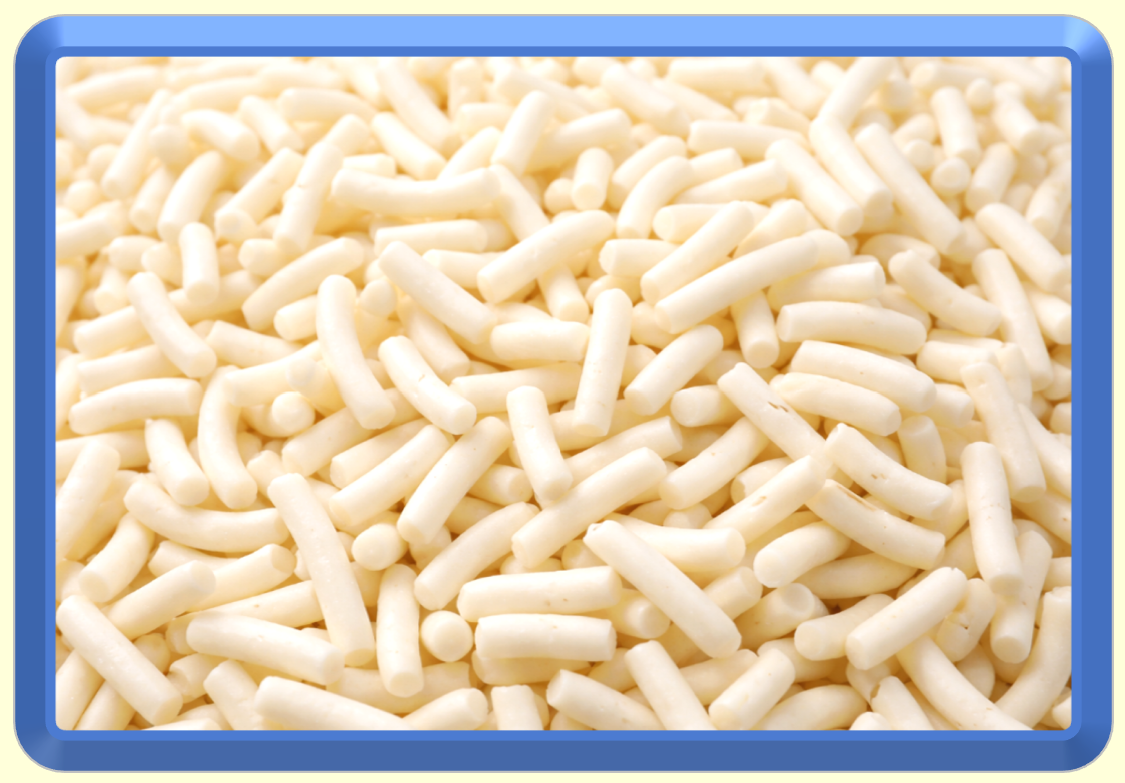
Image AI generated
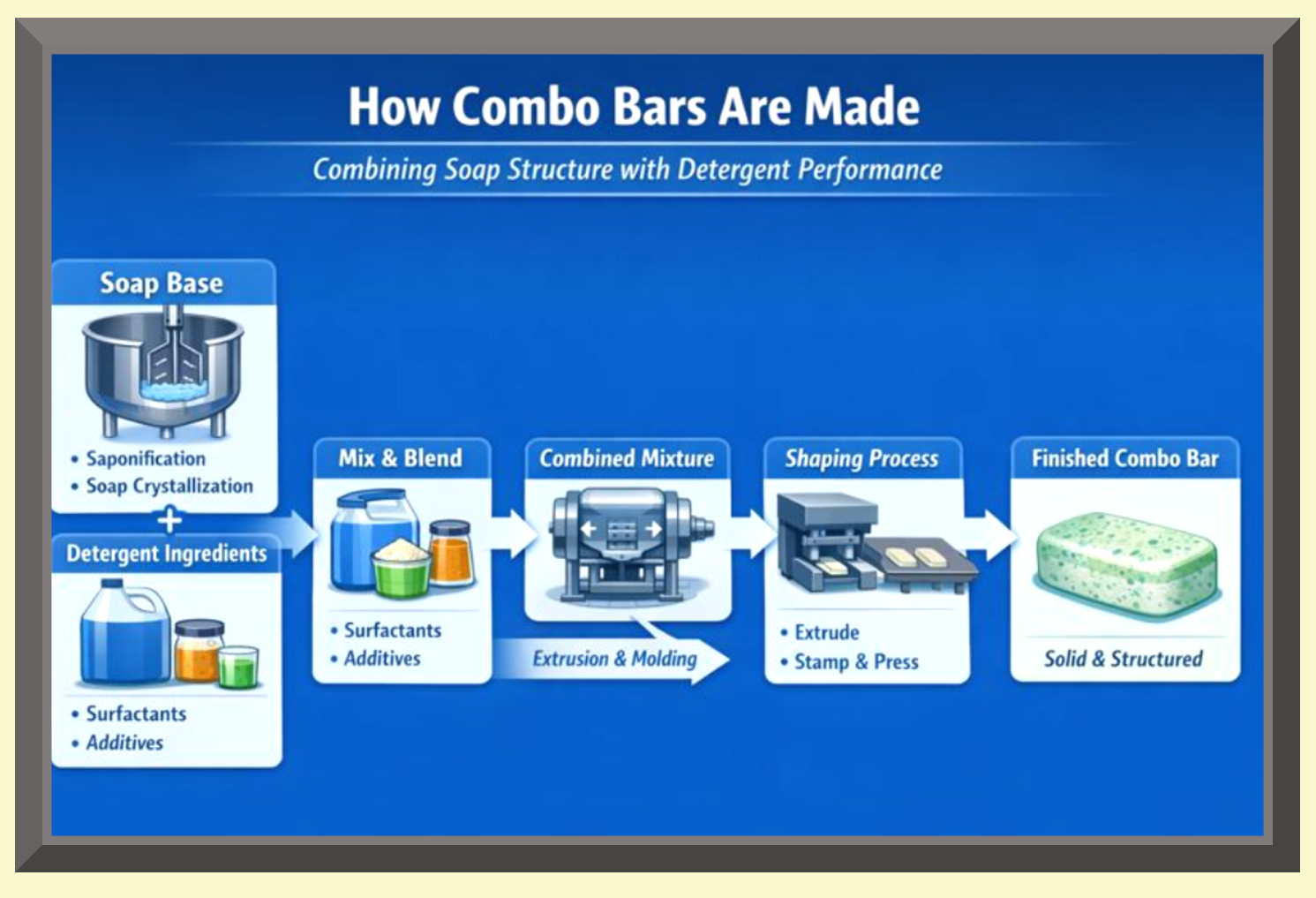
Image AI generated
What Creates Structure in a Combo Bar
Combo bars rely on several contributors to rigidity, with soap serving as the primary structural component.
1. Soap (Primary Structural Component)
Sodium salts of fatty acids naturally crystallize
These crystals interlock under pressure
This creates:
Hardness
Shape retention
Resistance to deformation during extrusion
Without soap, the mixture would not hold together in bar form.
2. Fillers (Bulk & Rigidity Enhancers)
Fillers are added to:
Increase hardness
Control cost
Improve stamping and cutting
Reduce stickiness during processing
Common fillers include:
Talc
Kaolin or other clays
Starch
Sodium sulfate
These materials:
Do not cleanse
Do not react chemically
Act as inert structural bulk
They occupy space within the soap lattice and reduce bar softness.
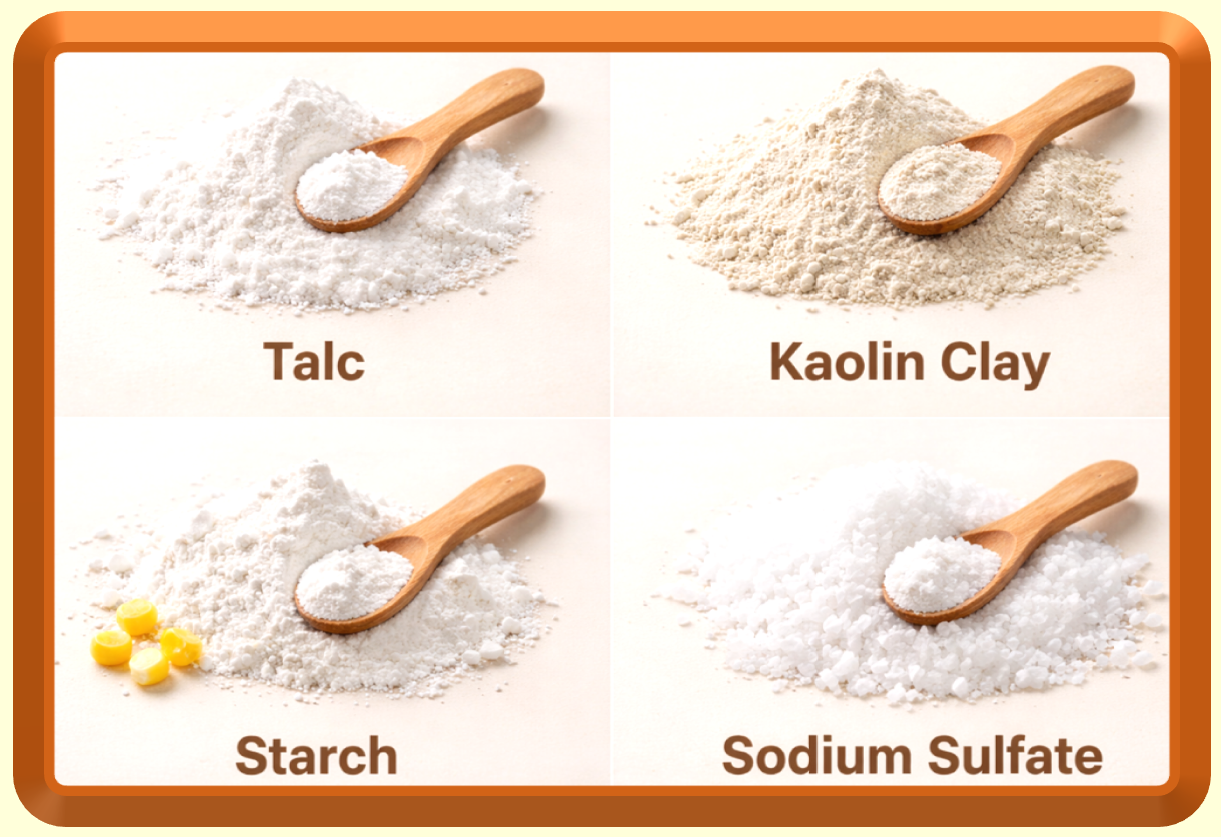
Image AI generated
3. Thickeners & Binders (Mechanical Stability)
Thickeners help stabilize detergents inside the soap matrix.
Common choices:
Fatty alcohols
Stearic acid
Sodium stearate (added intentionally, not just naturally formed)
Waxes (low levels)
Their function:
Increase viscosity during processing
Reduce smear during extrusion
Improve bar durability during use
They do not replace soap structure, but reinforce it.
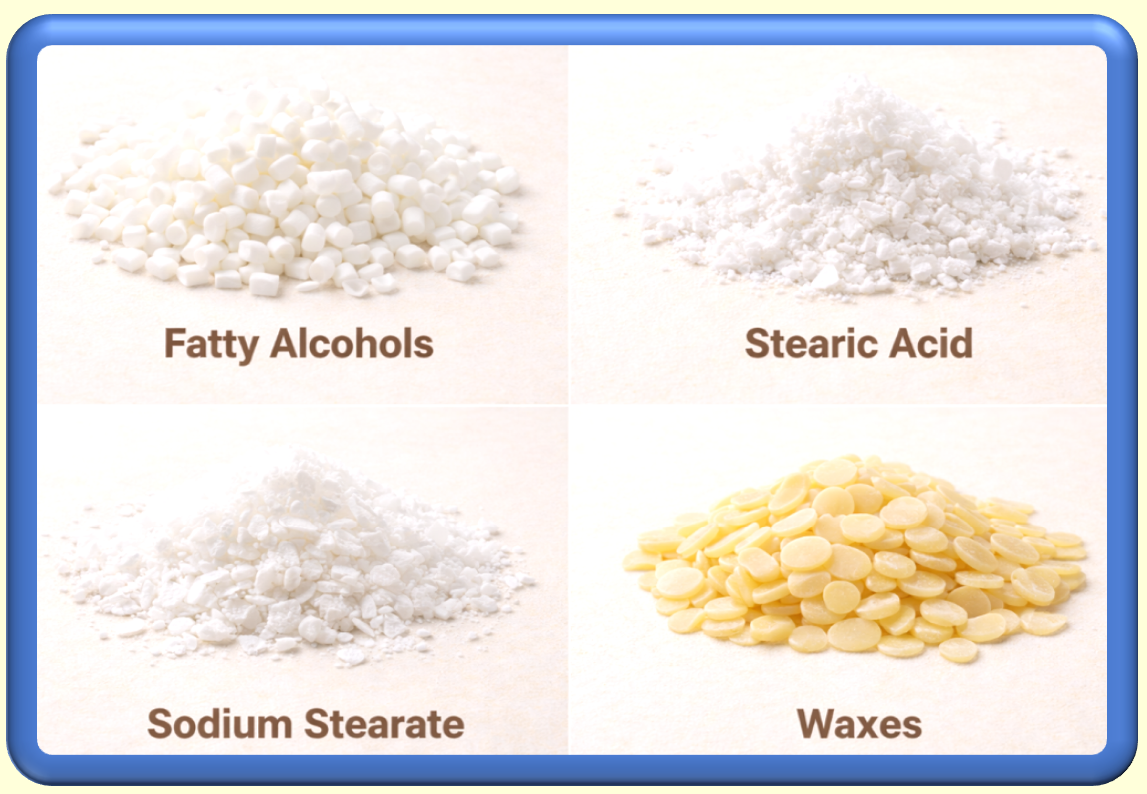
Image AI generated
4. Chelators & Processing Aids (Indirect Structural Role)
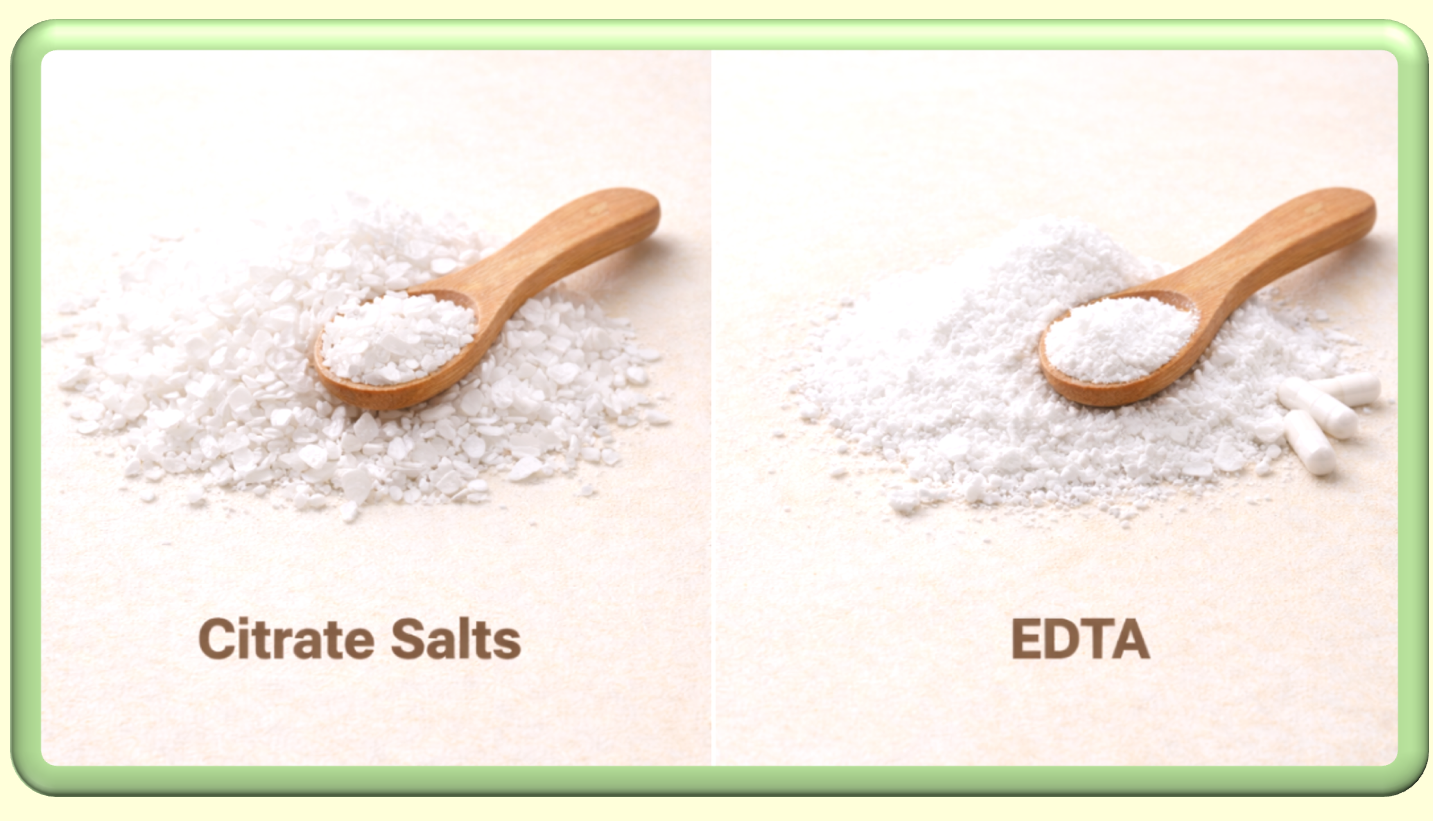
Image AI generated
Chelators do not harden the bar directly, but they:
Control mineral interference
Improve consistency of the finished product
Common examples:
EDTA
Citrate salts
They ensure the bar behaves predictably across different water qualities.
What Is a Chelator—and Why Is It Used in Soap?
A chelator is an ingredient that binds to metal ions naturally present in water, such as calcium, magnesium, and iron. These minerals are common in tap water and are often responsible for what is known as hard water.
In soap, chelators are used not to clean the skin, but to help the soap perform more predictably.
Why Chelators Matter in Soap
When soap is used in mineral-rich water, those minerals can react with soap molecules and form insoluble residues—commonly recognized as soap scum. This reaction can:
Reduce lather
Leave residue on skin, hair, or surfaces
Interfere with consistent rinsing
Chelators work by binding the minerals first, preventing them from reacting with the soap. This allows the soap to do what it was designed to do—clean—without unnecessary interference.
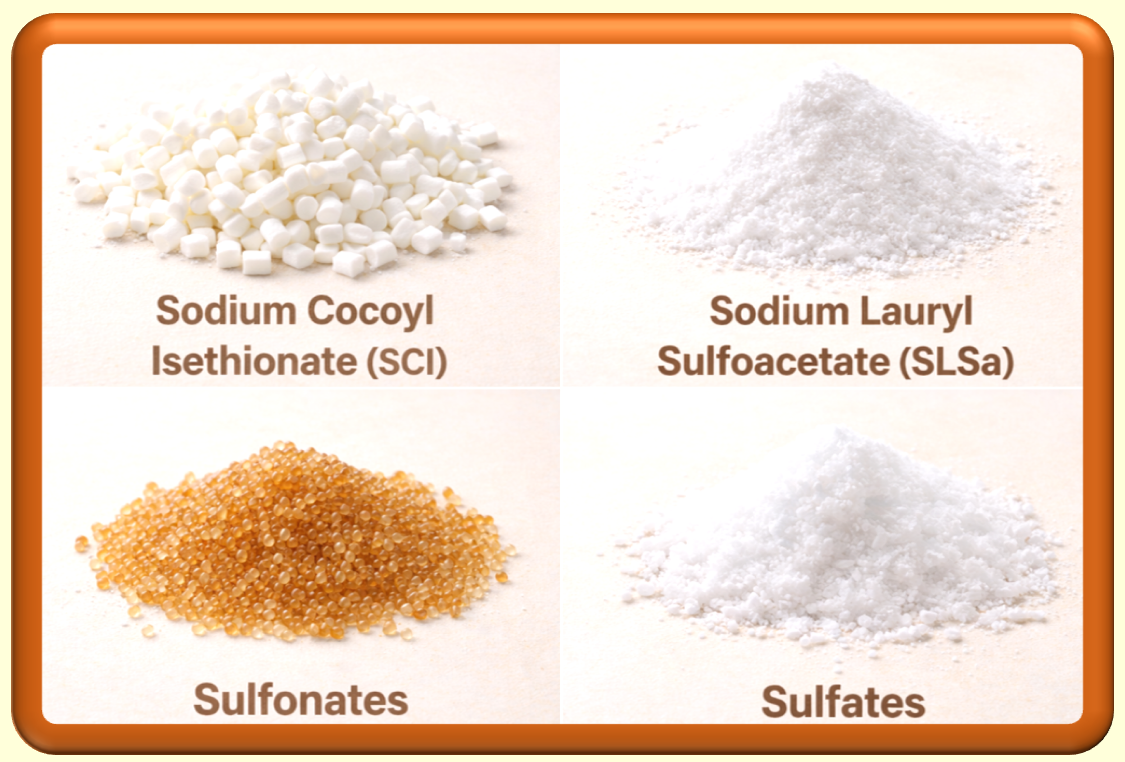
Image AI generated
Detergents Used in Combo Bars
Detergents are added after soapmaking and are physically dispersed, not chemically bonded.
Common detergent types include:
Sodium cocoyl isethionate (SCI)
Sodium lauryl sulfoacetate (SLSa)
Sulfonates
Sulfates
These detergents:
Improve cleansing in hard water
Reduce soap scum formation
Provide more consistent foam
Important distinction:
Detergents do not create structure
They rely on the soap-and-filler matrix to remain solid
Why Compression & Extrusion Are Essential
Combo bars cannot be:
Melted and poured
Cast like glycerin bars
They must be:
Compacted
Mechanically forced into shape
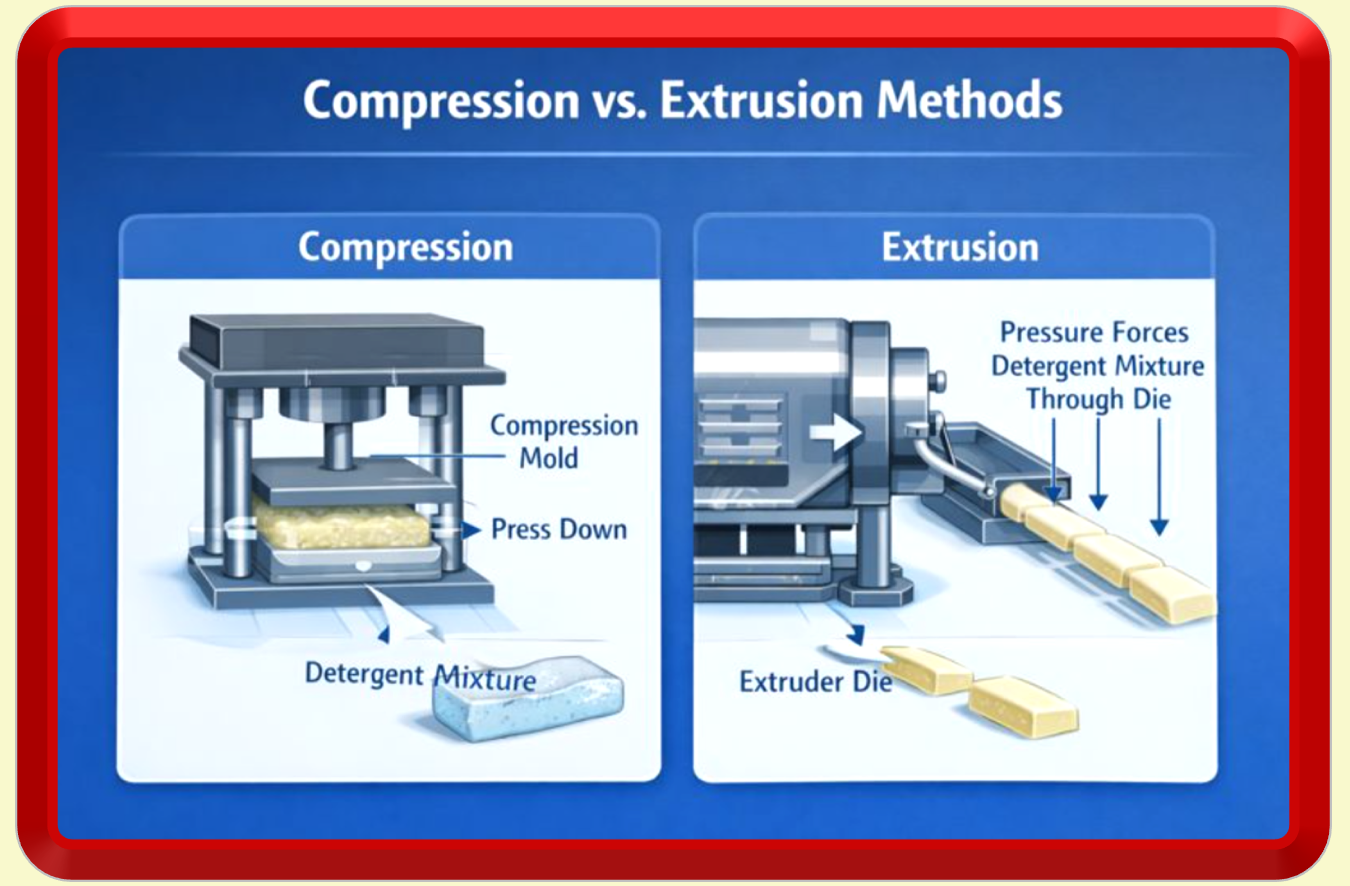
Image AI generated
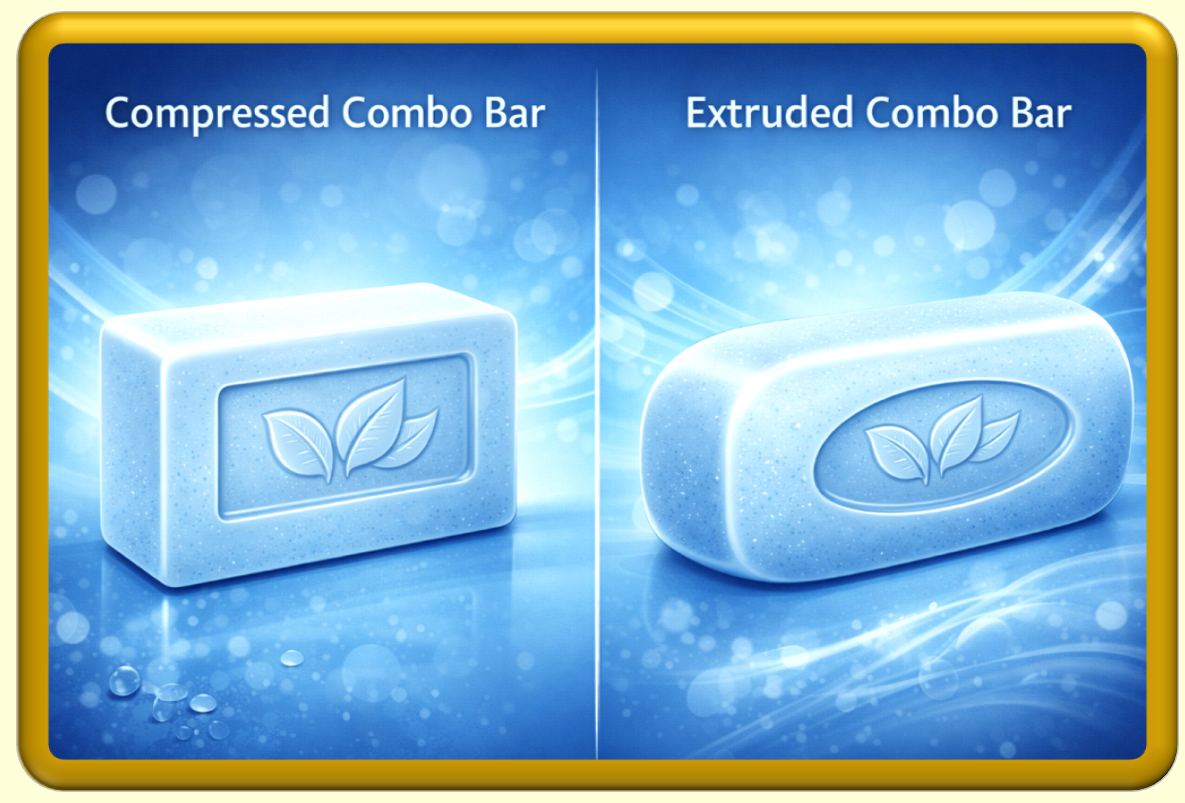
Image AI generated
Soap crystals lock together under pressure, trapping:
Detergents
Fillers
Thickeners
Fragrance and color
This is why combo bars:
Are dense
Are uniform
Hold sharp stamped edges
Conclusion: Why Combo Bars Work the Way They Do
Combo bars are not accidental hybrids—they are deliberately engineered cleansing bars built around the physical properties of true soap. Every component added to a combo bar serves a specific, functional purpose, but none replace soap’s central role.
At the core of every combo bar is soap’s natural crystalline structure, which provides the hardness, shape retention, and mechanical strength required for compression and extrusion. Detergents, fillers, thickeners, and processing aids are incorporated into this structure, not to form it, but to enhance performance, stability, and consistency under a wide range of water conditions and manufacturing demands.
Detergents improve cleansing reliability, especially in hard water. Fillers and thickeners reinforce durability and processing efficiency. Chelators manage mineral interference so the bar behaves predictably from one household to the next. Yet none of these components can stand alone as a solid bar without the structural framework that soap provides.
Understanding how combo bars are made—how they are compressed rather than poured, how structure is created rather than melted, and how each ingredient plays a supporting role—helps clarify what combo bars are and what they are not. They are neither traditional soap nor fully synthetic cleanser bars, but a mechanical and chemical bridge between the two, designed for durability, uniformity, and consistent performance.
This structural reality explains why combo bars look, feel, and behave the way they do—and why soap remains essential to their very existence.
Thank you for taking the time to read through this section.
Combo bars are often discussed in very simplified terms, yet the way they are made—and why they behave the way they do—depends on real chemistry and manufacturing processes that are rarely explained. If you’ve stayed with this topic from beginning to end, you’ve taken a deeper look than most people ever do, and that understanding matters.
My goal is always to share information clearly and honestly, without oversimplification or marketing language. I appreciate your curiosity, your patience, and your willingness to explore how these everyday products are actually created.
If you arrived here from one of my soap pages and would like to read the full story of how synthetic detergent cleansers evolved during the 20th century, click the button to begin at the start of this series.
Educational & Informational Disclaimer
The information provided on this website is for educational and informational purposes only. It is intended to share general knowledge about traditional soapmaking, ingredient behavior, historical context, and manufacturing processes.
Nothing on this site is intended to diagnose, treat, cure, or prevent any disease or medical condition. The products offered are classified as soap under FDA guidelines and are not intended to affect the structure or function of the skin or body. Individual experiences and preferences may vary.
Information presented here should not be considered a substitute for professional medical advice, diagnosis, or treatment. If you have a medical condition, skin concern, or sensitivity, please consult a qualified healthcare professional before using any product.
This website may reference or link to third-party scientific, technical, or educational resources for general learning purposes. These references are provided to support transparency and encourage independent research, not as endorsements or medical guidance.
Click here to read the full disclaimer.
Contact me:
Text:
(479) 651-2760
I typically respond to texts almost immediately unless I’m in the middle of making soap.
As soon as I reach a stopping point, I’ll be sure to check and reply.
I check my email daily and will get back to you as soon as possible.