
The History of Soap and Detergents: The 20th Century and Beyond
Necessity Breeds Invention

Image AI generated
World Wars and the Birth of Detergents:
The two World Wars marked a pivotal moment in the evolution of cleaning products. As blockades restricted access to natural fats and oils—essential ingredients for traditional soap—manufacturers were forced to innovate. The scarcity of these resources led to the development of synthetic detergents, which were made from petrochemicals rather than animal or vegetable fats. Germany, facing severe shortages during World War I, pioneered this breakthrough, creating detergents that would serve as the foundation for modern synthetic cleaning products.
World War II and the Need for Effective Cleaners:
During World War II, the demand for effective cleaning agents intensified, as military forces required solutions that could perform in a variety of environments. This necessity accelerated the global adoption of synthetic detergents, marking a significant shift from traditional soap-making methods to the widespread use of chemically engineered alternatives
Procter & Gamble and the Rise of Detergents
The Detergent Revolution
Procter & Gamble (P&G) played a crucial role in the rise of detergents in the United States. The company’s journey began when an employee visited a German plant in the early 20th century and acquired a sample of synthetic detergent. Initially regarded as insignificant by P&G’s leadership, the project was nearly abandoned. However, a determined chemist within the company, often identified as David “Doc” Byerly, persisted in reverse-engineering the formula and adapting it for American use. His dedication led to the creation of Tide, the world’s first heavy-duty synthetic detergent, which was launched in 1946.
Tide’s Innovation and Legal Strategy:
Detergents and Washing Machines: A Perfect Pairing
Washing Machines and Water Hardness Issues:
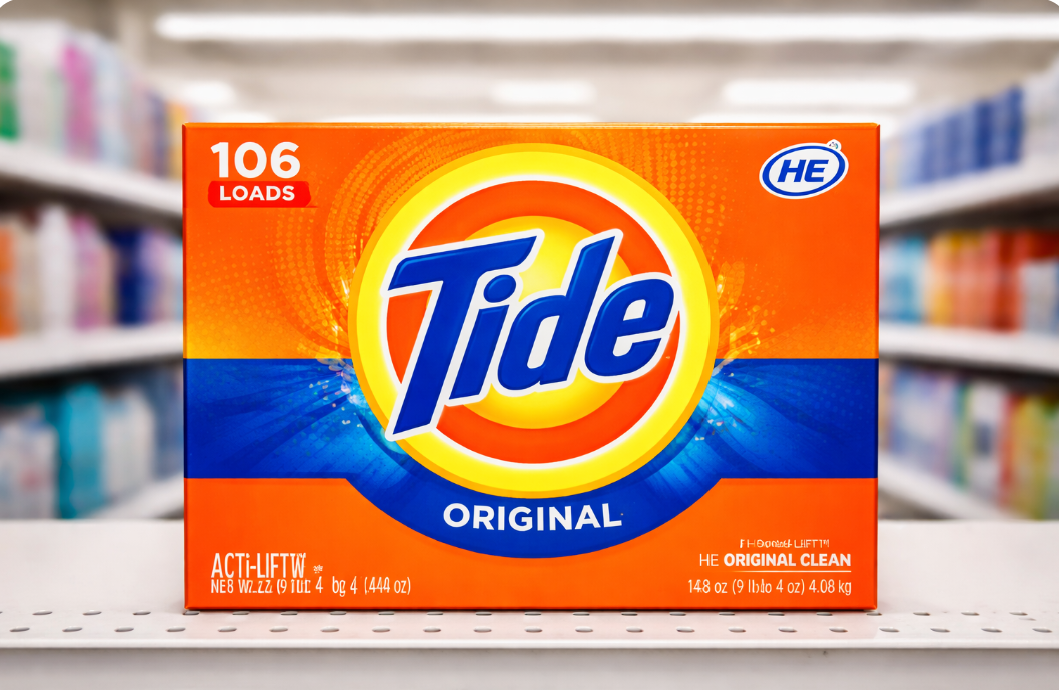
Image AI generated
The rise of washing machines created a demand for cleaning products that could perform well in both hard and soft water. Traditional soap, often hindered by the formation of scum in hard water, struggled to meet this need. This issue arises because soap is made of fatty acid salts that react with calcium and magnesium ions in hard water, forming insoluble soap scum. This residue not only reduced cleaning power but also left a film on fabrics and surfaces.
Synthetic detergents, however, excelled in such conditions. Formulated with surfactants that do not react with calcium and magnesium ions, they maintained their cleaning efficiency regardless of water hardness. Tide became a household name for its effectiveness, while other P&G products found success in niche markets. For instance, a detergent which initially underperformed in washing laundry was rebranded as a baby clothing detergent, carving out a lucrative specialty.
To ensure their innovation was legally sound, P&G collaborated with German companies, securing patents and licenses to produce synthetic detergents. Tide’s groundbreaking cleaning power, combined with its compatibility with modern washing machines, revolutionized laundry practices and set a new global standard for detergents.
Detergents also proved critical in military contexts, . Although the U.S. Navy did not profit financially, it gained significant functional and logistical advantages from the adoption of synthetic detergents, particularly during World War II. Traditional soap performs poorly in hard saltwater, failing to lather and making laundry at sea extremely difficult. Synthetic detergents, however, worked effectively in saltwater, allowing sailors to properly clean uniforms and linens aboard ships.
This shift improved overall hygiene and clothing maintenance, solving persistent problems associated with so-called “saltwater soap.” During World War II, companies such as Procter & Gamble supplied the military with large quantities of cleaning products, including formulations tailored for naval and combat use. While not a source of revenue, detergents provided a crucial operational advantage by enabling cleanliness and efficiency under demanding wartime and maritime conditions.

Image from Shutterstock
The German Origins of an American Detergent
The detergent that would later become a cornerstone of American households did not emerge in isolation. During and after the world wars, German chemists had already developed fully synthetic detergents in response to severe fat and oil shortages. A sample of this detergent chemistry ultimately reached the United States, where it drew limited initial interest from executives at Procter & Gamble. One chemist, however, recognized its significance and quietly studied the material in depth. Using this German innovation as a technical foundation, P&G was able to adapt and scale a detergent suitable for American manufacturing and consumers, leading to the launch of Tide. Behind this moment were the direct contributions of Heinrich Gottlob Bertsch, whose work established synthetic detergents, and the indirect influence of Fritz Hofmann, whose advances in large-scale synthetic chemistry helped make such materials possible. Click below to explore the full historical and scientific context behind this transition.
Other Key Developments and Innovations
Beyond Laundry: The Growing Influence of Detergents
Dishwashing Detergents and the Dishwasher Boom:
The rise of dishwashers in the mid-20th century created a new demand for specialized cleaning products. Traditional soap, which often left residue and struggled in hard water, was unsuitable for these machines. Detergents specifically formulated for dishwashers quickly became a staple, solidifying detergents’ dominance in the cleaning industry. As dishwashers became more common in households, the need for effective, residue-free dishwashing solutions grew, leading to the development of detergent tablets and gels that could tackle grease and grime while ensuring clean, spotless dishes.
Ivory Soap’s Unique Float:
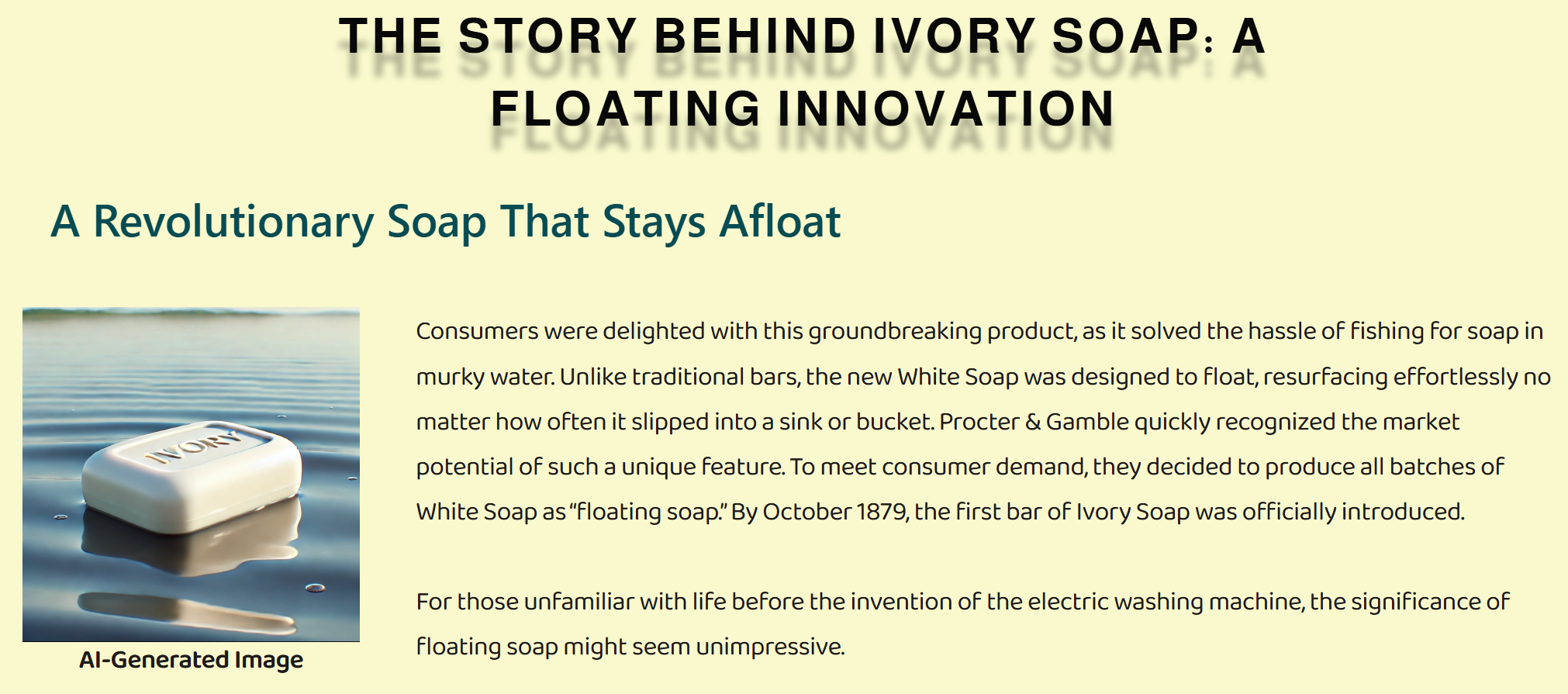
One of P&G’s most iconic products, Ivory Soap, became famous for its unique ability to float. Legend has it that this characteristic was discovered accidentally in the late 19th century when a worker forgot to turn off a soap-mixing machine, allowing air to be whipped into the batch. The resulting soap bars, lighter and more buoyant, were marketed as a product that wouldn’t sink in water—a practical advantage that resonated with consumers and contributed to Ivory Soap’s enduring popularity. This unexpected innovation not only set the product apart but also reinforced its branding as a pure, gentle soap, solidifying its place in American households for generations.
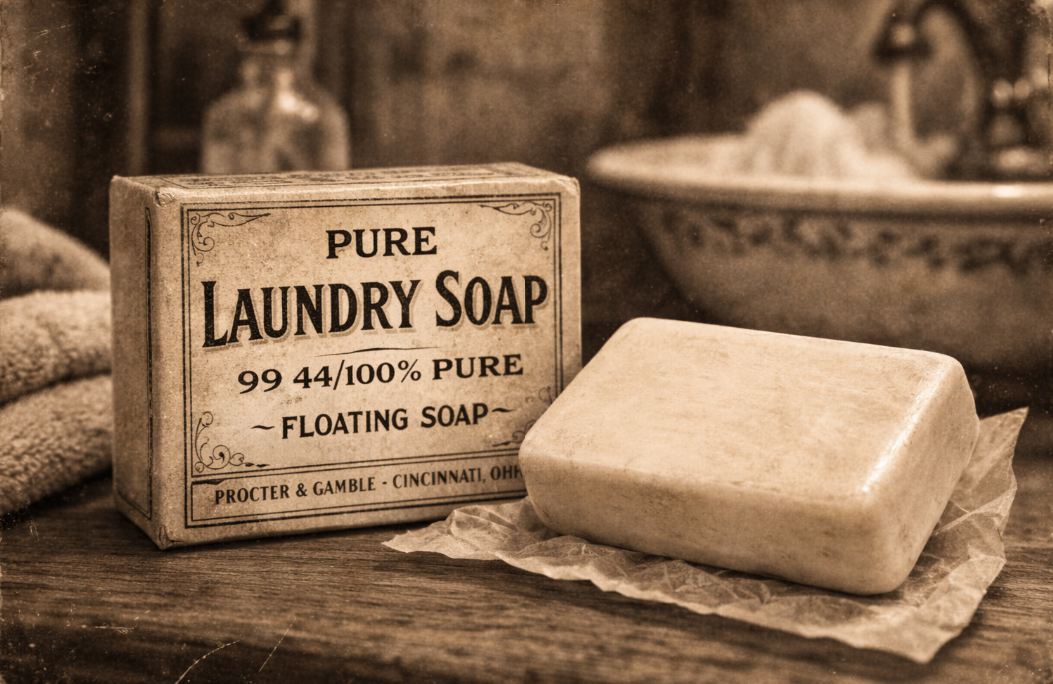
Image AI generated
Environmental Concerns and Solutions.

Image AI generated
Environmental Impact and the Shift Toward Sustainability
While detergents brought convenience and efficiency, they also introduced significant environmental challenges. Early synthetic detergents were often non-biodegradable, causing pollution in waterways and contributing to long-term ecological damage. One of the major culprits was phosphates, commonly used in detergents, which promoted algae blooms. These blooms depleted oxygen levels in water, harming aquatic life and disrupting ecosystems.
Responding to Environmental Concerns:
By the late 20th century, growing public awareness of these environmental issues led to widespread outcry and stricter regulations. In response, manufacturers began reformulating detergents, developing biodegradable ingredients and phosphate-free alternatives to reduce their environmental impact. This shift was essential in promoting sustainability within the cleaning industry, and ongoing innovations continue to focus on creating effective cleaning products that minimize harm to the environment.
The Return to Traditional Soap
The Resurgence of Traditional Soap
Artisanal Soap in Modern Times:
Despite the dominance of synthetic detergents, traditional soap has seen a resurgence in recent years. Consumers increasingly seeking natural, eco-friendly alternatives are turning to artisanal soaps made using time-honored techniques. These products, often crafted with nourishing oils and free from synthetic additives, meet the rising demand for sustainable and skin-friendly options. Handmade soaps, celebrated for their craftsmanship and authenticity, have become a symbol of the movement toward more conscious, environmentally mindful consumption.
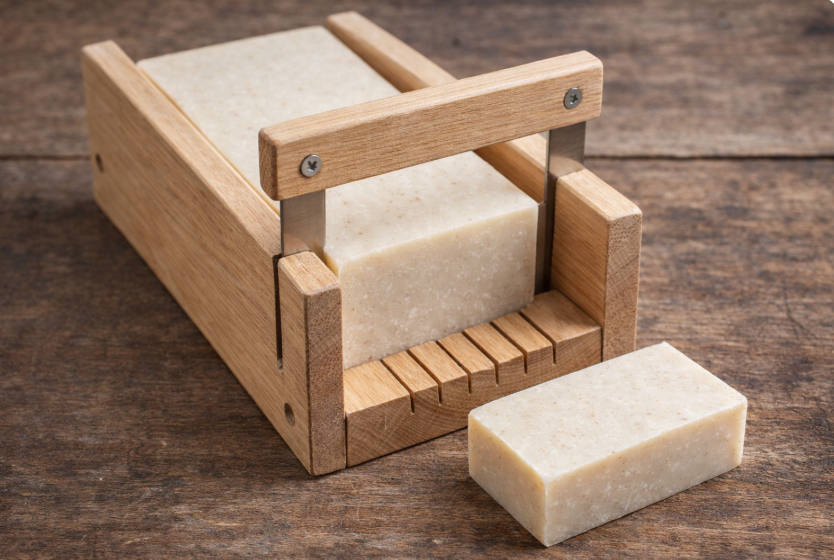
Image AI generated
Other Innovations and Trends in the 20th Century and Beyond
A Broadening Spectrum of Cleaning Products
Specialized Cleaning Products for Niche Markets:
The industry expanded to include a broad array of products, from stain removers to antibacterial soaps, each designed to meet specific consumer needs.
The Growth of Liquid Soaps and Body Washes:
The introduction of liquid soap in the 20th century provided convenience and hygiene benefits, leading to its widespread adoption in both households and public spaces.
Globalization and Accessibility:
Advances in production and distribution helped make soaps and detergents more accessible worldwide, contributing to improved hygiene standards across diverse cultures.
Conclusion: A Reflection on Soap’s Impact and Journey
A Special Note to Our History Enthusiasts
Reflection on Soap’s Fascinating History:
To those of you who’ve made it this far—thank you! You are the kind of people who appreciate the fascinating journey of soap through the centuries, just as I do. The history of soap is more than just about cleaning; it’s a story of innovation, creativity, and the resilience of humankind. From ancient civilizations to modern breakthroughs, it’s remarkable how something as simple as soap has shaped our daily lives, economies, and cultures.
Continued Exploration and Appreciation for History:
For those who delight in exploring the past, the twists and turns of soap’s history mirror the ever-evolving landscape of human ingenuity. I hope you’ve enjoyed this deep dive as much as I did writing it and uncovering the extraordinary moments that have made soap the essential part of our world it is today. Keep exploring, keep questioning, and never stop marveling at the wonder of history!
Educational & Informational Disclaimer
The information provided on this website is for educational and informational purposes only. It is intended to share general knowledge about traditional soapmaking, ingredient behavior, historical context, and manufacturing processes.
Nothing on this site is intended to diagnose, treat, cure, or prevent any disease or medical condition. The products offered are classified as soap under FDA guidelines and are not intended to affect the structure or function of the skin or body. Individual experiences and preferences may vary.
Information presented here should not be considered a substitute for professional medical advice, diagnosis, or treatment. If you have a medical condition, skin concern, or sensitivity, please consult a qualified healthcare professional before using any product.
This website may reference or link to third-party scientific, technical, or educational resources for general learning purposes. These references are provided to support transparency and encourage independent research, not as endorsements or medical guidance.
Click here to read the full disclaimer.
Contact me:
Text:
(479) 651-2760
I typically respond to texts almost immediately unless I’m in the middle of making soap.
As soon as I reach a stopping point, I’ll be sure to check and reply.
I check my email daily and will get back to you as soon as possible.