Detergents arose from necessity during World War I, when soap production collapsed due to the loss of fats and oils. Their development was driven by availability, not performance.
WWI → WWII: The Birth of Synthetic Detergents (Germany)
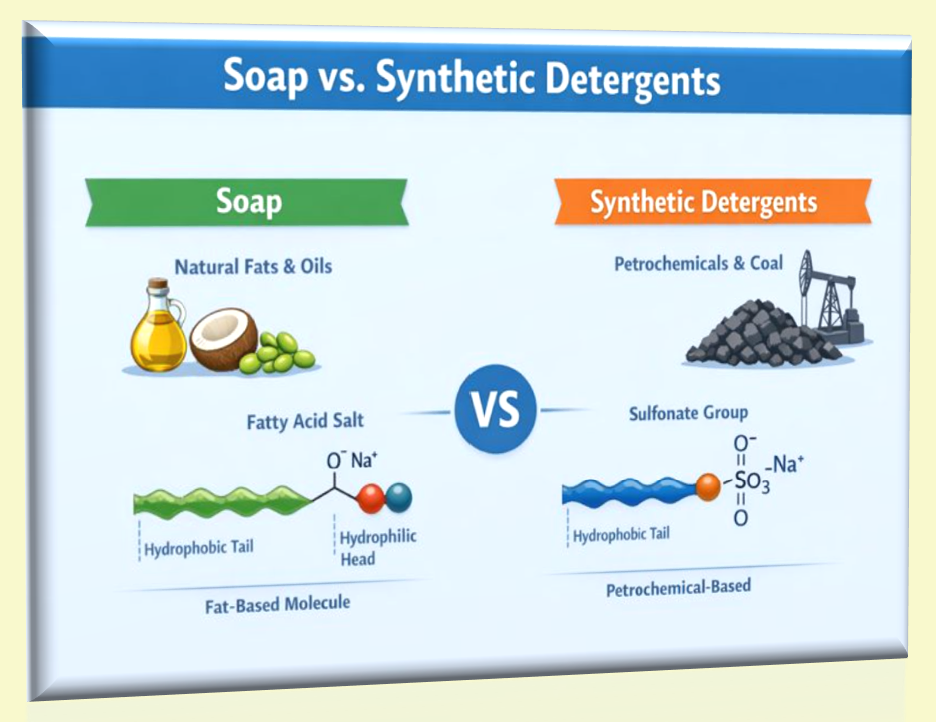
Image AI generated
1914–1918 | World War I: The Soap Crisis
Problem
British naval blockades cut Germany off from:
Animal fats
Tropical vegetable oils (coconut, palm)
Traditional soap production collapsed
Scientific Response
Chemists turn to coal tar, lignite, and petroleum fractions
Early experiments with fat-free cleaning agents
Detergents are conceptualized, but not yet practical
Key Takeaway
WWI creates the need for detergents — not because soap was bad, but because soap was unavailable.
1919–1931 | Interwar Chemistry: From Emergency to Innovation
Germany invests heavily in industrial organic chemistry
Expansion of:
Sulfonation techniques
Alkyl chain synthesis
Large-scale chemical reactors
This is where Fritz Hofmann matters indirectly:
Synthetic rubber research advances polymer & petrochemical infrastructure
Detergent chemistry depends on the same feedstocks and scaling methods
Key Takeaway
Detergents become technically possible once petrochemical chemistry matures.”
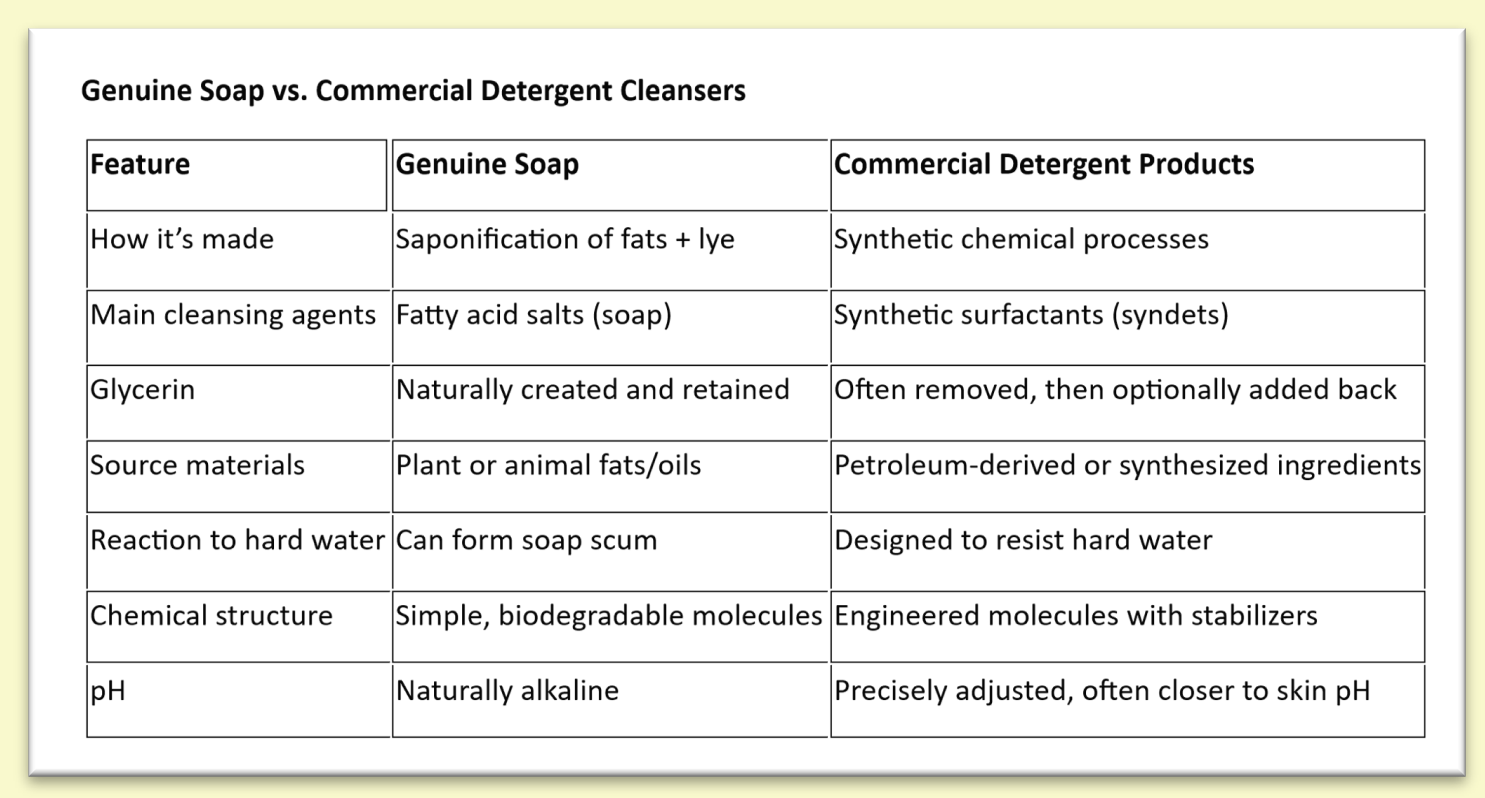
The clickable box to the right explains what glycerin is and why it is commonly removed during large-scale soap and combo bar manufacturing.
Synthetic surfactants integrated into civilian and military supply chains
1939–1945 | World War II: Detergents Become Strategic
Soap fats reserved for:
Food
Lubricants
Explosives (glycerol)
Detergents used for:
Uniform laundering
Hospitals
Civilian hygiene
By war’s end, detergent chemistry is fully entrenched
Key Takeaway
WWII makes detergents permanent.”
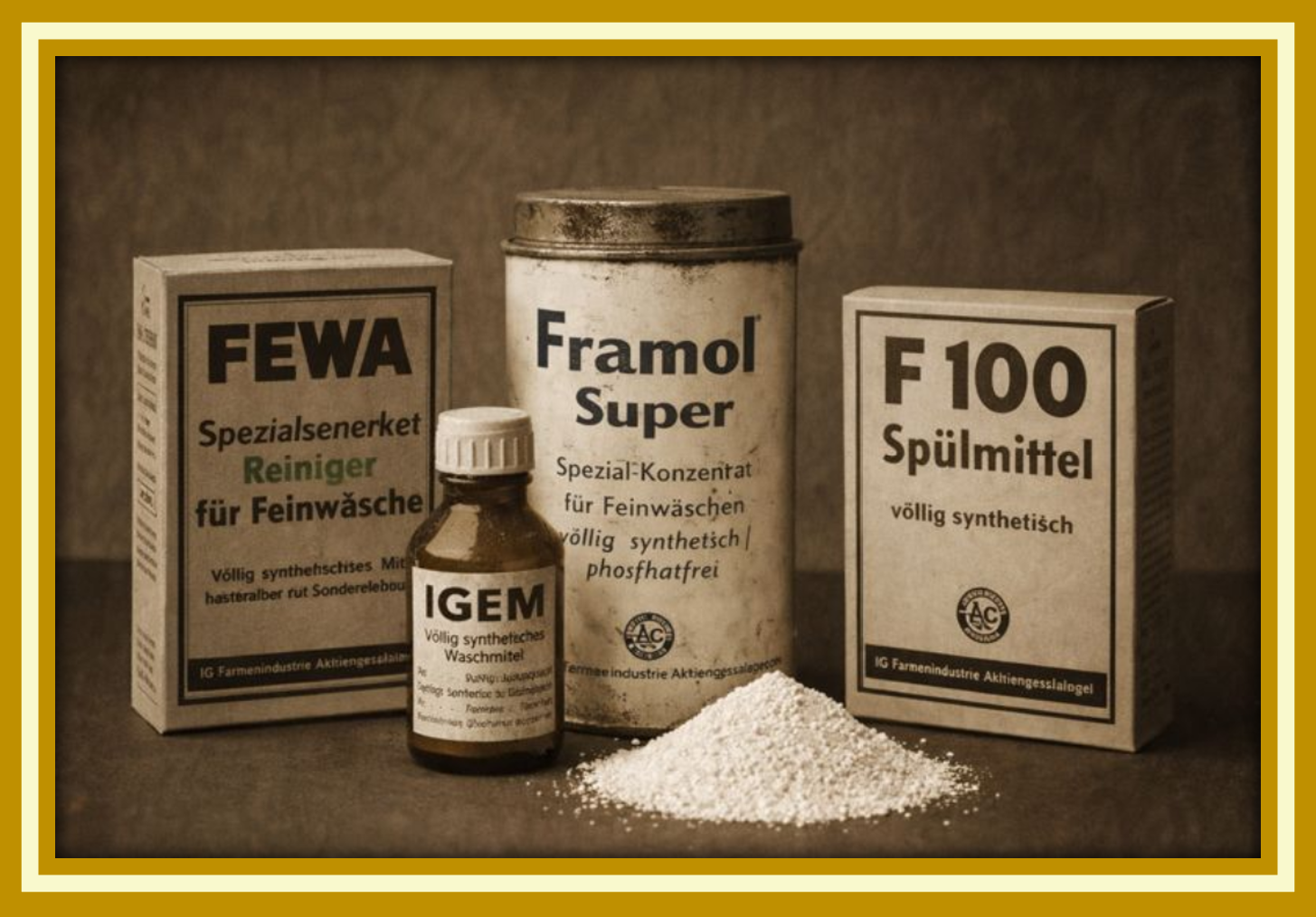
Image AI generated
Image AI generated
Why This History Matters Today
Understanding how synthetic detergents emerged helps clarify many of the claims still made about cleansing products today. Soap and synthetic detergents are not interchangeable, either historically or chemically. Detergents were born out of wartime necessity, developed specifically to function when fats and oils were unavailable, not because soap was ineffective or inherently harsh. Soap chemistry, by contrast, is older, simpler, and biologically sourced, relying on naturally occurring fats rather than industrial feedstocks.
This distinction is central to many modern detergent myths. Detergents were engineered to perform under conditions where traditional soap chemistry could not—such as hard water, material shortages, and large-scale industrial use. Over time, this technical advantage was reframed through marketing as a narrative of gentleness or physiological superiority. Recognizing the true origins of detergent chemistry helps place modern discussions about soap versus detergent behavior, pH claims, rinse-off reality, and promotional language into their proper historical and scientific context.
If you arrived here from one of my soap pages and would like to read the full story of how synthetic detergent cleansers evolved during the 20th century, click the button to begin at the start of this series.
The information provided on this website is for educational and informational purposes only. It is intended to share general knowledge about traditional soapmaking, ingredient behavior, historical context, and manufacturing processes.
Nothing on this site is intended to diagnose, treat, cure, or prevent any disease or medical condition. The products offered are classified as soap under FDA guidelines and are not intended to affect the structure or function of the skin or body. Individual experiences and preferences may vary.
Information presented here should not be considered a substitute for professional medical advice, diagnosis, or treatment. If you have a medical condition, skin concern, or sensitivity, please consult a qualified healthcare professional before using any product.
This website may reference or link to third-party scientific, technical, or educational resources for general learning purposes. These references are provided to support transparency and encourage independent research, not as endorsements or medical guidance.