
The Legacy of Soap-Making in the Levant
Introducing the Levant
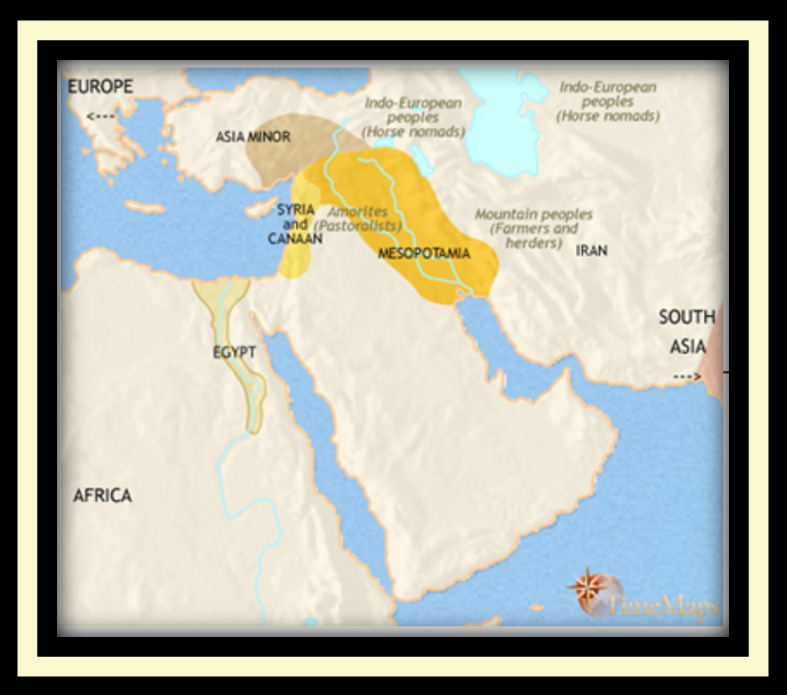
Ancient Levant / Israel / Juda Map Brewminate
A Crossroads of Cultures and Commerce
The Levant is a historical and geographical region along the eastern Mediterranean, encompassing modern-day Israel, Jordan, Lebanon, Syria, Palestine, and parts of southern Turkey. Its name, derived from the French word levant, meaning “rising,” refers to the land of the rising sun in the east. Historically, the Levant has served as a vital crossroads for cultures, religions, and civilizations, strategically bridging Mesopotamia, Egypt, and the wider Mediterranean world. This region, characterized by fertile lands, diverse landscapes, and access to key trade routes, was home to influential civilizations such as the Phoenicians, Canaanites, and ancient Israelites. Their enduring cultural legacy continues to shape the historical narrative of the Mediterranean.
The Levant as a Crossroads of Cultures and Commerce
Soap-Making in the Levant: A Historical Overview
From roughly 3500 BCE to 600 CE, the Levant played a pivotal role in the exchange of ideas, goods, and technologies across the ancient Middle East. Early soap-like substances, crafted from combinations of animal fats, oils, and alkaline materials such as wood ash or plant ash, were used primarily for cleaning textiles and possibly for medicinal purposes. These rudimentary cleansing agents reflected the broader influence of Mesopotamian and Egyptian practices, while also showcasing innovations unique to the Levant’s rich natural resources and thriving trade networks.
The Levant’s strategic position facilitated cultural exchanges that spread early soap-making knowledge throughout the Mediterranean. Although soap in this period was predominantly used for practical tasks like laundering or treating skin conditions, its production underscores the interconnectedness of ancient civilizations. It highlights the shared advancements in hygiene and domestic life that arose from this vibrant and influential region.
The Levant as a Crossroads of Cultures and Commerce
Nestled between mountains, deserts, and the Mediterranean Sea, the Levant served as both a bridge and a barrier for ancient travelers and traders. This narrow stretch of land connected Mesopotamia, Egypt, and the Mediterranean, making it a vibrant crossroads of commerce and culture. The region’s dynamic trade routes, including the famed King’s Highway, facilitated the exchange of ideas and materials, enabling the blending of Mesopotamian, Egyptian, and Mediterranean influences. These interactions shaped local practices, including early soap-making traditions. The Levant’s access to diverse natural resources and its thriving trade networks contributed to the development of soap-like substances that would later influence broader traditions across the ancient world.
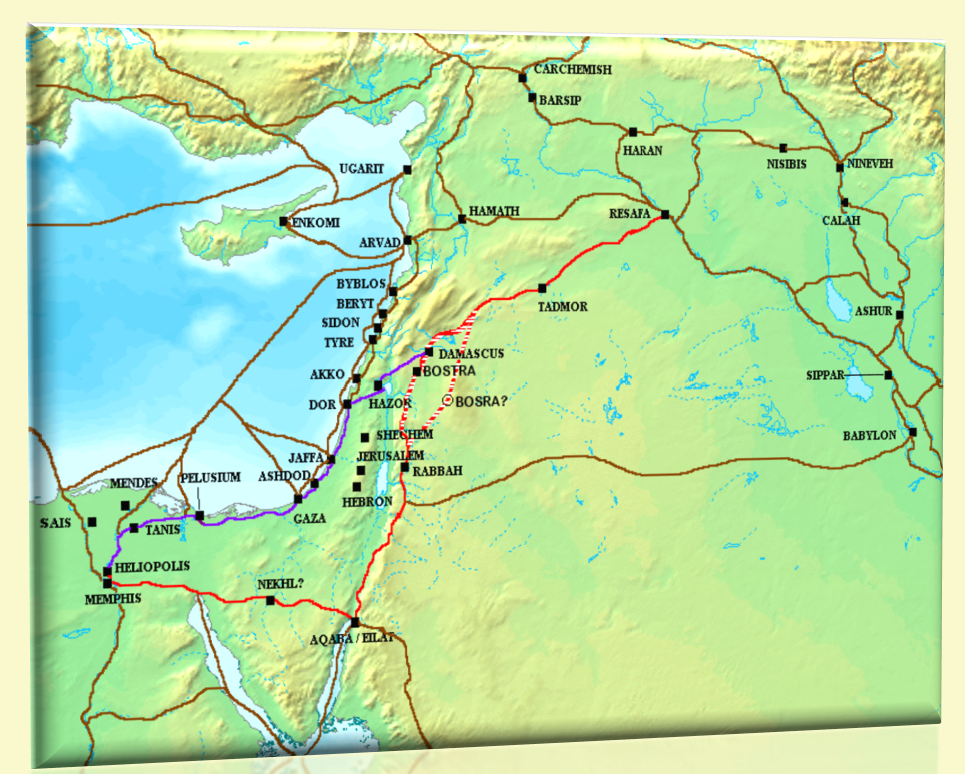
Kings Highway & trade roads Wickipedia
Early Soap-Making in the Levant
Origins and Early Soap-Making in the Levant
Spanning thousands of years, the history of soap-making in the Levant positions the region as one of the earliest centers of soap production. Ancient civilizations such as the Canaanites, Phoenicians, and Israelites played pivotal roles in developing and refining soap-making techniques using locally available materials. These innovations not only improved hygiene within the region but also spread through extensive trade networks to neighboring cultures.
Canaanites (2000 BCE–1200 BCE)
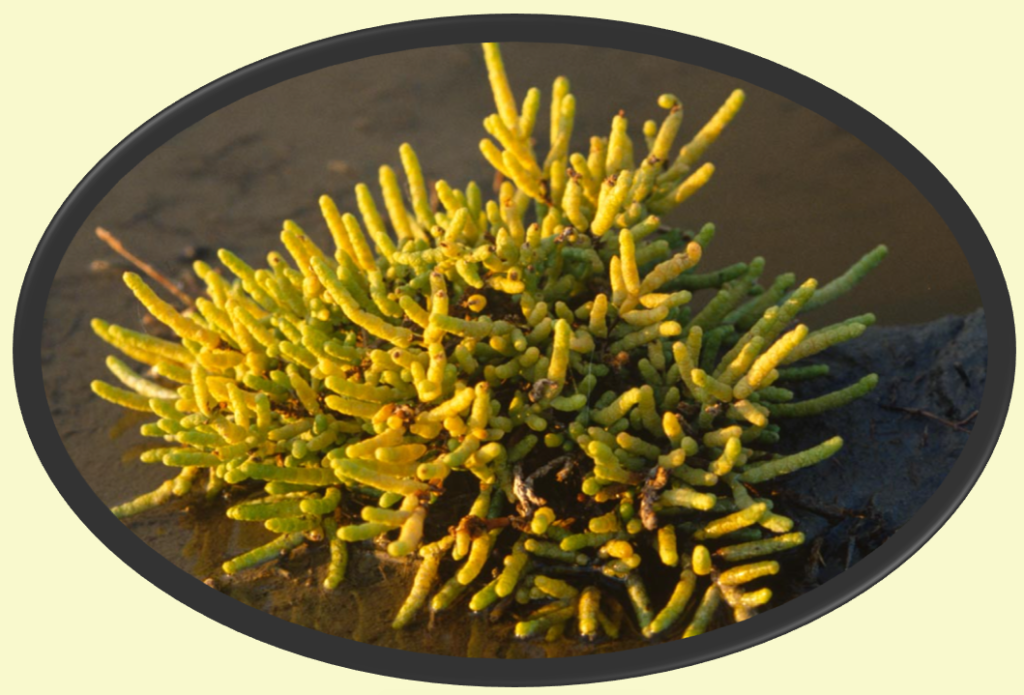
The Canaanites, inhabitants of the coastal Levant, encompassed areas of modern-day Israel, Palestine, Lebanon, and parts of Syria. Cities like Ugarit (modern Ras Shamra, Syria) thrived as hubs of trade and culture, fostering the exchange of goods and ideas. Archaeological evidence from Ugarit reveals early soap-making methods where fats were combined with plant ashes, particularly from Salsola kali (saltwort). This plant, rich in sodium carbonate, provided the alkali necessary for producing soap-like substances. These practices, likely influenced by Egyptian and Mesopotamian traditions, were essential for laundering and basic hygiene, laying the groundwork for more sophisticated soap production.
Israelites (1000 BCE–500 BC
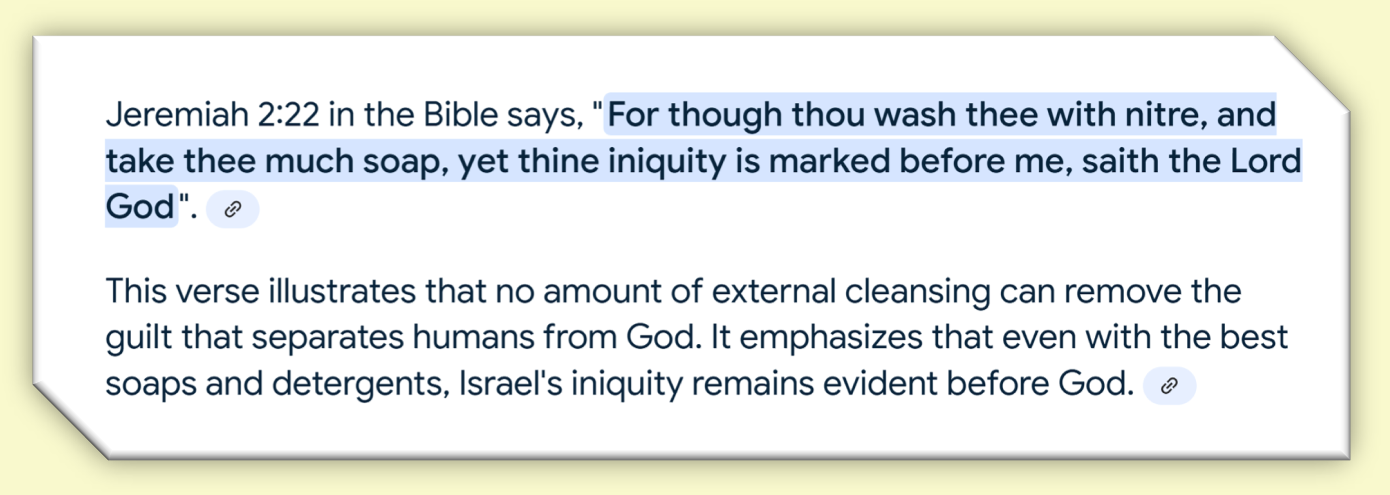
Kings Highway & trade roads Biblicalcyclopedia
The Israelites, residing in the region now known as Israel and Palestine, developed soap-making practices influenced by neighboring civilizations. Biblical references, such as the mention of “niter” (an alkaline substance) and “soap” in the Book of Jeremiah (2:22), indicate an early awareness of cleansing agents. The Israelites produced soap-like substances by combining animal fats with plant ashes, which were primarily used for laundering garments and treating skin conditions. While their methods were less advanced than those of the Phoenicians, they represented an important contribution to the evolving soap-making traditions of the Levant.
Phoenicians (1500 BCE–300 BC)
The Phoenicians, famed as master seafarers and traders, occupied coastal cities like Tyre, Sidon, and Byblos in modern Lebanon and Syria. Building on Canaanite techniques, they advanced soap-making by utilizing fats and plant ashes, particularly from saltwort. By around 600 BCE, their soap-like products were employed not only for textile laundering but also for personal hygiene. The Phoenicians’ expansive maritime trade networks helped disseminate their soap-making knowledge across the Mediterranean, leaving a lasting impact on civilizations in North Africa, Europe, and beyond.
The Role of Natural Resources in Soap Production
The Role of Olive Oil and Alkaline Plants in Soap Production
In the Levant, olive oil, a staple of the region’s agriculture, became a cornerstone of early soap-making traditions. Renowned for its mild yet effective cleansing properties, olive oil provided an ideal fat for crafting soap, offering a nourishing base that was both practical and readily available. Its abundance in the Levant made it an accessible resource for local artisans and communities.
Complementing olive oil in soap production were alkaline ashes derived from plants such as saltwort (barilla) and other native flora. These ashes, rich in sodium carbonate, were crucial for producing lye, a key ingredient in the saponification process. Together, these natural materials allowed for the creation of an early form of soap that served dual purposes—maintaining personal hygiene and cleaning textiles.
As civilizations in the Levant grew more sophisticated, so too did their soap-making practices. Levantine soap-makers refined their techniques, blending their deep knowledge of chemistry with the region’s abundant resources. This mastery not only elevated the quality of their soaps but also set standards that resonated across the Mediterranean, shaping the evolution of soap-making traditions for centuries to come.
Archaeological Discoveries and Evidence
Discoveries in Israel
Image from here
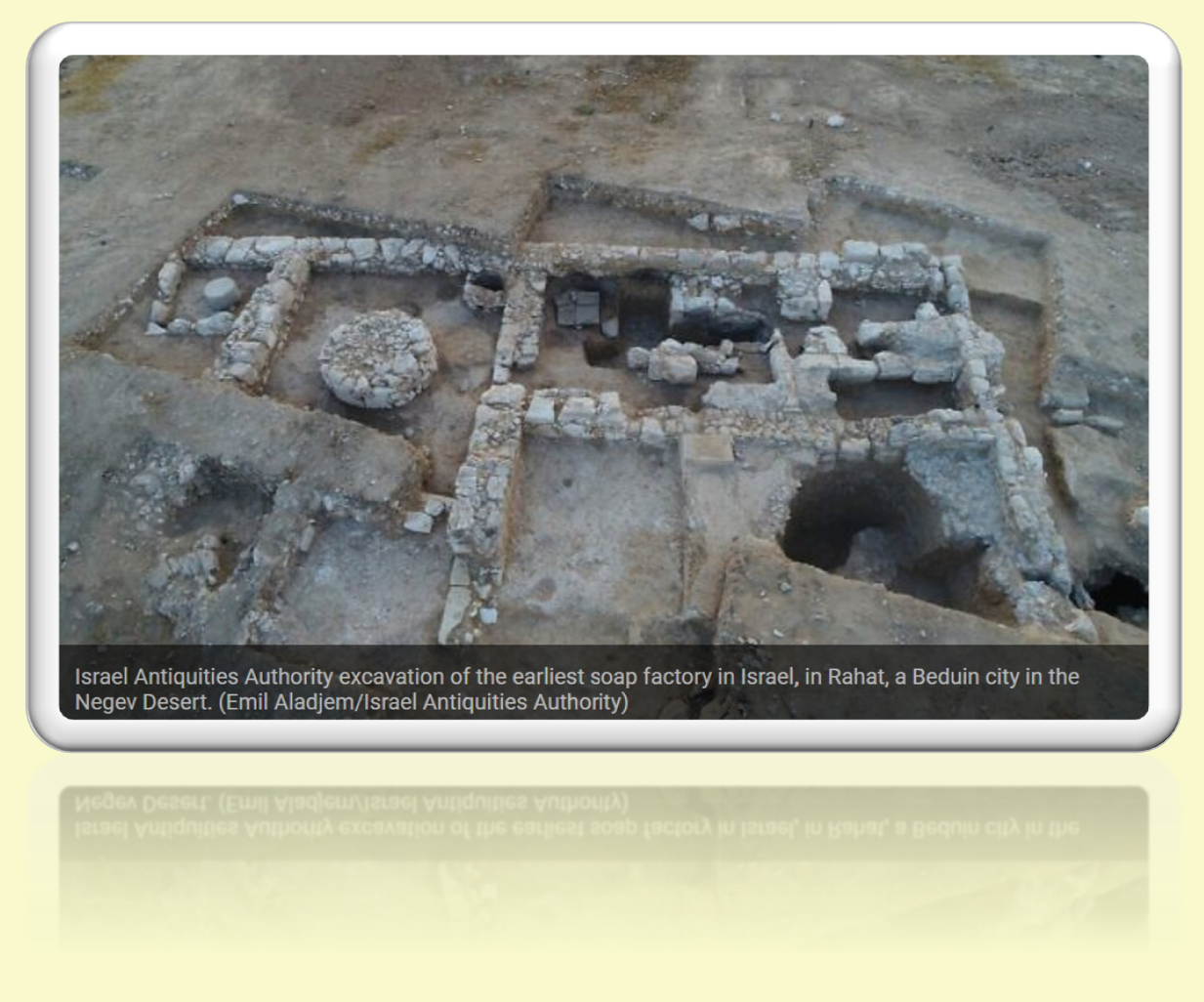
In a groundbreaking find, archaeologists from the Israel Antiquities Authority, along with local high school students, unearthed the first identifiable soap factory in Israel, dating back approximately 1,200 years. Discovered in Rahat, a Bedouin city in the Negev Desert, the factory reveals that soap production during this period primarily relied on olive oil. This reflects the growing influence of Islam in the region, as olive oil-based soap became increasingly significant in Islamic hygiene practices.
For more details, you can explore this fascinating discovery in full on this webpage.
Saltwort, a plant abundant in sodium carbonate, was a critical component of early soap-making as a reliable source of alkali for producing lye. The combination of animal fats and alkaline plant ash at Tel Dor reflects advanced production techniques and aligns with similar practices across the Levant. This discovery underscores the region’s innovative understanding of chemistry and its role in refining soap-making methods.
These findings not only confirm the Levant’s significance as an early hub for soap production but also demonstrate its contributions to hygiene and trade practices that shaped neighboring civilizations. Through its advancements in soap-making, the Levant solidified its position as a key player in the historical evolution of cleanliness and commerce.
Archaeological Evidence of Soap-Making in the Levant
The origins of soap-making in the Levant, though challenging to pinpoint precisely, are supported by archaeological findings that suggest the use of soap-like substances as early as the Bronze Age. Artifacts such as clay cylinders containing traces of soap-like materials have been unearthed at ancient Levantine sites, providing intriguing insights into early soap production practices. However, it was during the classical period that soap-making in the region became more sophisticated, eventually culminating in the renowned Aleppo soap tradition of Syria.
Tel Dor Excavation
One of the most significant archaeological discoveries highlighting the complexity of ancient soap-making in the Levant is an early soap factory uncovered at Tel Dor, a prominent port city on the Mediterranean coast of modern-day Israel. Dating back to the 7th century BCE, this site offers clear evidence of large-scale soap production during the Iron Age. Excavations revealed essential infrastructure for soap-making, including vats and remnants of key ingredients such as animal fats and plant ash, particularly from saltwort.
The Enduring Legacy of Levantine Soap-Making
The soap-making traditions of the Levant have left a lasting imprint on hygiene practices across the Mediterranean and beyond. Through the far-reaching trade networks of the Phoenicians, Canaanites, and Israelites, the knowledge of soap-making spread to North Africa, Southern Europe, and the broader Mediterranean basin, influencing early personal care routines and hygiene standards in these regions.
A prime example of this enduring heritage is Aleppo soap, a centuries-old product crafted in Syria from olive oil and laurel oil. Known for its gentle, nourishing qualities, Aleppo soap gained widespread acclaim and continues to be a symbol of Levantine soap-making excellence. The recipe has been carefully preserved through generations, underscoring the cultural and historical significance of this time-honored craft.
Soap-Making in the West Bank of Palestine
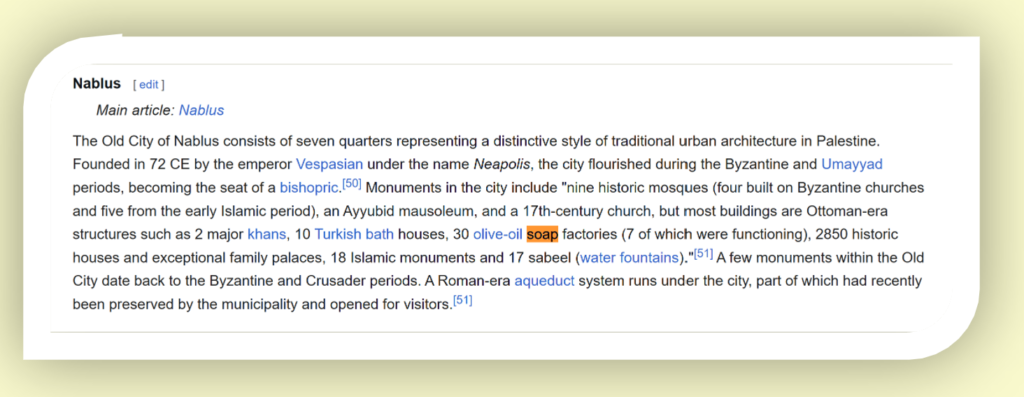
The old city of Nablus in the West Bank of Palestine was historically a prominent center for olive oil soap production. At its peak, Nablus housed around 30 soap factories, as documented in historical records. Although the exact date of these references remains unclear, only a handful of factories remain operational today, continuing the rich tradition of olive oil soap-making in the region. (source, click here) and source, click here)
Conclusion: Echoes of Innovation
The history of soap-making in the Levant stands as a testament to ancient ingenuity, resourcefulness, and the dynamic cross-cultural exchanges that shaped its development. From the Canaanites’ innovative use of plant ashes and fats, to the Phoenicians’ refined techniques and the Israelites’ knowledge of alkaline substances, the Levant became a cradle of soap-making innovation. These practices not only advanced hygiene in the ancient world but laid the foundation for the global soap-making industry that would evolve over centuries.
Today, traditional soaps like Aleppo soap continue to embody the Levant’s lasting contributions to the craft. The region’s innovations have left an indelible mark on the history of personal care and hygiene, echoing through the centuries and enriching global soap-making traditions.
Why These Maps?
In tracing the origins of soap, I found myself drawn to the geography of Babylonia, Egypt, and the Levant—three regions that reveal a fascinating web of cultural and technological exchange. These maps not only pinpoint the birthplaces of early soap-making but also illuminate the interconnectedness of ancient civilizations. Trade routes crisscrossed these lands, carrying more than just goods—they transported ideas, techniques, and innovations, including the craft of soap-making.
While it’s easy to assume that soap originated independently in each region, these maps challenge us to consider how shared knowledge and resources played a role. Babylonia’s early alkali-rich cleansers, Egypt’s meticulous use of oils and ash for cleaning, and the Levant’s evolving soap traditions weren’t isolated developments. Together, these lands wove a tapestry of early soap-making practices, highlighting the profound influence of geography and trade on one of humanity’s most essential crafts.
These maps serve as a visual reminder to rethink our assumptions about everyday items like soap. By exploring this shared history, we gain a deeper appreciation for how interconnected the ancient world truly was.
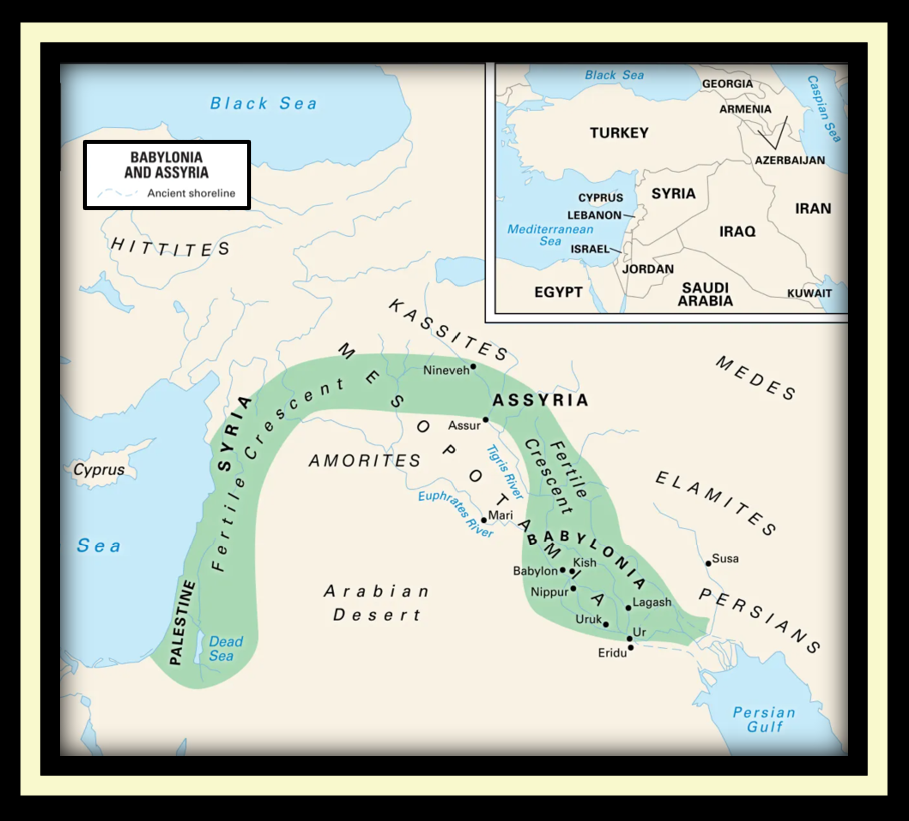
Babylonian Map Britannica
Ancient Levant / Israel / Juda Map Brewminate
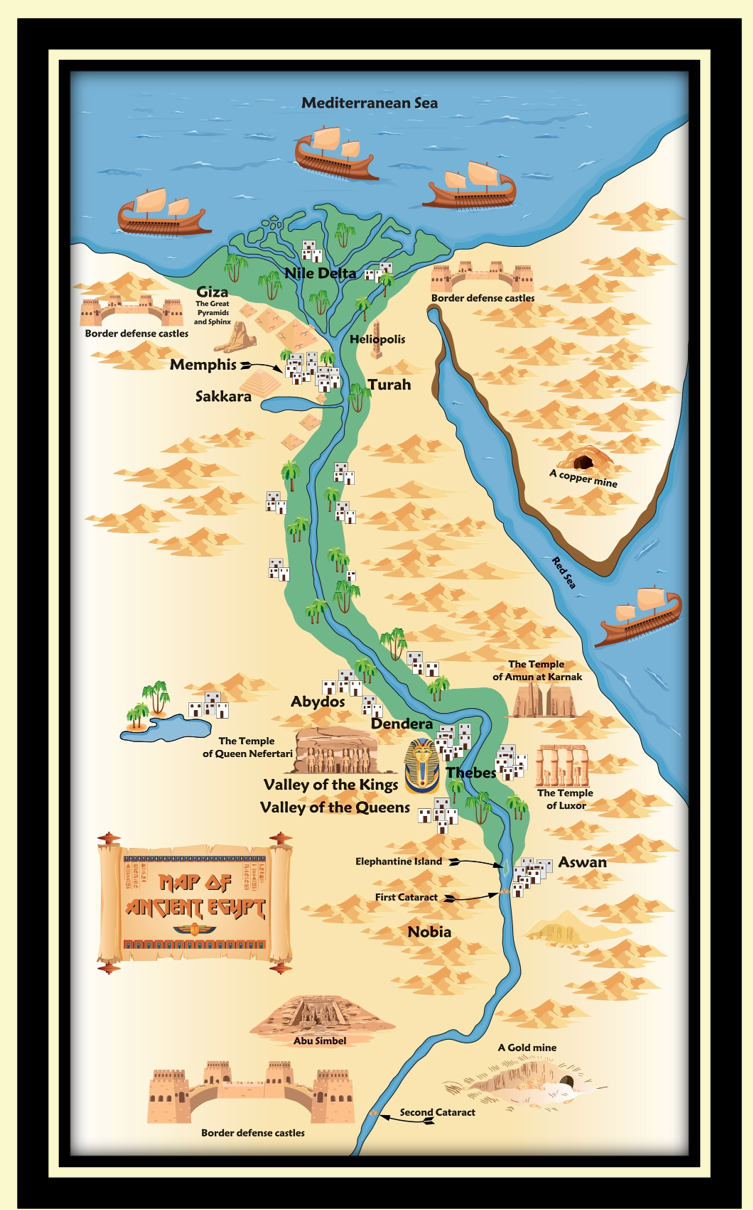
Ancient Egypt Map Shutterstock
Educational & Informational Disclaimer
The information provided on this website is for educational and informational purposes only. It is intended to share general knowledge about traditional soapmaking, ingredient behavior, historical context, and manufacturing processes.
Nothing on this site is intended to diagnose, treat, cure, or prevent any disease or medical condition. The products offered are classified as soap under FDA guidelines and are not intended to affect the structure or function of the skin or body. Individual experiences and preferences may vary.
Information presented here should not be considered a substitute for professional medical advice, diagnosis, or treatment. If you have a medical condition, skin concern, or sensitivity, please consult a qualified healthcare professional before using any product.
This website may reference or link to third-party scientific, technical, or educational resources for general learning purposes. These references are provided to support transparency and encourage independent research, not as endorsements or medical guidance.
Click here to read the full disclaimer.
Contact me:
Text:
(479) 651-2760
I typically respond to texts almost immediately unless I’m in the middle of making soap.
As soon as I reach a stopping point, I’ll be sure to check and reply.
I check my email daily and will get back to you as soon as possible.