
From Riversides to Palatial Bathhouses: The Roman Journey in Hygiene and Leisure
Introduction
Ancient Rome’s bathing practices underwent a fascinating evolution, progressing from simple riverside baths and modest bathhouses to elaborate public bath complexes by the 1st and 2nd centuries AD. These grand structures became lively social hubs, underscoring the Roman emphasis on leisure and communal life. Alongside this shift in architecture, Roman hygiene practices advanced, with soap-like substances beginning to complement the traditional oil anointing—a significant step in the development of personal care. This transformation reshaped Roman cityscapes and highlighted bathing as a vital aspect of daily life and social interaction.
Are you ready to journey through the evolving landscapes and customs of Ancient Rome? Picture yourself waking early to prepare for a day that includes the ritual of communal bathing. As you read, let your mind wander through the intricate and luxurious traditions of Roman bathhouses, uncovering the time-honored practices that defined their culture.
Location
At its peak, Ancient Rome spanned vast territories around the Mediterranean Basin and beyond. While its core was the Italian Peninsula—especially the region of Latium, where the city of Rome was founded—the empire expanded to include lands across Europe, North Africa, and the Middle East.
For a vivid sense of just how extensive the Roman Empire grew, click on the map below. This interactive map journeys through Rome’s history, moving year by year from 400 BC to 1917. You’ll also see how the landscape evolved over time, tracing the regions and modern-day countries that once fell under Rome’s influence and revealing how the empire’s legacy shaped Europe and the surrounding lands.

The Evolution of Bathing Practices
EARLY BATHING PRACTICES: The Rivers and Lakes
Before the establishment of modest bathhouses in the 3rd century BC, Romans relied on natural water sources—rivers, streams, and public fountains—for their bathing needs. Bathing in these open-air environments was a straightforward affair, with individuals using their hands or simple cloths to cleanse themselves. While these natural settings fulfilled basic hygiene requirements, they lacked the amenities and comforts that later defined Roman bathhouses. Despite its simplicity, this early practice laid the foundation for a transformative cultural evolution, where bathing progressed from a purely practical activity to a sophisticated and social experience central to Roman life.
Communal Bathing in Lakes
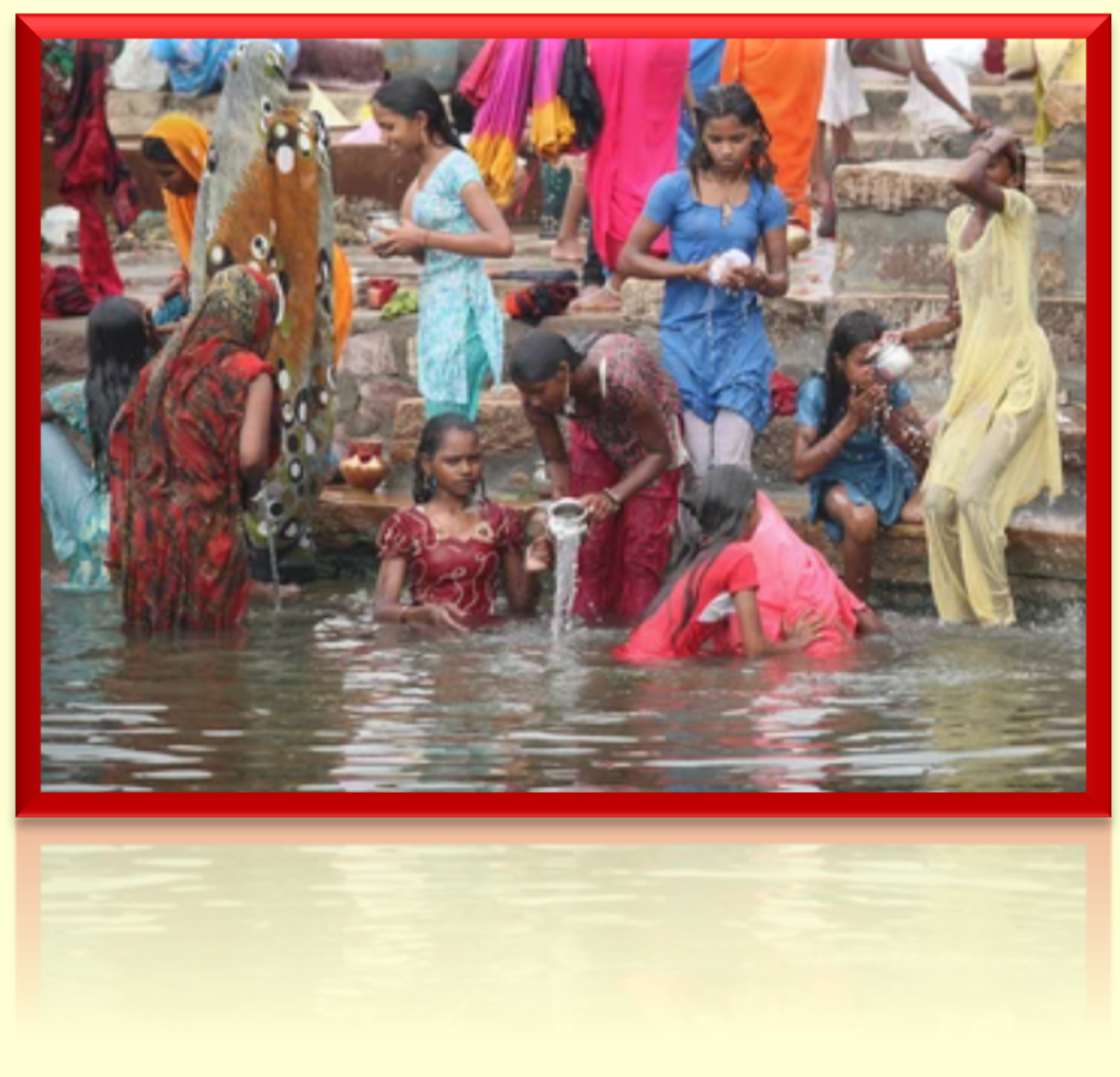
Communal bathing in lakes
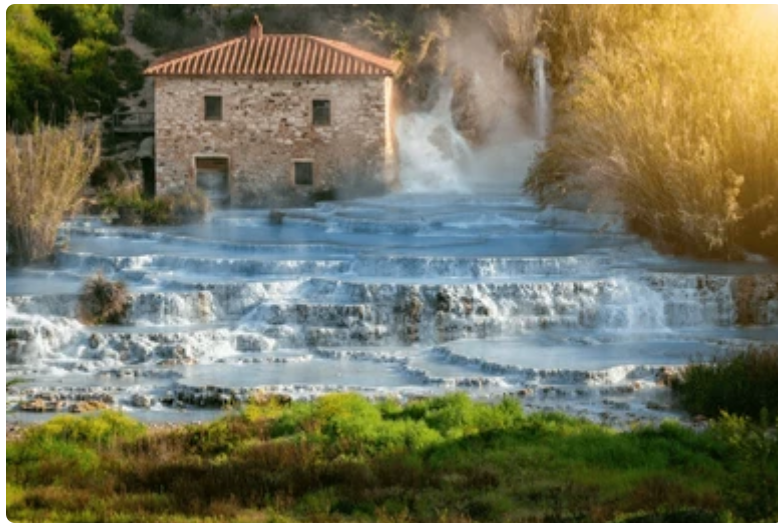
Hot Spring Waterfall in Tuscany, Italy – Le Cascate del Mulino
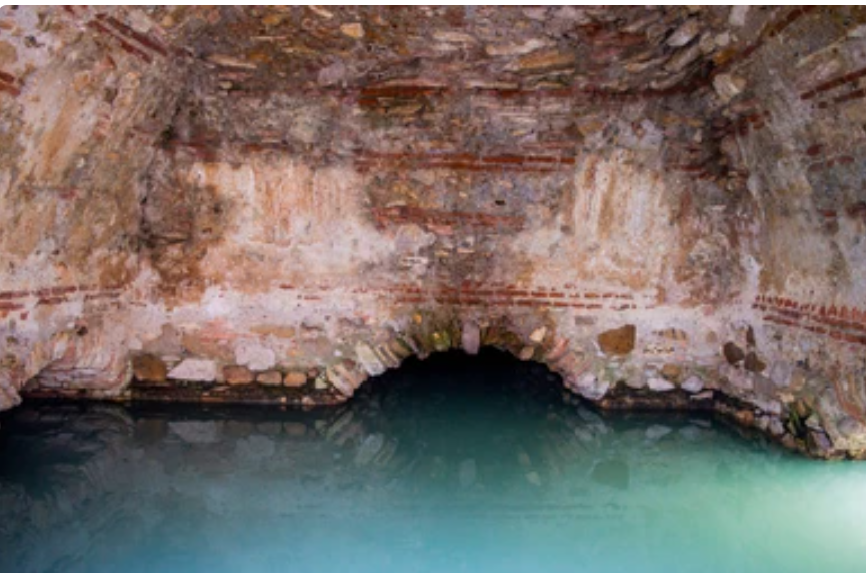
Thermal Cave in Casares, Spain
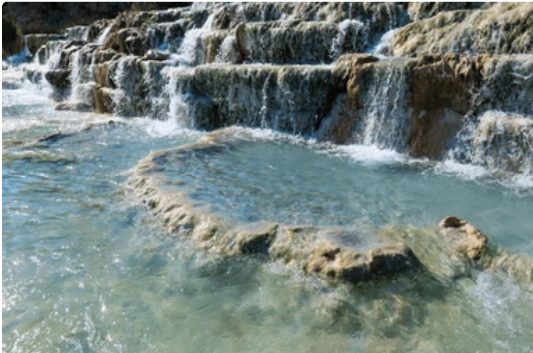
Thermal Spa in Tuscany, Italy
Before the advent of bathhouses, communal bathing in lakes provided a natural, accessible option for early Romans seeking cleanliness and refreshment
Le Cascate del Mulino in Tuscany, Italy: A natural hot spring with a cascading waterfall, offering a glimpse into the types of warm, mineral-rich waters the Romans cherished.
An ancient thermal cave in Casares, Spain, used by Romans for bathing. Such caves were sought after for their warmth and the therapeutic qualities of their waters.
A thermal spa in Tuscany, Italy, reminiscent of the warm showers and mineral baths that Romans valued. Natural hot springs like this inspired the design of many Roman bathhouses.
BATHHOUSES—MODEST AND PRACTICAL
By the 3rd century BC, as Rome transitioned from the Republican to the Imperial Period, modest bathhouses began to appear across the city. These early establishments catered to the practical needs of Roman citizens, offering both hot and cold water for cleansing. Attendants were often present to assist bathers, ensuring a functional and efficient bathing experience.
Interestingly, soap at this time was not a staple of personal hygiene but was primarily reserved for laundry and wool cleaning. Instead, bathing rituals centered around oiling the skin, a practice that persisted until the late 200s AD, when soap began to gain prominence in Roman hygiene routines.
ROMAN BATHING RITUAL
The bathing customs of ancient Romans evolved from simple river washes to intricate rituals centered around anointing, a practice that combined cleansing with relaxation and socializing. This multi-step process was not just about hygiene but also about indulging in a ceremonial routine that reflected Roman sophistication.
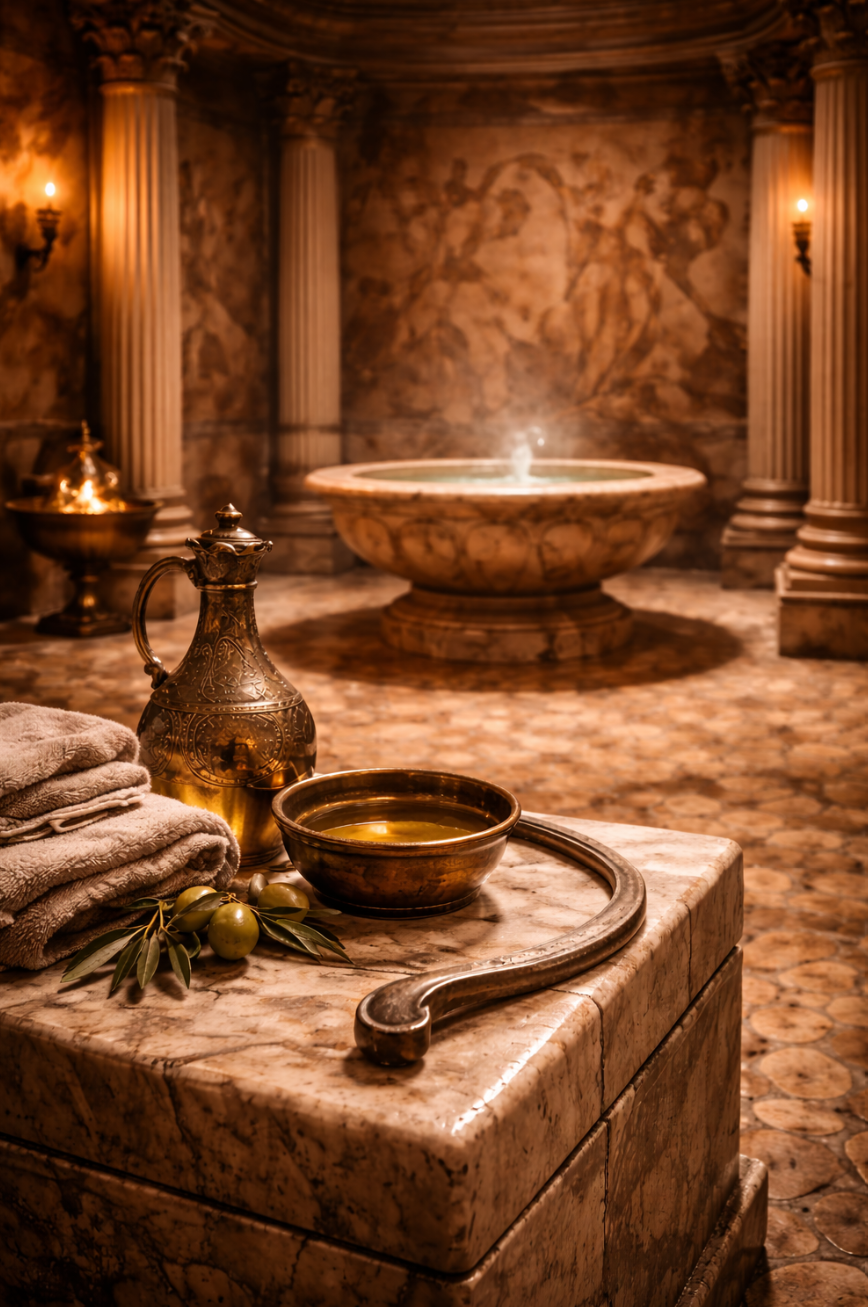
TEPIDARIUM | Image AI generated
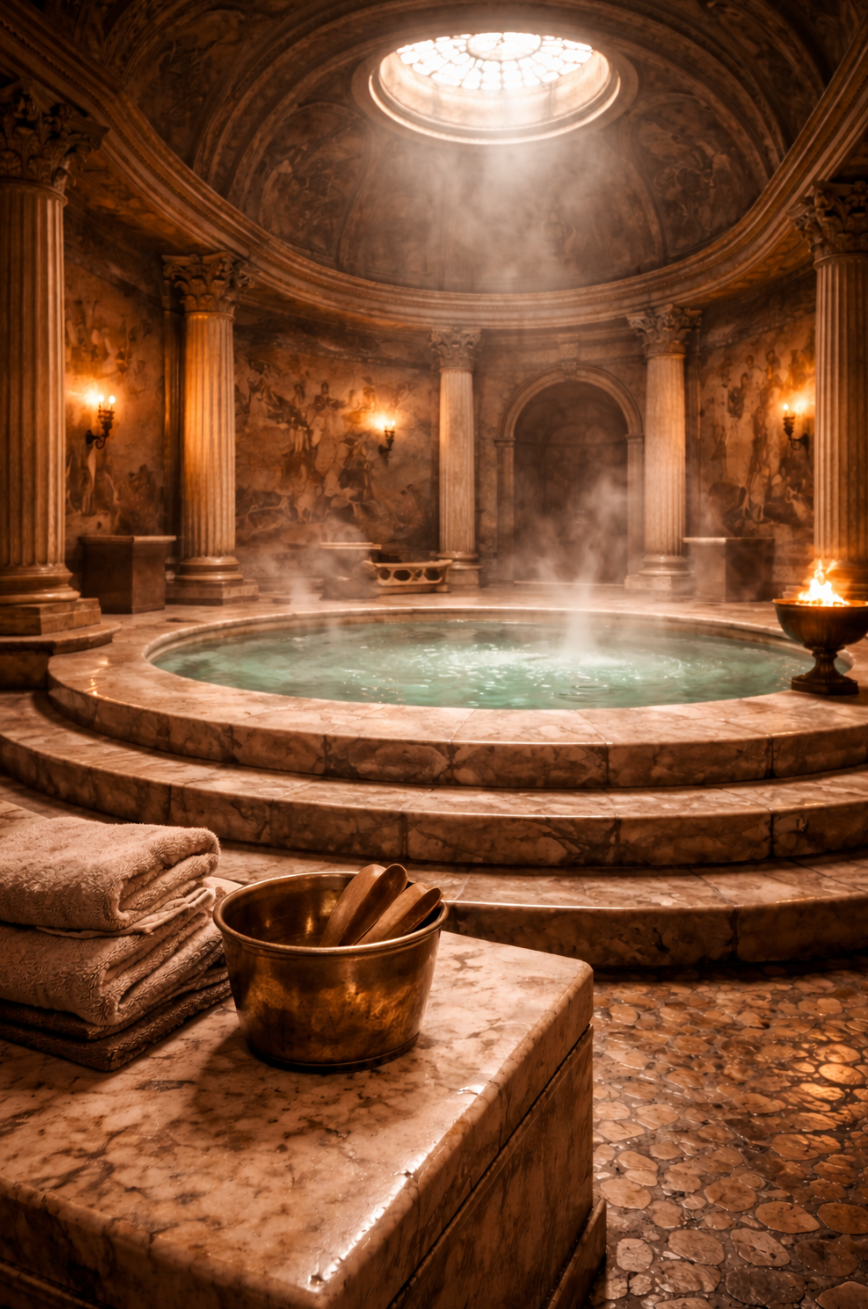
CALDARIUM (hot water, steamy) Image AI generated
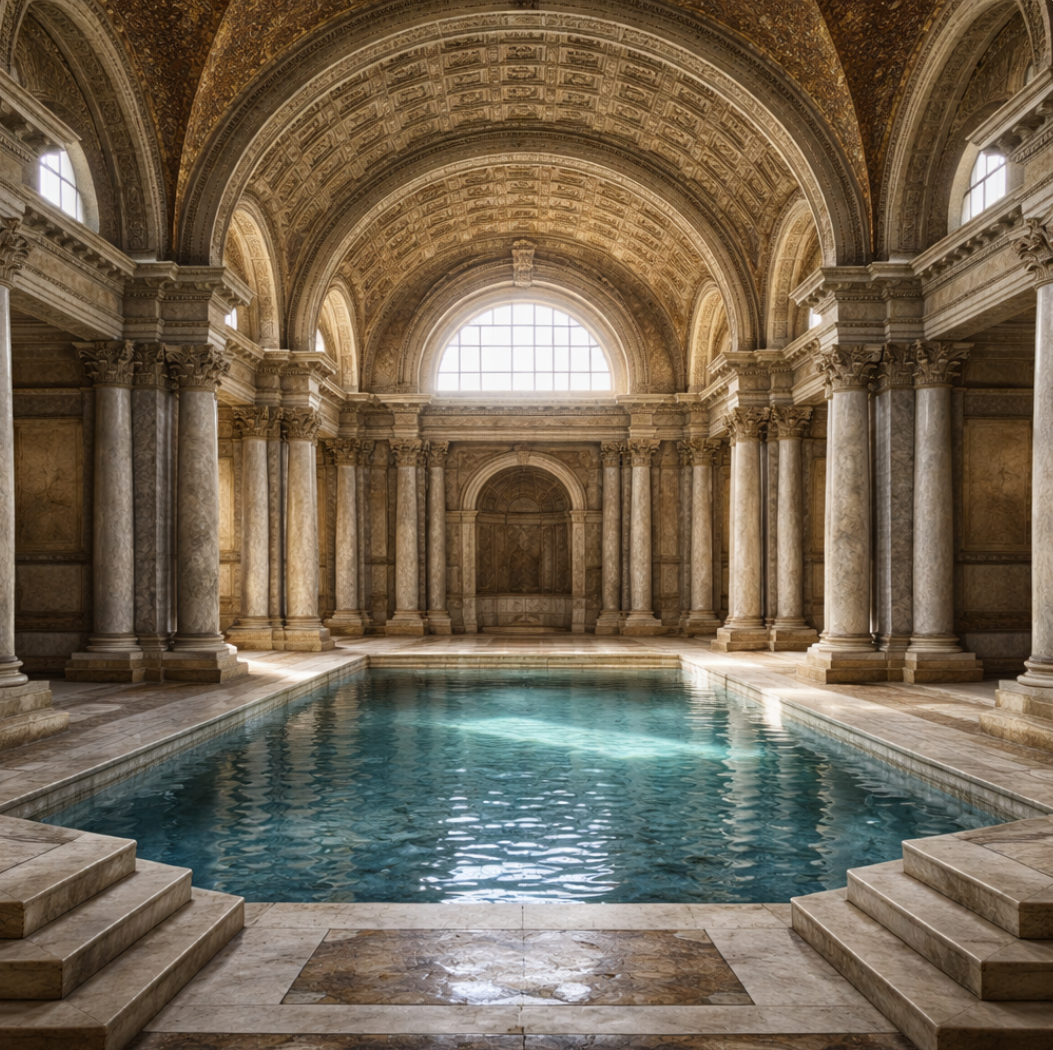
FRIGIDARIUM (cold water) | Image AI generated
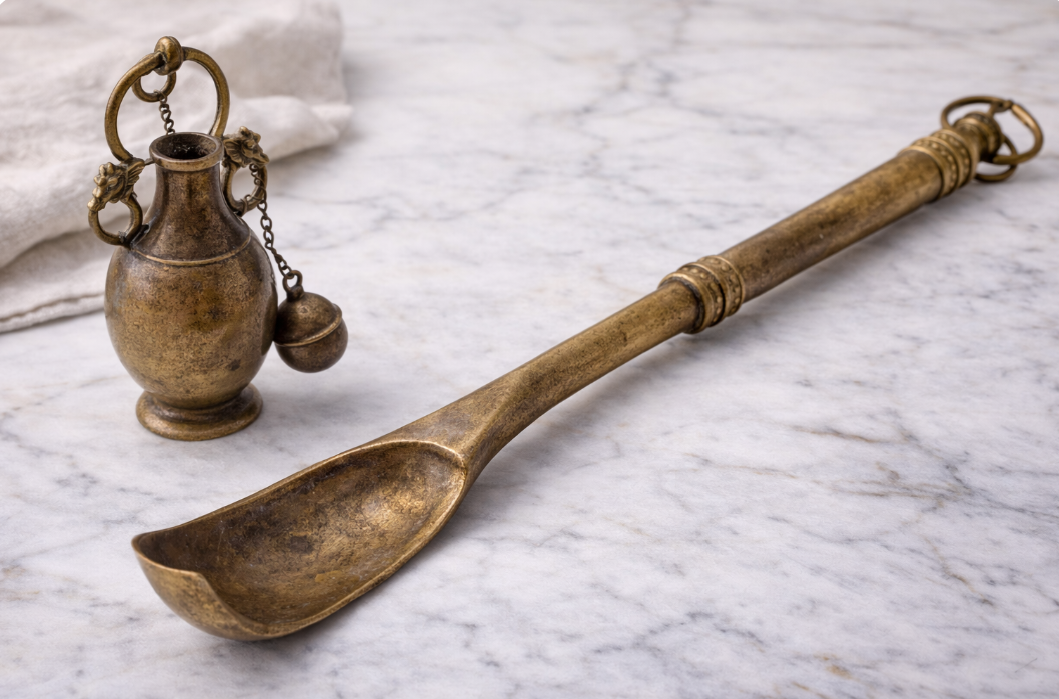
STRIGIL | Image AI generated
Bathers would begin in the tepidarium, a warm room where they acclimated to the heat. Here, they applied oils—often scented—to their skin in a ritual known as anointing. The oil served to loosen dirt and sweat, preparing the skin for deeper cleansing. (After all, like dissolves like, so oil effectively removed oily sweat and dirt from the skin.)
For further cleansing, bathers might use abrasives such as fine sand or ground pumice. They would then progress to the caldarium, the hot room, where they employed a tool called a strigil—a curved metal implement used to scrape away oil, sweat, and dirt. While strigils are often associated with athletes, they were widely available in public bathhouses and were essential to the Roman hygiene routine. Archaeological excavations have uncovered numerous examples of these tools, highlighting their significance in Roman culture.
The ritual concluded in the frigidarium, a cold room where bathers cooled down and closed their pores after the hot and oily treatments. This process is reminiscent of modern shaving practices: starting with warm water to open pores for a close shave and finishing with cold water—or an astringent aftershave—to close the pores and soothe the skin. The Romans’ attention to detail in their bathing rituals mirrors our own pursuit of both cleanliness and self-care.
Historical Mentions of Soap in Ancient Rome
Early Mentions of Soap in the Roman Empire
The Roman Empire provides some of the earliest recorded references to soap-like substances, though soap as we know it today was not widely embraced by Romans for personal hygiene. Much of what we know about ancient Roman soap-like substances comes from Naturalis Historia, the first-century encyclopedia by Pliny the Elder. In Book 28, Chapter 51, Pliny credits the invention of sapo (Latin for soap) to the Gauls, who crafted it using animal fats and plant ashes. However, this “soap” was less a cleanser and more a treatment for certain skin conditions, such as scrofulous sores. Among the Germanic tribes, it was also used—particularly by men—for dyeing and giving a shiny appearance to their hair.
Pliny mentions that Romans found Gaulish soap products too harsh for their own use, favoring gentler substances that began to emerge around 58 BC. This distinction underscores the Romans’ preference for alternative cleansing methods, such as oiling and scraping, rather than relying on soap-like substances for personal hygiene. Despite this limited adoption, Roman records reflect the significance of soap in other cultures and its value as a traded commodity, offering insights into its broader historical impact.
Later References to Soap
The utility of soap for both washing and cleansing gained greater recognition in the 2nd century AD. The Greek physician Galen explicitly mentions soap as a medicament and a means of cleaning the body (source: Britannica), further solidifying its role in personal hygiene practices of the time.
Bathing in Ancient Rome: A Cultural and Hygienic Evolution
Bathing was an essential part of daily life in Ancient Rome, offering not only physical cleansing but also a reprieve from the demands of society. By the 1st century AD, Roman bathing culture had undergone a remarkable transformation, coinciding with the Pax Romana (Roman Peace), a period of prosperity and stability spanning from approximately 27 BC to 180 AD. This era witnessed significant advancements in infrastructure, including the construction of elaborate bathhouses, alongside cultural flourishing, legal reforms, and the expansion of trade and commerce.
While evidence of widespread soap use for personal hygiene in Ancient Rome is limited, the Roman emphasis on cleanliness was undeniable. Bathing rituals, which included oiling the body and using the strigil to remove dirt and sweat, were integral to hygiene and grooming practices. These traditions reflected the Romans’ dedication to physical well-being and their societal standards of cleanliness.
During the Pax Romana, the construction of grand public bathhouses became a hallmark of Roman architectural ingenuity. These bathhouses, adorned with intricate mosaics and sophisticated heating systems, served as much more than
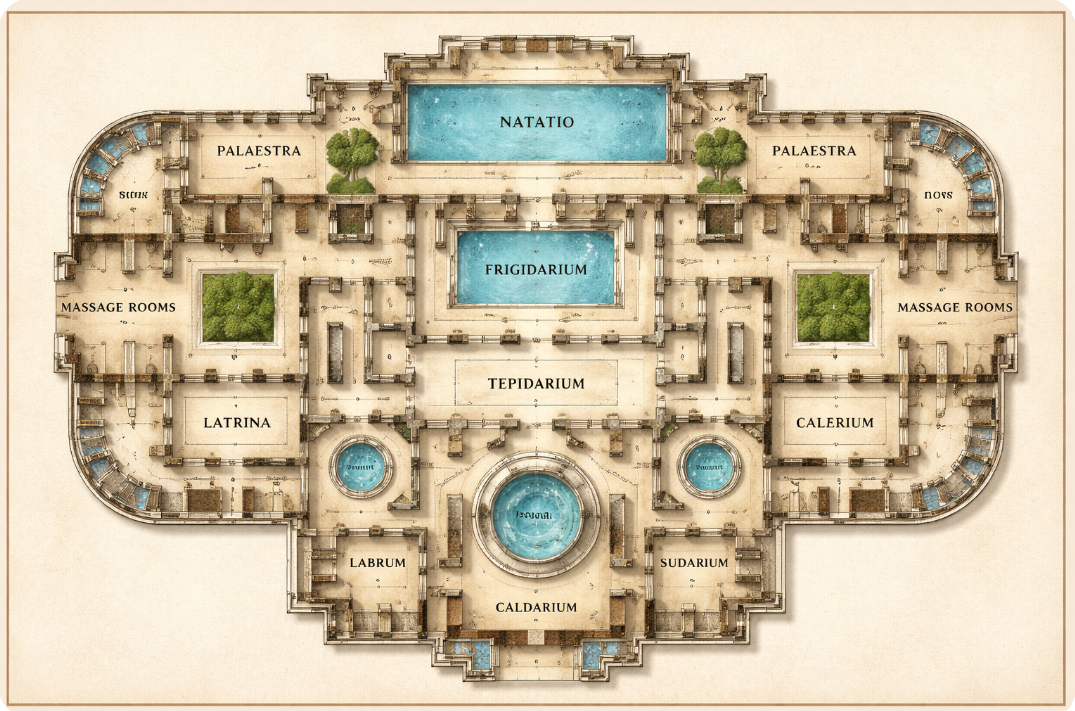
Floor plans for an elaborate bathhouse / AI generated
places for cleansing—they were vibrant social and cultural hubs that symbolized Roman power and prosperity. Although soap began to gain attention in Roman culture during this time, its use was distinct from modern applications, further emphasizing the uniqueness of Roman hygiene practices.
Historical Mentions of Soap in Ancient Rome
While the Romans primarily relied on oils for cleansing, historical references suggest that a milder form of soap began to emerge by the 1st century AD. Pliny the Elder, in his monumental work Naturalis Historia (Book 28, Chapter 51), provides one of the earliest recorded mentions of soap. He describes it as a substance used by the Gauls, an ancient Celtic people, to give their hair a shiny appearance. According to Pliny, this soap—crafted from tallow and ashes—was a known product of the time. His mention also highlights the Phoenicians’ earlier soap-making practices, around 600 BC, using goat’s tallow and wood ash, sometimes trading their creations with the Gauls–click here.
Development of Soap in the Roman and Celtic Cultures
The Role of Soap in Ancient Cultures
Following Pliny the Elder’s account, other ancient writers provide additional insights into the evolution of soap. Aretaeus of Cappadocia, a Greek physician of the second century AD, described the use of alkaline balls by the Gauls and Celts. These soap-like substances, made from basic ingredients like animal fats and plant ashes, were primarily used by Celtic tribes rather than Romans. This distinction highlights the regional differences in soap-making techniques and applications. Aretaeus’s observations, found in On the Causes and Symptoms of Acute and Chronic Diseases, reinforce that soap, while known, was not yet a common element in Mediterranean cultures.
Galen’s Contributions to Soap: Bridging Ancient Medicine and Hygiene
By the 2nd century AD, Galen, a renowned Greek physician practicing in Rome, advanced the understanding and application of soap-like substances for both personal cleanliness and medicinal purposes. In his writings, Galen recommended soap for washing and removing impurities from the body and clothing, reflecting an increased appreciation of soap’s utility beyond its traditional medicinal applications.
Interestingly, Galen ranked the quality of soaps available at the time, asserting that Germanic soaps were superior to Gaulish varieties, a recognition that highlights Rome’s gradual acceptance of these foreign products. This also demonstrates Galen’s influence in shifting attitudes toward soap as an essential part of hygiene.
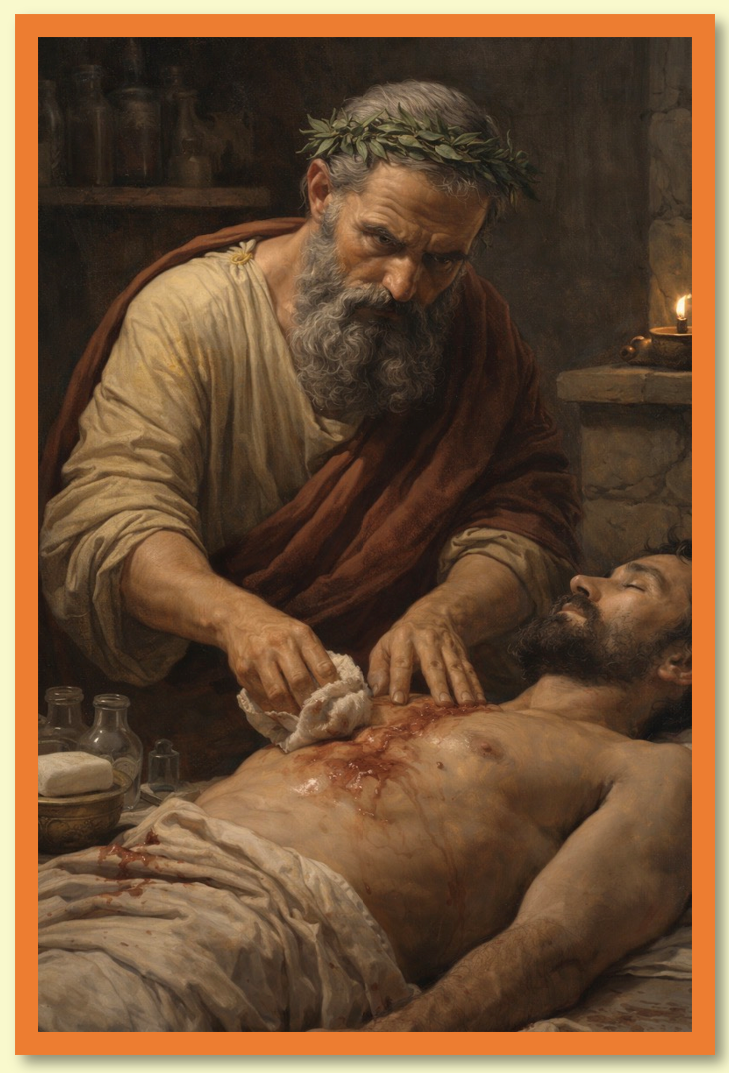
Image AI generated
Key Contributions of Galen to Early Soap Knowledge
1. Medicinal Use of Soap
Galen was one of the earliest advocates for soap’s medicinal benefits. He recommended its use for treating skin ailments, emphasizing its ability to cleanse impurities and promote healing. He also suggested using soap to prepare the skin before medical treatments, recognizing that cleanliness could enhance the effectiveness of therapies.
2. Soap as a Cosmetic Tool
Galen endorsed soap as part of personal grooming and cosmetic routines. He categorized soaps based on their origin and quality, praising Germanic soaps for their superior cleansing effectiveness despite Roman preferences for milder alternatives. This ranking illustrates Galen’s awareness of the diversity in soap formulations available at the time.
3. Recognition of Ingredients
Galen was among the first to document the key components of soap—animal fats and plant ashes—and their role in creating an alkaline product effective at removing oils and dirt. His observations reveal a sophisticated understanding of the chemistry behind soap, likely aiding its gradual integration into hygiene practices.
4. Influence on Roman and European Hygiene Practices
Galen’s advocacy for soap extended beyond hygiene, influencing Roman culture and shaping European practices in later centuries. His writings were widely studied throughout antiquity and the medieval period, laying a foundation for soap’s eventual widespread adoption across Europe.
5. Galen’s Writings on Soap
Although much of Galen’s work survives only in fragments, his discussions of soap are preserved in medical texts on hygiene and health protocols. In these works, Galen underscores the importance of cleanliness for maintaining health and preventing infections. His insights bridge early medical practices with the gradual cultural acceptance of soap as a vital tool for hygiene.
A Note on Historical Accuracy
While Pliny’s accounts are widely respected, it’s important to approach some of his claims with caution. For instance, he mentions soap being used to treat scrofulous sores, a form of skin tuberculosis that could result in painful ulcerations. This claim is frequently cited in historical texts, but verifying its accuracy through primary sources remains challenging. Accessing a broader range of historical materials often requires specialized resources or paid subscriptions, which can limit comprehensive research.
Alchemical References to Soap by Zosimos of Panopolis
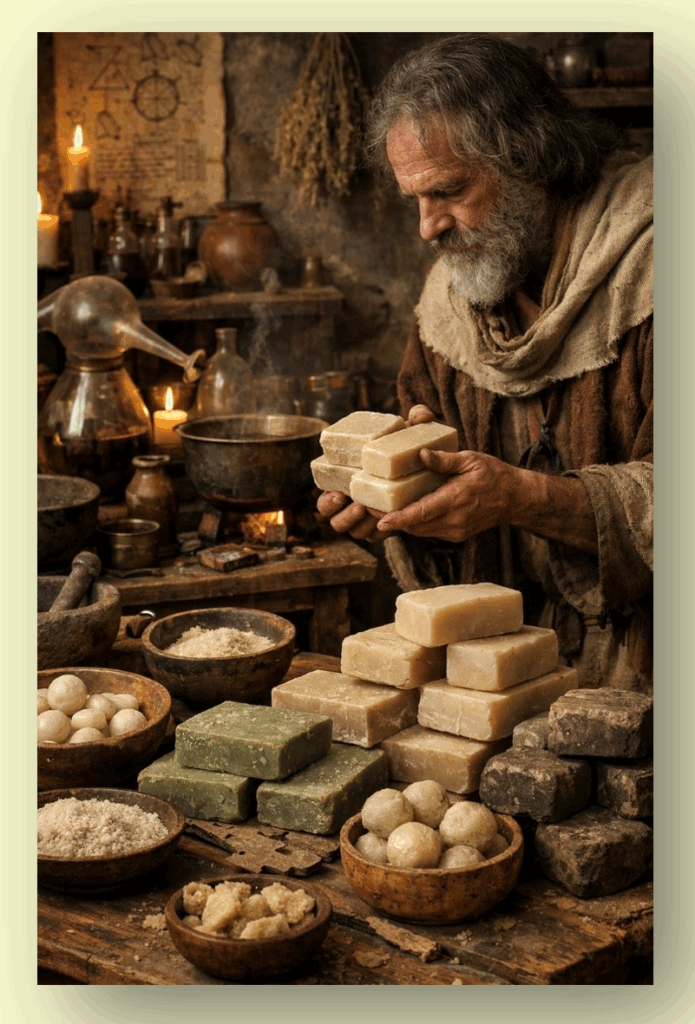
Image AI generated
By the third century AD, Zosimos of Panopolis, a Greco-Egyptian alchemist, incorporated soap into his alchemical writings. While his primary focus was on transmutation and the creation of elixirs, Zosimos also referenced the use of alkaline substances resembling soap. His texts reveal that soap-like compounds played a role in alchemical practices in Egypt, indicating that knowledge of soap extended beyond Europe. Zosimos’s work underscores the adaptability of soap formulations and applications, reflecting the diverse scientific and cultural practices of the time.
Conclusion: The Evolution of Soap in Antiquity
The journey of soap from a rudimentary cleansing aid among the Gauls to its integration into Roman and Egyptian practices highlights its diverse applications and evolving significance in antiquity. Initially overlooked by the Romans for personal hygiene, soap gradually gained recognition for its medicinal and practical benefits. References by Pliny, Aretaeus, Galen, and Zosimos offer a vivid account of soap’s transformation, showcasing its role in ancient healthcare and alchemical traditions. These developments laid the foundation for the sophisticated soap-making techniques that would emerge in medieval and later periods.
Educational & Informational Disclaimer
The information provided on this website is for educational and informational purposes only. It is intended to share general knowledge about traditional soapmaking, ingredient behavior, historical context, and manufacturing processes.
Nothing on this site is intended to diagnose, treat, cure, or prevent any disease or medical condition. The products offered are classified as soap under FDA guidelines and are not intended to affect the structure or function of the skin or body. Individual experiences and preferences may vary.
Information presented here should not be considered a substitute for professional medical advice, diagnosis, or treatment. If you have a medical condition, skin concern, or sensitivity, please consult a qualified healthcare professional before using any product.
This website may reference or link to third-party scientific, technical, or educational resources for general learning purposes. These references are provided to support transparency and encourage independent research, not as endorsements or medical guidance.
Click here to read the full disclaimer.
Contact me:
Text:
(479) 651-2760
I typically respond to texts almost immediately unless I’m in the middle of making soap.
As soon as I reach a stopping point, I’ll be sure to check and reply.
I check my email daily and will get back to you as soon as possible.