
Conventional Soap, is it Soap
Introduction: Understanding the Differences in Cleansers
Not all cleansing bars are the same. There are important differences between traditional soap, syndet bars, and combination bars (often called combars). With so many body cleansers available today, consumers have more choices than ever when selecting products that fit their preferences and daily routines.
Many people develop a habit of purchasing the same bar soaps, body washes, shower gels, or hand cleansers without giving much thought to how these products are made or what ingredients they contain. Taking a closer look at the ingredients and how different cleansers are formulated can provide helpful insight into the products we use every day.
If terms like syndet or combar are unfamiliar, that’s completely normal. This section will explain what these terms mean and outline the general differences between traditional soap and other types of cleansing bars. Information referenced in this section is based on publicly available regulatory and educational resources, including materials from the U.S. Food and Drug Administration (FDA).
The goal is simply to help readers better understand the types of cleansers available and how they differ in formulation and use for bathing, washing hands, or cleansing hair.
Soap (THE OLD-TIMER) And Detergents (the YOUNGSTER)
Ingredients of Products is 1-3 Determining Factors for the FDA….is it soap or is it a cosmetic
The Great Grandpa of Soap
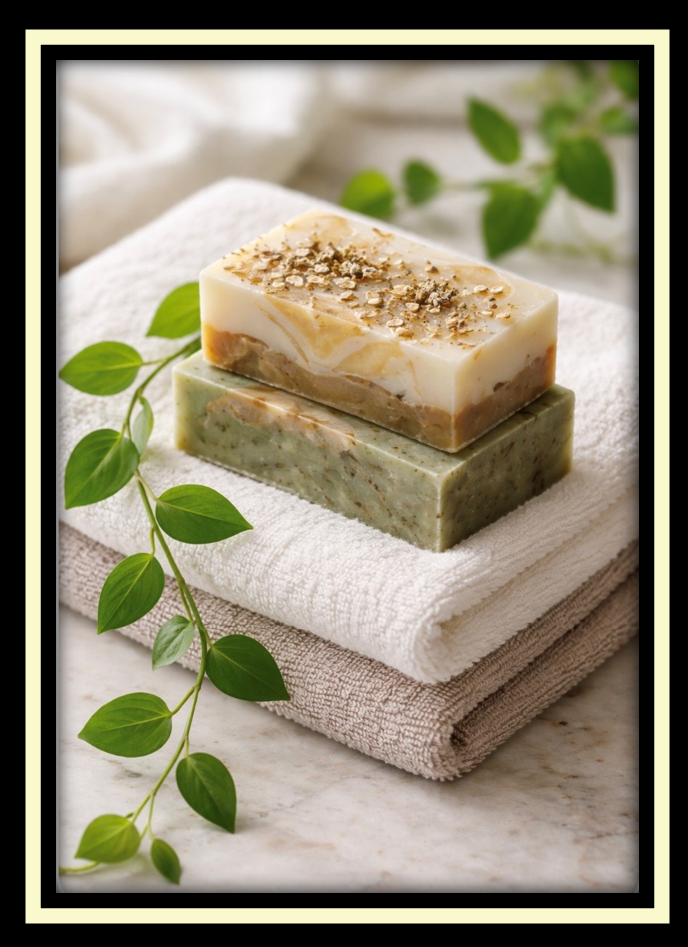
Image AI generated
Just a century ago, soap was the primary cleaning product used for a wide range of everyday tasks—bathing, washing hair, doing laundry, cleaning dishes, and even maintaining tools. At that time, synthetic detergents had not yet been developed for household use. Families often saved animal fats from cooking throughout the year, which were later combined with lye made by leaching hardwood ash with water. This mixture was then heated and stirred for hours over an open fire, producing enough soap to supply the household for many months.
Soap was valued for its versatility. It could be used for bathing, laundering clothes, and cleaning household items. In some cases, it was also used in practical ways around the home and farm, such as helping lubricate wooden wagon axles or other equipment. Considering the time and labor involved in producing it, the many uses of soap made it an essential part of daily life.
For many people today, it may be surprising to learn that bathing with synthetic detergents is a relatively modern development.
The Newcomer (Youngster)
. . . . . but is it soap ? ?

Image from Shutterstock
The development of synthetic detergents—often referred to as syndets—began less than a century ago and introduced a new category of cleansers formulated from different types of chemical ingredients than traditional soap. As these products became widely available, they were increasingly used in many household and personal care cleansers.
Although large-scale manufacturing of cleansing products expanded during this time, the tradition of soap-making continued in many homes. Some families still made soap for personal use, preserving knowledge of traditional soap-making methods and passing those skills from one generation to the next.
Click here to read more from the FDA site’s Is It a Cosmetic, a Drug, or Both? (Or Is It Soap?)
Soap is a category that requires special explanation because the regulatory definition differs from how the word is commonly used in everyday language. According to the FDA, soap is defined as a product consisting primarily of alkali salts of fatty acids, and products that meet this definition are generally exempt from certain provisions of the Federal Food, Drug, and Cosmetic Act (FD&C Act).
While Section 201(i)(1) of the act includes “articles…for cleansing” within the definition of a cosmetic, Section 201(i)(2) specifically excludes soap from being classified as a cosmetic when it meets the regulatory definition.
This distinction is important. For a product to be considered soap under the FDA’s regulatory definition, it must be composed mainly of alkali salts of fatty acids and intended primarily for cleansing. Products that contain synthetic detergents, or that are marketed with cosmetic claims, are generally regulated differently and may fall under the cosmetic category.
Click here to read more from the FDA site’s Frequently Asked Questions on Soap
To meet the FDA’s definition of soap, a product must satisfy three basic conditions:
What it’s made of:
The product must consist primarily of alkali salts of fatty acids, which are created when fats or oils react with an alkali during the soap-making process.
What ingredients cause its cleaning action:
For a product to be regulated as soap, the cleansing action must come only from alkali salts of fatty acids. If synthetic detergents are included and provide the cleansing action, the product is generally regulated as a cosmetic, even if it is labeled as “soap.”
How it’s intended to be used:
To be regulated as soap, the product must be labeled and marketed only for cleansing. If it is marketed for purposes such as moisturizing the skin, making the user smell pleasant, or deodorizing the body, it is generally regulated as a cosmetic.
What Exactly is a Syndet (Non-Soap Soap)?
Defining Syndets
Syndets—short for synthetic detergents—are cleansing products made with detergent-based ingredients rather than traditional soap. Unlike true soap, which is produced through saponification (the chemical reaction between fats or oils and an alkali such as lye), syndets do not rely on alkali salts of fatty acids for their cleansing action.
Instead, their cleansing ability comes from detergent ingredients, which may be derived from petrochemical sources or from processed oils and fats. These detergent ingredients act as surfactants, helping water lift and rinse away oils and dirt from the skin.
The primary categories of syndet-based cleansers include:
- Anionic: Detergent surfactants with a negatively charged head group, commonly used for their cleansing and foaming properties.
- Cationic: Detergent surfactants with a positively charged head group, often used in conditioning formulations.
- Non-ionic: Detergent surfactants with a neutral (uncharged) head group, typically used for mild cleansing and compatibility with other ingredients.
Syndets differ from traditional soap in both chemical composition and historical development.
To learn more about how detergent-based cleansers were developed—including their expansion during Germany’s wartime research efforts—click the link to the right to continue reading.
Why Syndets Are Popular
Syndet bars are widely used because they tend to produce abundant lather and perform well in hard water without leaving behind the residue commonly known as soap scum. Traditional soap can react with minerals such as calcium and magnesium found in hard water, which may form this visible residue. Syndet formulations were developed in part to address this issue, offering another type of cleansing bar for consumers to choose from.
Are Syndets Truly Milder?
Syndets are often marketed as being milder on the skin and convenient to use. However, preferences for cleansing products can vary from person to person. Some people prefer traditional soap because they appreciate its simplicity and the way it feels during and after washing.
My own experience also influenced my perspective. After dealing with ongoing concerns related to skin dryness and moisture balance for many years, I began paying closer attention to the types of cleansers I used. If you would like to learn more about that experience, Click here to read my personal story.
A Non-Soap Cleansing Bar
Syndets are sometimes referred to as “non-soap cleansing bars” because they provide cleansing through detergent-based ingredients rather than traditional soap. One of the earliest widely recognized syndet bars, Dove®, was introduced in 1955 and remains a familiar product today.
Are There Syndet Liquid Products?
Image AI generated
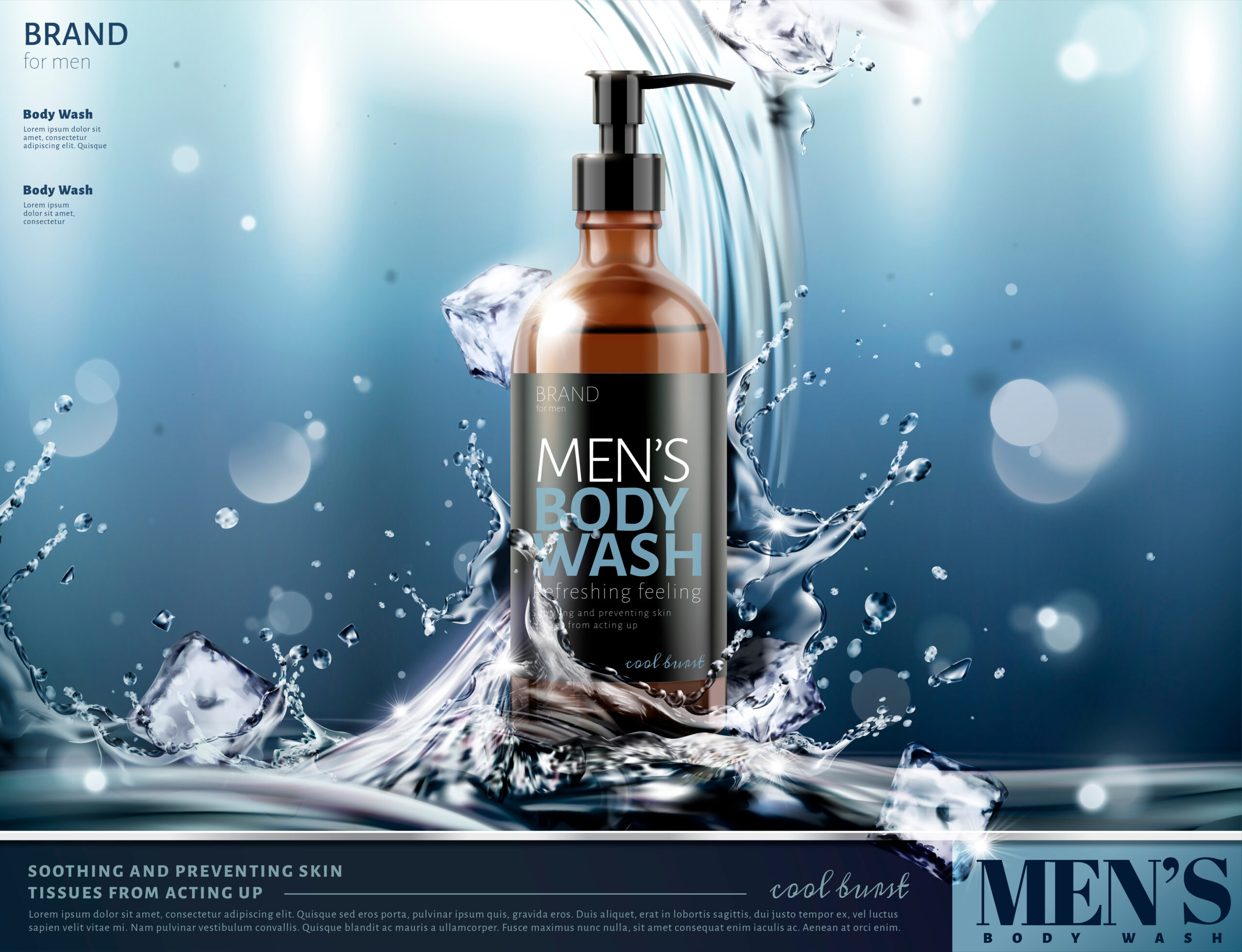
Image Shutterstock
Syndets aren’t limited to solid bars—they also dominate the liquid cleanser market. Common liquid syndet products include:
- Hair Shampoo
- Beard Shampoo
- Body Washes
- Facial Cleansers
Interestingly, some hair conditioners also contain detergents. In these products, detergents are primarily included to reduce static electricity, enhance hair manageability, and add shine.
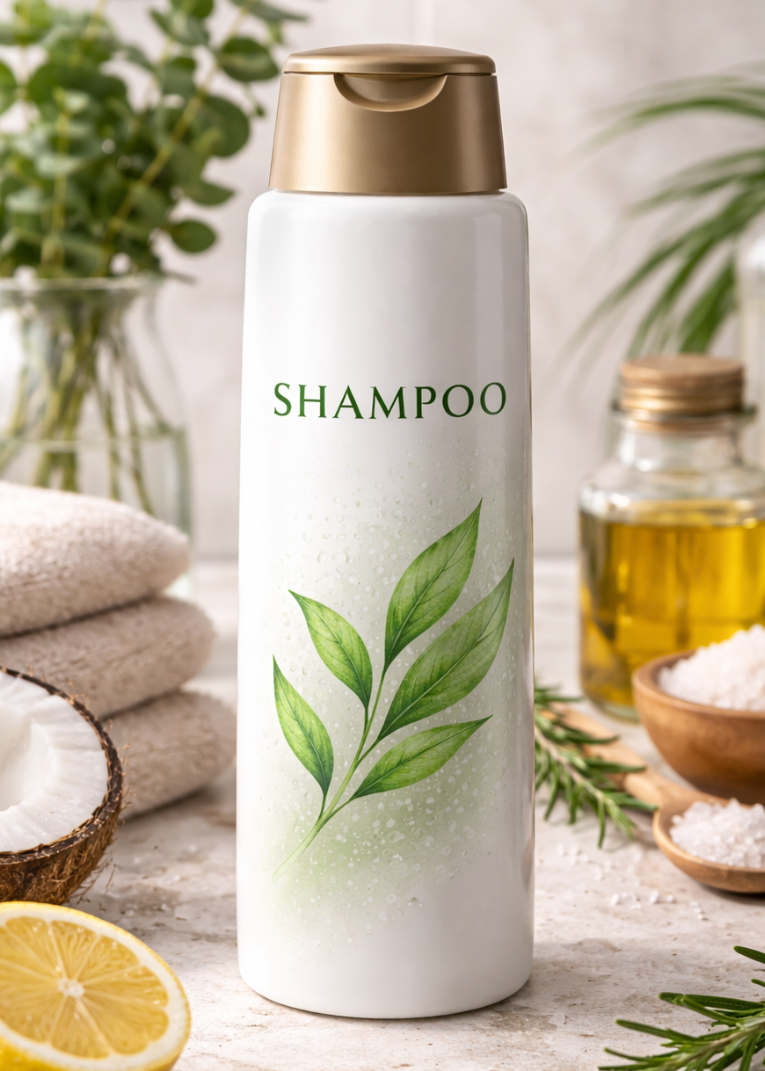
Image AI generated
As it turns out (click here), daily or very frequent hair washing became more common over time. As cleansing habits changed, manufacturers began developing additional hair-care products designed to condition and manage hair after washing. This reflects how personal-care products often evolve alongside changing grooming practices.
Traditional soap and detergent-based cleansers are formulated differently, and individuals may notice differences in how their skin or hair feels after washing. For this reason, some people prefer traditional soap, while others prefer detergent-based cleansing products.
However, I DO NOT recommend washing hair with traditional soap unless you fully understand the science behind it. Hair and scalp have different characteristics than skin, and traditional soap is naturally alkaline, which can cause the hair cuticle to lift during washing.
My sister once switched to soap-based shampoo bars and liked the “volume” it seemed to give her thin hair. In reality, the lifted cuticle can make individual hair strands feel slightly rougher or fuller in texture. Without the use of an acidic rinse or conditioner to help smooth the cuticle layer, the raised cuticles may remain slightly open, which can increase friction between hair strands.
Over time, repeated mechanical stress—such as brushing, combing, or styling—can contribute to cuticle wear. As the cuticle becomes worn, the inner structure of the hair shaft may become more exposed, which can lead to hair that feels rough, dry, or more prone to breakage.
What’s in a Combar?
A combar, or combination bar, is a type of cleansing bar that blends traditional soap with detergent-based ingredients. Unlike pure syndet bars, combars may contain some real soap produced through saponification—the chemical reaction between fats or fatty acids and an alkali that creates soap and glycerin.
However, these bars also include synthetic detergents, which means they share characteristics of both traditional soap and syndet cleansers. In some manufacturing processes used for certain commercial soap products, much of the naturally formed glycerin is removed during processing and may be used in other cosmetic formulations. The process is a salting out of the glycerin.
What’s ‘Hiding’ in My Combar
Have you ever noticed that combars and many liquid cleansers do not list ‘sodium hydroxide’ (lye) or ‘potassium hydroxide’ on their labels? Instead, you may see ingredient names such as sodium tallowate (soap derived from animal fats) or other INCI (International Nomenclature of Cosmetic Ingredients) terms. These ingredient names follow standardized labeling conventions used throughout the cosmetic industry.
While these names comply with labeling requirements, they may not always be immediately recognizable to consumers who are unfamiliar with INCI terminology. For example, sodium tallowate refers to soap produced through the reaction of tallow (rendered beef fat) with sodium hydroxide during the soap-making process.
INCI names can sometimes make ingredient lists appear more technical than they actually are. For instance, terms such as sodium tallowate may sound unfamiliar, but they simply refer to soap made from tallow and an alkali. These naming conventions are used so that ingredients are listed consistently across cosmetic products.
My best friend is a dedicated vegan who avoids animal-derived ingredients. Yet she once purchased a cleanser containing sodium tallowate without realizing that it originated from tallow. Ingredient naming systems like INCI are standardized for labeling, but they can still require a little interpretation for consumers who are carefully reviewing product ingredients.
Transparency in Labeling: Why I List Ingredients Plainly
When my soap is marketed simply as soap, it is regulated differently than cosmetic products under current FDA guidelines. Because of this, I focus on presenting my products as traditional soap and avoid making cosmetic claims about them. Some soap makers choose to list ingredients using INCI (International Nomenclature of Cosmetic Ingredients) terminology, which is the standardized system commonly used for cosmetic labeling.
Some handcrafted soap makers also choose not to include ingredient lists when their products are sold strictly as soap, since traditional soap that meets the FDA’s definition is regulated differently than cosmetics. In those cases, ingredient disclosure may not always be required in the same way it is for cosmetic products.
In contrast, I choose to list my ingredients in clear, recognizable language so customers can easily understand what is used in my soap. I do this for the sake of transparency and to help readers better understand the materials involved in traditional soap making.
Clear communication about ingredients helps people make informed decisions about the products they choose, and providing that information in a straightforward way is something I believe many customers appreciate.
Combars that Contain Animal Fats: Tallow
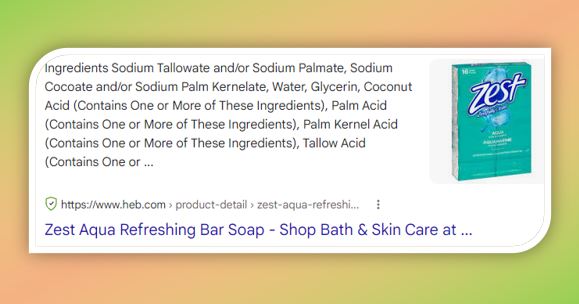
These 7 most popular ‘soap’ companies use Tallow (animal fat).
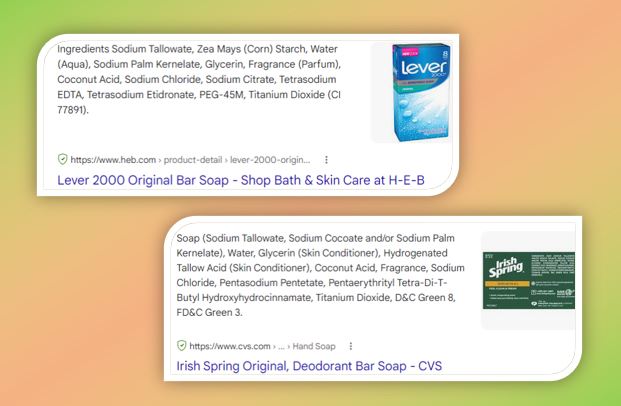

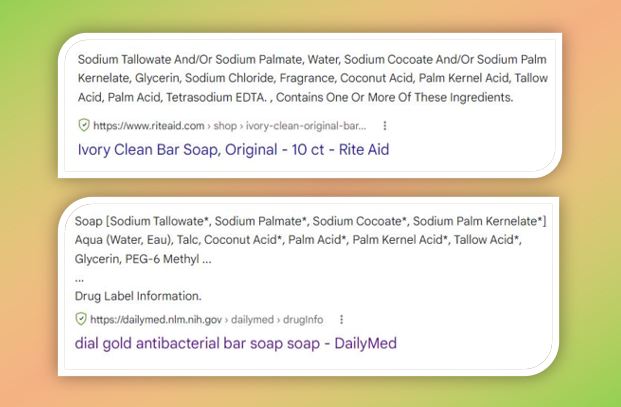
Sodium before the name of a fat or plant oil means it is the soap (made with sodium hydroxide) of that particular lipid:
- Soap made from beef fat = sodium tallowate
- Palm Oil soap = sodium palmate
- Olive Oil soap = sodium olivate
- Coconut Oil soap= sodium cocoate
- Palm Kernel Oil soap = sodium palm kernelate
How Genuine Soap Differs from Commercial “Soap” Detergent Products
Chemically, genuine soap and many commercial cleansing products are different types of substances. True soap is produced through saponification, a chemical reaction in which triglycerides (fats or oils) react with sodium hydroxide (NaOH) or potassium hydroxide (KOH) to form soap molecules (fatty acid salts) and glycerol. These soap molecules function as surfactants, meaning they contain a polar (water-attracting) head and a nonpolar (oil-attracting) tail that help lift oils and dirt so they can be rinsed away with water.
Many cleansing bars and liquid cleansers available today are formulated using synthetic detergents, often referred to as syndets. These cleansing agents are produced through industrial chemical processes rather than traditional saponification. The surfactants used in these formulations may be derived from petrochemical sources or from processed oils and fatty alcohols. They are commonly combined with other ingredients—such as chelating agents, preservatives, thickeners, and pH adjusters—to create cleansers with specific performance and stability characteristics. To read about these syndets, click here.
Because traditional soap can react with minerals commonly found in hard water and naturally produces an alkaline solution, detergent-based cleansers are sometimes formulated to provide consistent performance under a wide range of water conditions and to allow manufacturers to design products with specific pH and formulation characteristics.
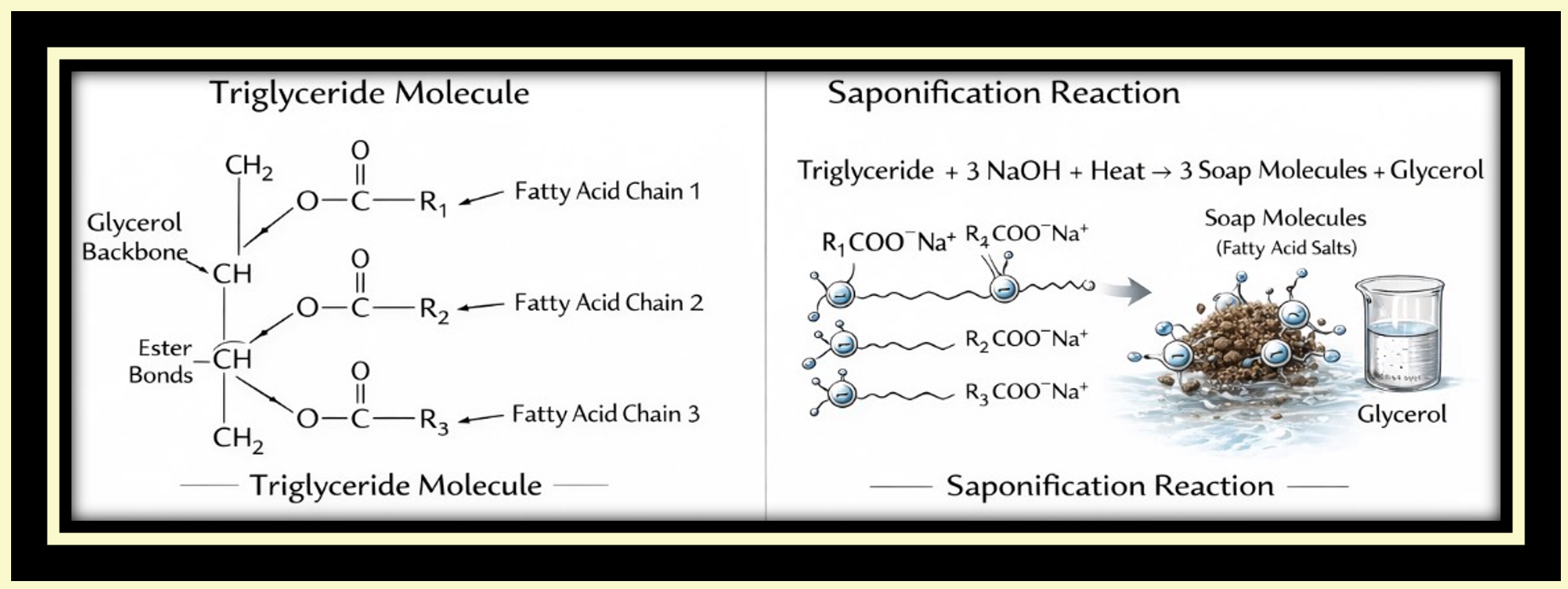
Image AI generated
Saponification Reaction
Triglycerides (fats or oils) react with sodium hydroxide (NaOH) during the process known as saponification. In this reaction, the ester bonds within the triglycerides are broken, producing soap molecules (fatty acid salts) and glycerol.
The soap molecules function as surfactants, meaning they help water lift and rinse away oils and dirt. Glycerol forms naturally as a byproduct of the reaction and may remain dispersed within the finished soap depending on the manufacturing process.
To learn more about what soap is, how it’s made through the chemical process known as saponification, and its strengths and limitations, click the link to the right.
The FDA site states the following about lye:
Ordinary soap is made by combining fats or oils and an alkali, such as lye. The fats and oils, which may be from animal, vegetable, or mineral sources, are degraded into free fatty acids, which then combine with the alkali to form crude soap. The alkali reacts with the oils, turning what starts out as liquid into blocks of soap. When made properly, no lye remains in the finished product. In the past, people commonly made their own soap using animal fats and lye that had been extracted from wood ashes.
Today there are very few true soaps on the market. Most body cleansers, both liquid and solid, are synthetic detergent products.”
Educational & Informational Disclaimer
The information provided on this website is for educational and informational purposes only. It is intended to share general knowledge about traditional soapmaking, ingredient behavior, historical context, and manufacturing processes.
Nothing on this site is intended to diagnose, treat, cure, or prevent any disease or medical condition. The products offered are classified as soap under FDA guidelines and are not intended to affect the structure or function of the skin or body. Individual experiences and preferences may vary.
Information presented here should not be considered a substitute for professional medical advice, diagnosis, or treatment. If you have a medical condition, skin concern, or sensitivity, please consult a qualified healthcare professional before using any product.
This website may reference or link to third-party scientific, technical, or educational resources for general learning purposes. These references are provided to support transparency and encourage independent research, not as endorsements or medical guidance.
Click here to read the full disclaimer.
Contact me:
Text:
(479) 651-2760
I typically respond to texts almost immediately unless I’m in the middle of making soap.
As soon as I reach a stopping point, I’ll be sure to check and reply.
I check my email daily and will get back to you as soon as possible.
The facts and the truth are good to know.
Thanks! It’s always good to know.
Before I started making soap, I had no idea that the cleansers most people use today were actually detergent-based. I also didn’t realize how different traditional soap was from what’s widely available. Once I began using my own handmade soap, I noticed that my skin felt different during Autumn and Winter.