
The Beard Growth Cycle
Understanding the Three Phases of Facial Hair Development
The Three Phases of Beard Growth: An In-Depth Guide to Growing a Healthy Beard
Beard growth follows a natural cycle divided into three distinct stages: anagen, catagen, and telogen. Each stage plays a critical role in determining the length, fullness, and health of your beard. Understanding these phases can help you navigate your beard journey with realistic expectations and the best care practices.
The 3 Phases of Beard Growth
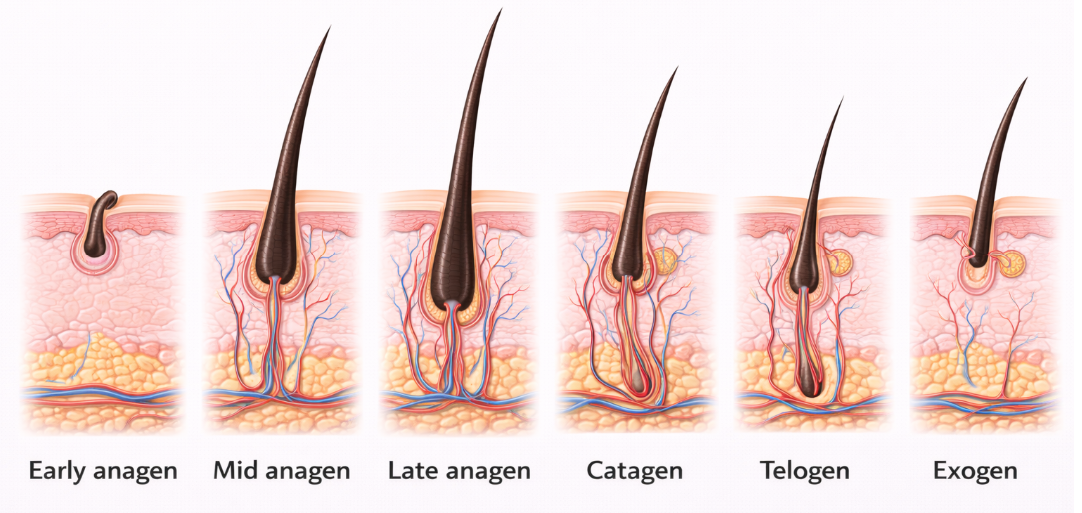
Anagen Phase: The active growth phase where most beard length is achieved.
Catagen Phase: A transitional period when growth slows and follicles prepare for rest.
Telogen Phase: The resting phase before shedding occurs, making way for new growth.
Some experts also identify an “early anagen” phase, a preparatory stage within the anagen cycle that helps activate robust hair growth.
1. Anagen Phase: The Growth Stage
Anagen Phase: The Growth Stage
The anagen phase is where beard growth actively occurs. This is the active growth phase of the hair follicle, and for beard hair it typically lasts about 1 to 3 years, with genetics largely determining how long an individual hair remains in this stage.
During this period:
Beard hair grows approximately 1 cm (0.40 inches) per month, meaning a year of uninterrupted growth could produce roughly 12 cm (4.70 inches) of length.
Cells within the hair matrix rapidly divide, forming new keratinized cells that lengthen the hair shaft and push it outward from the follicle.
The visible portion of the hair is a keratinized fiber composed of three primary structures: the cuticle, cortex, and sometimes a central core known as the medulla.
Because individual follicles cycle independently, not all beard hairs grow at the same time or for the same duration. This is why beards gradually become fuller as more hairs enter and remain in the anagen phase.
Patience is part of the process. While some beards grow faster or achieve greater length due to genetics, slower growth is perfectly normal. Consistent grooming and proper care allow the beard to gradually reach its natural potential—without the need for gimmicky supplements.
The anagen phase is where beard growth begins at the molecular level. Inside the follicle, the process starts with individual atoms and molecules forming the building blocks of keratin, the protein that makes up your hair. These molecules combine into structures called dimers and further assemble into coiled coils, creating the strong yet flexible strands that make up your beard.
Discover the fascinating details of this microscopic process and the intricate anatomy of your hair to gain a deeper appreciation for the science behind scalp hair and beard growth.
1. Anagen Phase: The Growth Stage
The anagen phase is the active growth stage of your beard. For facial hair, this phase typically lasts about 1 to 3 years, though genetics can sometimes extend or shorten this duration.
What happens during this phase?
During the anagen phase, the hair matrix and dermal papilla undergo rapid mitotic activity. Cells in the hair matrix divide quickly, forming the hair shaft and pushing the growing hair outward from the follicle. The newly formed hair shaft is made up of keratinized layers, including the cuticle, cortex, and sometimes a central medulla.
Hair grows roughly 1 cm (0.40 inches) per month, meaning your beard could potentially grow about 12 cm (4.7 inches) in a year if left undisturbed.
Why does anagen length matter?
The longer a follicle remains in the anagen phase, the longer that individual beard hair can grow before naturally shedding. Genetics play a major role in determining how long this growth phase lasts, which is why some men can grow longer beards than others. Because each follicle cycles independently, beard hair grows and sheds at different times, gradually contributing to overall beard fullness.
Key tips for this phase:
Maintain consistency with grooming to keep the growing hair clean and manageable.
Avoid shortcuts, like ineffective supplements that promise quick results.
Embrace the process—slow and steady growth is completely normal and worth the wait.
2. Catagen Phase: The Transition Stage
The catagen phase is a short transitional stage, lasting about 2–3 weeks.
During this time:
- Hair growth stops, and the hair follicle begins to shrink.
- The hair, now known as a club hair, detaches from the dermal papilla and is no longer actively nourished by the blood supply.
- A small percentage of beard hairs are in this phase at any given time as follicles transition from active growth to the resting stage.
Think of this phase as a brief transition period for the follicle. Although the hair stops growing, it remains anchored in the follicle while the follicle restructures itself in preparation for the next stage of the growth cycle.
2. Catagen Phase: The Transitional Stage
The catagen phase is a brief transitional period that typically lasts about 2–3 weeks. During this stage, beard hairs stop growing but remain in place within the follicles.
What happens during this phase?
During the catagen phase, the hair strand detaches from the dermal papilla and its blood supply, halting the production of new hair. This marks the beginning of the hair’s preparation for the resting stage of the cycle. The follicle shrinks and forms what is known as a club hair, a hard, keratinized strand that is no longer actively growing. At any given time, a small percentage of beard hairs are in the catagen phase as follicles transition between growth and rest.
Why is this phase important?
While growth stops during the catagen phase, it plays an essential role in the hair’s overall cycle. This transition allows the follicle to reorganize and prepare for the resting stage before eventually producing a new hair during the next growth cycle.
Key tips for this phase:
- Be gentle when combing or brushing to prevent unnecessary breakage or pulling.
- Focus on keeping the surrounding skin clean and conditioned to support a healthy environment for future hair growth.
3. Telogen Phase: The Resting and Renewal Stage
The telogen phase typically lasts about 2–4 months. During this stage:
- The hair follicle is in a resting state, and the fully formed hair remains anchored in the follicle without actively growing.
- Eventually, the existing hair is naturally shed as a new hair begins forming beneath it in the follicle, restarting the growth cycle.
- At any given time, a portion of beard hairs are in this resting stage as follicles cycle independently.
It’s completely natural to notice occasional shedding, so there’s no need for concern. Beard follicles continually cycle through growth, transition, and rest, allowing new hairs to replace older ones over time.
3. Telogen Phase: The Resting and Renewal Stage
The telogen phase is the final stage in the beard growth cycle and typically lasts about 2 to 4 months.
What happens during this phase?
During the telogen phase, the hair follicle rests while a new hair begins forming beneath the existing one. The old hair remains anchored in the follicle until it is eventually released as the new hair begins to grow. This natural shedding is simply part of the normal hair cycle as follicles reset before entering the next growth phase.
Visible signs of this phase:
If you notice stray beard hairs on your desk, in your comb, or on your pillow, they have likely been shed during the telogen phase. Occasional shedding is completely normal because beard follicles cycle independently, meaning different hairs are always at different stages of growth.
Key tips for this phase:
- Avoid pulling at hairs to reduce unnecessary breakage or premature shedding.
- Maintain good grooming habits and a healthy lifestyle to support the natural cycling of your beard follicles.
While the anagen phase is widely known as the active growth stage of beard development, some experts describe an early anagen stage as the period when the follicle reactivates and prepares to produce a new hair. During this time, important biological processes begin before visible hair growth becomes noticeable.
What Happens During the Early Anagen Phase?
The early anagen stage begins when the hair follicle reactivates after the resting telogen phase. During this stage:
- Cellular activity resumes: The dermal papilla, a cluster of specialized cells at the base of the follicle, reconnects with the hair matrix and signals the start of renewed cell division.
- Follicle regeneration occurs: The follicle reorganizes and rebuilds the structures necessary to produce a new hair shaft.
- Blood flow to the follicle increases, supplying oxygen and nutrients that support the early stages of hair production.
- New hair formation begins: Keratinocytes—the primary cells that form the hair shaft—start producing keratinized structures that will become the emerging beard hair.
Why is the Early Anagen Phase Important?
This stage lays the biological groundwork for the active growth period that follows. A smooth transition from the telogen phase into early anagen allows the follicle to begin producing a new beard hair and continue the natural cycle of growth, transition, and rest that occurs throughout the life of each follicle.
Supporting the Early Anagen Phase
Although much of this phase is dictated by genetics, you can support your beard’s transition into robust growth with these practices:
- Maintain good nutrition: A balanced diet that includes a variety of vitamins and minerals—such as biotin, zinc, and vitamin E—supports overall health, which includes the normal function of hair follicles. Eating a nutrient-rich diet helps provide the nutrients your body uses in many biological processes, including hair production. To learn more, explore our comprehensive guide to vitamin-rich foods and how overall nutrition supports healthy hair.
Maintain good grooming habits: Gentle beard grooming and occasional massage can help distribute natural oils and keep the skin and beard comfortable.
Protect the skin: Keeping the skin clean and hydrated helps maintain a healthy environment for normal beard growth.
- Avoid excessive stress: Prolonged physical or emotional stress can influence normal hair cycling and may contribute to temporary shedding in some individuals. Managing stress through healthy habits can help support overall well-being and maintain the natural growth cycle of your beard. If you’re interested in learning more about the relationship between stress and beard health, along with practical ways to manage stress, visit our in-depth guide on stress and beard care. visit our in-depth guide on stress and the beard.
The early anagen phase may be less visible but is a critical step in achieving a thick, healthy beard. By understanding and supporting this initial stage, you can optimize your beard’s potential for growth and fullness.
The Beard Growth Timeline
- Anagen (Growth Phase): About 1–3 years (genetics can sometimes extend or shorten this stage)
- Catagen (Transitional Phase): About 2–3 weeks
- Telogen (Resting Phase): About 2–4 months
“Your beard journey is unique and largely influenced by genetics and natural hair cycles. By embracing the process and maintaining good grooming habits, you can keep your beard looking healthy and well-maintained as it grows.”
How to Support Your Beard Growth
While genetics play a significant role in your beard’s natural growth potential, proper care can help keep your beard looking its best:
- Use quality beard care products: Beard oils, balms, and conditioners help condition the hair and improve manageability.
- Be gentle with combs and brushes: Avoid excessive tugging or pulling, which can cause unnecessary breakage.
- Stay hydrated: Drinking enough water supports overall health and helps maintain normal body functions.
- Eat a balanced diet: A variety of nutrients from your food supports overall wellness, including the normal function of hair follicles.
- Seek professional grooming: A skilled barber can help shape and maintain your beard for a more polished, even look.
Conclusion
Beard growth is a dynamic process that moves through three stages: the active anagen phase, the transitional catagen phase, and the resting telogen phase. Each phase is a natural part of the hair cycle that influences how beard hair grows, sheds, and renews over time. Understanding these stages can help set realistic expectations and provide useful insight into how beard hair naturally develops.
While genetics largely determine your beard’s growth potential, consistent grooming and good personal care can help keep your beard looking healthy and well-maintained. Proper hydration, balanced nutrition, and gentle grooming habits all contribute to maintaining the appearance and condition of your beard. With patience and regular care, your beard can develop in a way that reflects your personal style and individuality.
Educational & Informational Disclaimer
The information provided on this website is for educational and informational purposes only. It is intended to share general knowledge about traditional soapmaking, ingredient behavior, historical context, and manufacturing processes.
Nothing on this site is intended to diagnose, treat, cure, or prevent any disease or medical condition. The products offered are classified as soap under FDA guidelines and are not intended to affect the structure or function of the skin or body. Individual experiences and preferences may vary.
Information presented here should not be considered a substitute for professional medical advice, diagnosis, or treatment. If you have a medical condition, skin concern, or sensitivity, please consult a qualified healthcare professional before using any product.
This website may reference or link to third-party scientific, technical, or educational resources for general learning purposes. These references are provided to support transparency and encourage independent research, not as endorsements or medical guidance.
Click here to read the full disclaimer.
Contact me:

Text:
(479) 651-2760
I typically respond to texts almost immediately unless I’m in the middle of making soap.
As soon as I reach a stopping point, I’ll be sure to check and reply.
I check my email daily and will get back to you as soon as possible.